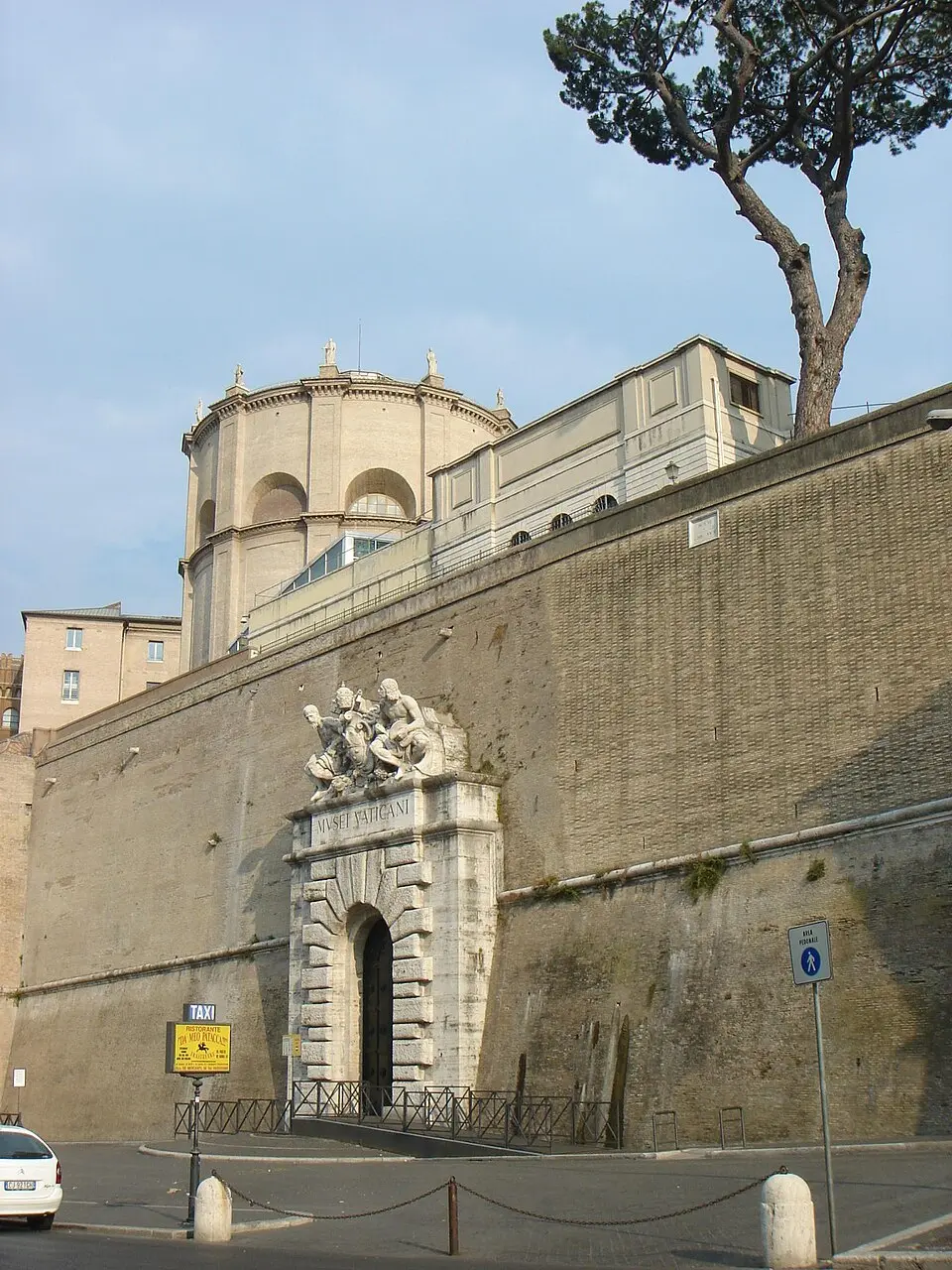
About Musei Vaticani
The Vatican Museums are one of the most important and extensive art collections in the world, stretching across the entire territory of Vatican City. They house the historic art collections of the popes, assembled over the course of centuries. The complex holds a remarkably diverse range of exhibits, from ancient Near Eastern antiquities from Egypt and Assyria to classical Greek and Roman art, Etruscan finds, and early Christian and medieval works. Art from the Renaissance, the Baroque, and the 19th century is also well represented, as are contemporary art and ethnological objects. The best-known and most-visited part of the collection is the Sistine Chapel, regarded as the highlight of any museum visit.
The museums are built around the Papal Palace, whose present form goes back to the building projects of Pope Nicholas V around 1450. A great humanist, he laid the foundation for the complex, which his successors steadily expanded. Pope Sixtus IV had the papal chapel built between 1471 and 1484, while Innocent VIII commissioned the Belvedere garden house. Alexander VI added a fortified tower to the complex. The true founder of the public collections, however, is considered to be Pope Julius II, who owned a private collection of antiquities and expanded it by adding the Cortile delle Statue and acquiring famous sculptures for the Belvedere.
The architectural development of the palace was shaped decisively by famous architects such as Donato Bramante and Antonio da Sangallo. Bramante linked the Belvedere to the main building via the large rectangular Cortile del Belvedere, while Sangallo expanded the palace around the central Cortile San Damaso. Over time, further courtyards and corridors were added, including the Braccio Nuovo, built in the 19th century. Today the entire complex comprises about 1,400 rooms covering 55,000 square meters and has around twenty courtyards. While only a small part is reserved for the pope and his household, most of the complex is open to visitors. The Vatican Gardens remain difficult to access, but you can catch glimpses of them from the museum windows.
The official entrance from St. Peter's Square leads up the Scala Regia, an impressive staircase originally built by Antonio da Sangallo and later renovated by Gian Lorenzo Bernini. At the foot of this staircase stands an equestrian statue of Constantine the Great. Today, however, the main entrance for museum visitors is on the north side, on Viale Vaticano, and was redesigned for the Holy Year 2000. This route leads directly into the historic collections and connects St. Peter's Basilica with the main exhibition areas.
A central point of any museum visit is the Sistine Chapel, built between 1475 and 1483 under Pope Sixtus IV and named after him. The rectangular building with its flat barrel vault matches the proportions of the biblical Temple of Solomon. The walls are decorated with frescoes by famous Renaissance painters such as Botticelli, Perugino, and Ghirlandaio, depicting scenes from the lives of Jesus and Moses. The chapel's real fame, however, rests on the ceiling paintings that Michelangelo executed for Julius II. Covering 520 square meters, these world-famous works show scenes from Genesis with larger-than-life figures. The Creation of Adam in particular, in which God the Father brings Adam to life with an outstretched finger, is one of the most reproduced works of art in history.
Besides the chapel, the Borgia Apartments, an early part of the palace, contain important frescoes. This wing was built under Nicholas V and named after Pope Alexander VI. The artistic decoration is by Pinturicchio, who adorned several rooms with biblical legends. The rooms bear names such as the Sala delle Sibille and the Sala dei Santi. From here, a staircase leads to the Raphael Rooms on the second floor. These four chambers were painted starting in 1508 for Pope Julius II and include the famous scene of the School of Athens. Despite severe damage during the Sack of Rome in 1527, when Protestant mercenaries damaged the frescoes, the works were restored through elaborate conservation efforts, most recently between 1999 and 2001.
Raphael's Loggia, which extends the Papal Palace to the east, offers another highlight. Originally intended as a private area for the papal collection of antiquities, it was decorated by Giovanni da Udine and other members of Raphael's workshop with imaginative architectural paintings and a cycle of biblical scenes. The grotesque style used here had a lasting influence on 16th-century art. The vaults are decorated with fanciful ornaments that lend an expressive sense of movement to the few figures depicted.
The Vatican Library, whose collection dates back to the 15th century, is also part of the museum complex. It now holds over two million books and manuscripts, including valuable handwritten codices, incunabula, and maps. The great library hall, the Salone Sistino, was built by Domenico Fontana and is decorated with frescoes and arabesques. Display cases along the walls show valuable old manuscripts, drawings, and coins. Adjoining the library is the Galleria delle carte geografiche, a 120-meter-long gallery of splendor decorated with large-scale topographical frescoes of Italian cities from the 16th century.
The Vatican Pinacoteca, a new building from 1932 in the Lombard Renaissance style, houses the papal painting collection. The building stands in the Vatican Gardens and comprises 16 rooms that present Italian paintings and tapestries from the Middle Ages to the 19th century in chronological and regional order. The most important artists whose works are on display here include Giotto, Leonardo da Vinci, Raphael, Titian, and Caravaggio. Many of these paintings originally came from St. Peter's Basilica, where they were replaced by mosaic copies, or were returned after being confiscated by Napoleon in the 19th century.
The antiquities collections are spread across several museums, including the Museo Pio-Clementino, the Museo Chiaramonti, and the various Gregorian museums. The Pio-Clementino Museum, founded in the 18th century, houses Greek and Roman artworks in octagonal rooms and features a famous spiral staircase. The Museo Chiaramonti consists of a long colonnaded gallery holding about a thousand sculptures, imperial portraits, and sarcophagi, as well as the Braccio Nuovo, which displays important statues such as the Doryphoros and the Augustus of Prima Porta. The Gregorian museums focus on specific themes: the Egyptian Museum displays finds from ancient Egypt, the Etruscan Museum shows archaeological pieces from southern Etruria, and the Profane Museum has Greek and Roman sculptures. There is also a Missionary-Ethnological Museum with objects from around the world and a Historical Museum that exhibits the papal state carriages and other means of transport. Together, these institutions form a unique ensemble that documents the art and cultural history of humankind in an impressive way.
At a glance
- Category
- Museum › Art museums
- Rating
- no reviews yet · write a review
- Address
- Viale Vaticano
00165 Rome, Italy - Phone
- +390669884676
- Website
- www.museivaticani.va
- —
- Coordinates
- 41.90644° N · 12.45372° E
- Data quality
- confidence 0.99
- Identifier
- ID d331d3f2-71b…
Location & surroundings
Toggle layersRatings & comments
none yetNear Musei Vaticani
closest 5 per category · 2 kmSights
Restaurants
Museums
Hotels
More:Art museums in Rome (77)All museums in Rome (383)
300 places within 2 km loaded.
Don't miss in Rome
All sights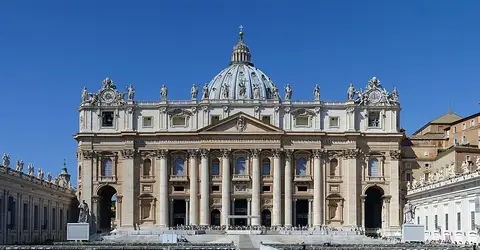 Historic sites01
The Dome at San Pietro Basilica
No address · Rome○ Website○ Phone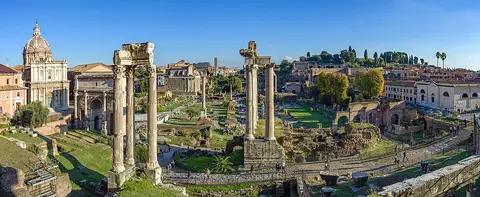 Historic sites02
Roman Forum
Via della Salara Vecchia, 5/6 · Rome● Website● Phone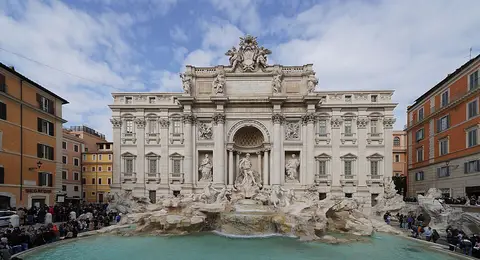 Historic sites03
Restauro Fontana di Trevi
Piazza di Trevi, 91 · Rome● Website○ Phone Monuments04
You need a free account to leave reviews and photos – that keeps comments genuine and lets you edit them later.
One of the greatest art galleries in the world, the museum is most famous for its spiral staircase, the Raphael Rooms and the exquisitely decorated Sistine Chapel famous for Michelangelo's frescoes.
Source: Wikivoyage, „Rome/Vatican“ · authors per page history · CC BY-SA 4.0 · as of 8/19/2022