Puglia: Trulli, Baroque and Two Seas
Travel guide · editorialThe heel of Italy's boot is surrounded by the Adriatic and the Ionian Sea and dotted with millions of olive trees. A vacation in Puglia takes you to whitewashed towns, villages of trulli, Baroque facades of golden stone and bays with water almost as clear as the Caribbean.
Location and Landscape
Puglia is Italy's easternmost region and, with roughly 500 miles (800 km) of coastline, one of its longest. In the north, the Gargano juts into the sea like the spur of the boot, a forested limestone promontory with the Foresta Umbra and the Tremiti Islands offshore. To the south lies the broad grain plain of the Capitanata around Foggia, followed by the rocky Murgia plateau. The Itria Valley is home to the trulli, round stone houses with conical roofs. Farther south, the Salento tapers flat toward the tip at Santa Maria di Leuca. Since 2013, a bacterium, Xylella, has destroyed many old olive groves in the south, and the damage is clearly visible in the landscape.
Bari and the Coast North of Brindisi
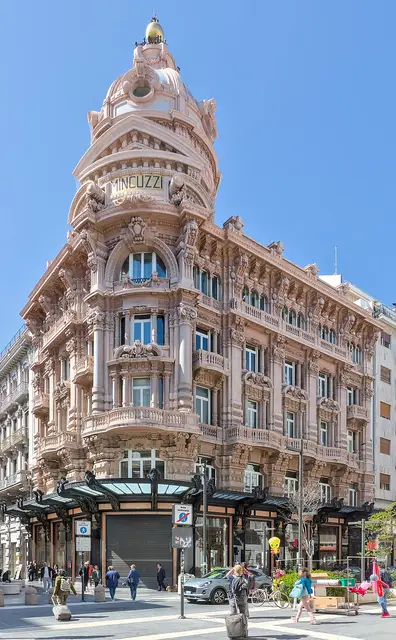
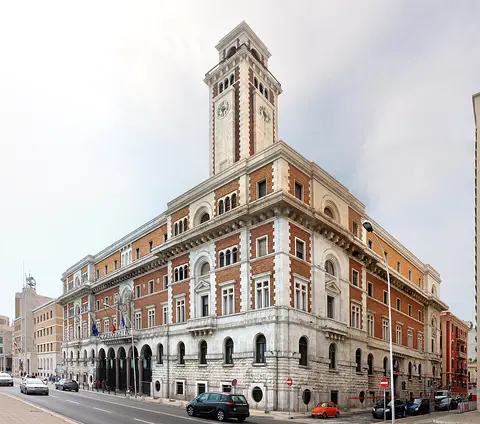
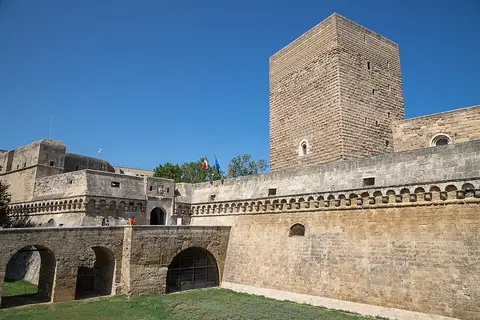
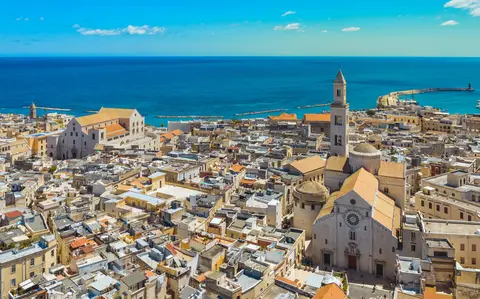
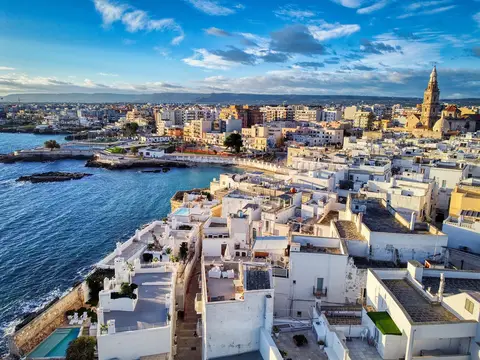
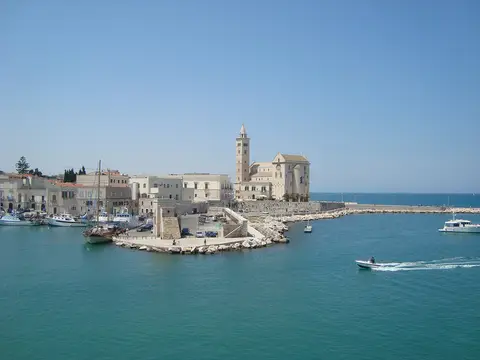
Bari has gone from a port city that visitors avoided to a popular destination. In the old town, Bari Vecchia, women shape orecchiette by hand in front of their doorways, and the Basilica of San Nicola holds the bones of Saint Nicholas, which draw pilgrims from the Orthodox world. The waterfront promenade is among the longest in Italy. To the north lies Trani, whose cathedral stands right at the water's edge, one of the most beautiful Romanesque buildings in southern Italy. Inland rises the enigmatic octagonal Castel del Monte of Frederick II. South of Bari, Monopoli, with its harbor, old town and small rocky coves, makes a relaxed base, and next door Polignano a Mare plunges over cliffs into the sea.
Sights in Puglia
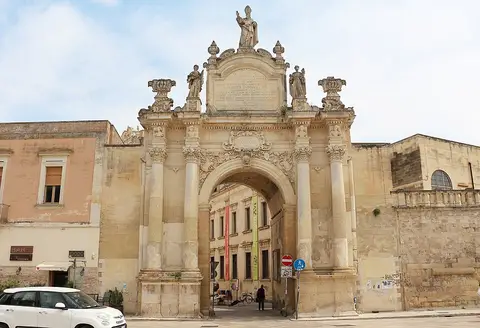
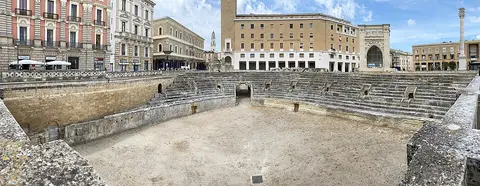
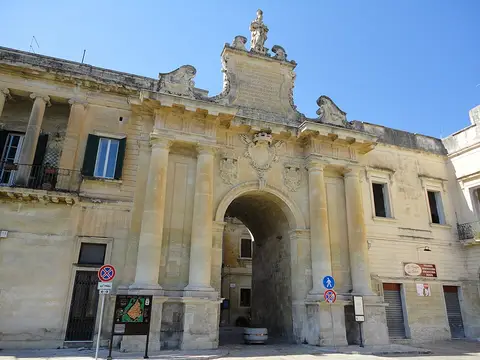
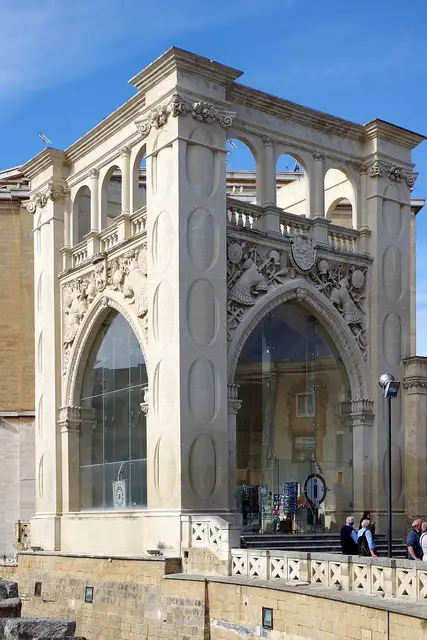
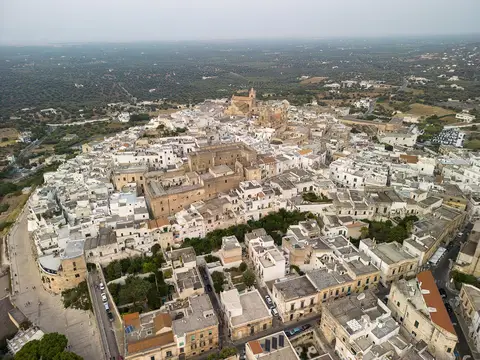
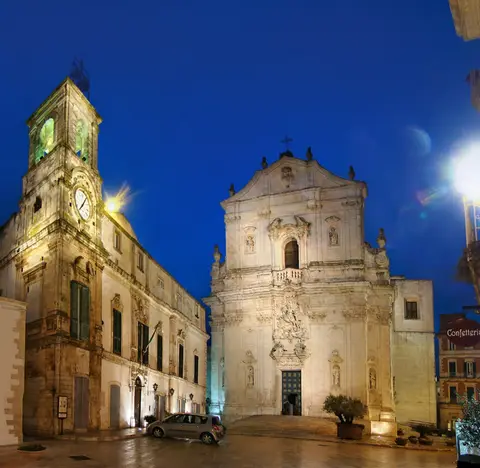
In the Itria Valley, Alberobello, with more than a thousand trulli, is a World Heritage Site; Locorotondo and Cisternino are quieter. Ostuni, the White City, gleams with its whitewashed houses on a hill above a sea of olive trees. The Castellana Caves are among the largest stalactite caves in Italy. Lecce, the Florence of the South, is a celebration of the Baroque: Santa Croce and the cathedral were carved from soft, honey-colored Lecce stone, and a Roman amphitheater lies beneath the city. Otranto, in the far east, has an enormous 12th-century floor mosaic. Gallipoli, with its old town on an island in the Ionian Sea, is a summer gathering place for young Italians.
Taranto, Foggia and the Gargano
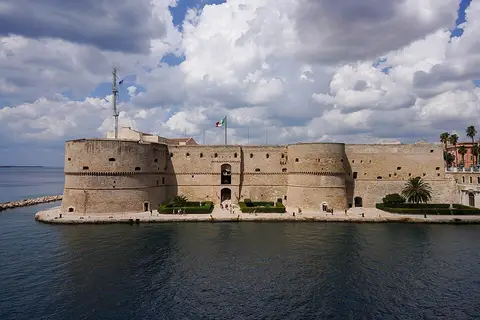
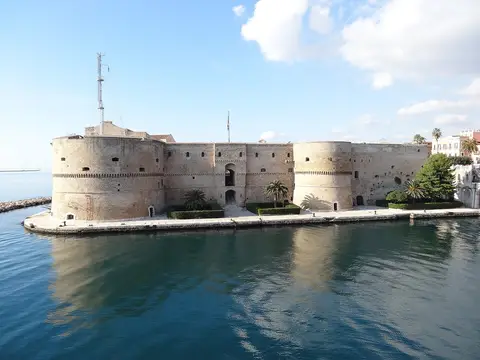
Taranto was founded by Spartans and has, in the MArTA, one of southern Italy's most important museums of Greek art, including finely crafted gold jewelry. The old town, on an island between two bodies of water, struggles with decay and the legacy of the huge steelworks. Foggia is mainly a transport hub and the starting point for the Gargano, home to the pilgrimage sites of Monte Sant'Angelo and San Giovanni Rotondo, the town of Padre Pio. Vieste and Peschici offer beaches beneath white limestone cliffs and boat trips to sea caves.
Food and Drink
Puglia is Italy's largest producer of olive oil, and you can taste it. Orecchiette with cime di rapa, a type of broccoli rabe, is the signature dish, alongside fave e cicorie, fava bean puree with wild chicory, focaccia barese with tomatoes, and burrata from Andria. By the sea, people eat raw seafood, ricci (sea urchin) and squid. In Lecce, rustico leccese and the pasticciotto, a pastry filled with custard, are part of breakfast, along with a caffè in ghiaccio con latte di mandorla (iced coffee with almond milk). Red wines such as Primitivo from Manduria and Negroamaro from the Salento have made the region famous.
Getting There and Best Time to Visit
Bari and Brindisi have direct flights from Germany, Austria and Switzerland, and ferries connect Bari with Greece, Albania and Croatia. Trains link the coastal towns, but a rental car is practical for the Itria Valley and the Salento. The best time to visit Puglia is May, June and September, when the sea is warm and the beaches aren't overcrowded. In August, around Ferragosto, the coast is packed and the heat is intense. Numerous village festivals take place in summer, in the Salento with dances to the pizzica, at the La Notte della Taranta festival in Melpignano.