About Porta Santa Croce
The Porta Santa Croce is one of the most important gateways in Padua's Venetian walls and marks the southern section of the fortifications. Its history goes back to the 14th century, when the Carrara family had the first earthen ramparts built in 1372, followed later by stone walls, to protect the suburbs. The gate's present form, however, dates only from the early 16th century, after the city withstood an attack by the League of Cambrai in 1509. As part of a comprehensive defense program drawn up in 1517 under the direction of Andrea Gritti and Fra Giocondo, the medieval structures were replaced with a modern system of bastions and fortified gates. The architect Sebastiano Mariani da Lugano designed the gate on the model of a Roman triumphal arch, intended to embody both the military strength and the political splendor of the Republic of Venice.
Today, you can experience the Porta Santa Croce as an impressive example of Renaissance fortress architecture. The outward-facing facade is built of Istrian stone and articulated by Corinthian pilasters, while the sides are flanked by Ionic columns of trachyte. Above the archway is a parapet that once served as a terrace. Inside the square structure you'll find frescoes depicting Padua's four patron saints, as well as historic inscriptions recording the gate's construction by the Venetian Senate in 1516. The city side has niches holding statues of San Prosdocimo and San Girolamo. In front of the gate extends the longest bridge span of the bastion front; most of its arches are now covered over, but it still allows you to cross the moat.
The structure also tells the later story of Padua. After the fall of the Republic of Venice in 1797, the wall lost its strategic importance, but in the 19th century it was used for the inauguration of the new Kingdom of Italy. An inscription commemorates the passage of King Victor Emmanuel II in 1866. Over time, the gate served a variety of purposes, from customs clearance to housing a school and an electrical transformer station. Today, the Porta Santa Croce stands as a testament to the city's military and cultural development, set within the historic city fortifications, which were declared a UNESCO World Heritage Site in 1997.
At a glance
- Category
- Sight › Historic sites
- Rating
- no reviews yet · write a review
- Address
- via 35123, Via Marghera, 38
35123 Padua, Italy - Phone
- —
- Website
- —
- —
- Coordinates
- 45.39243° N · 11.87404° E
- Data quality
- confidence 0.86
- Identifier
- ID 816feab7-473…
Location & surroundings
Toggle layersRatings & comments
none yetNear Porta Santa Croce
closest 5 per category · 2 kmSights
Restaurants
Museums
More:Historic sites in Padua (75)All sights in Padua (87)
217 places within 2 km loaded.
Don't miss in Padua
All sights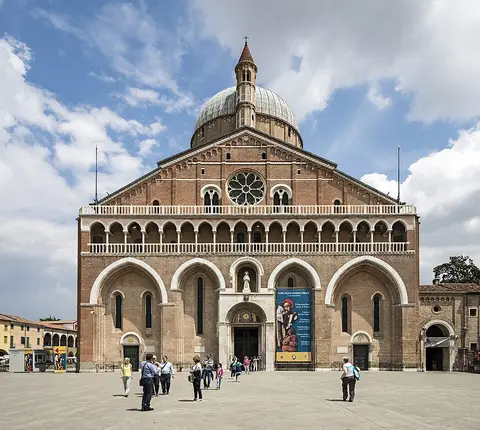 Historic sites01
Basilica di Sant'Antonio
Piazza del Santo, 11 · Padua● Website● Phone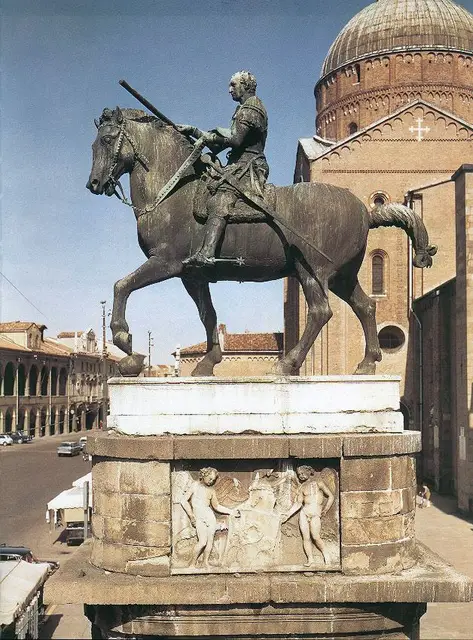 Monuments02
Monumento Equestre Al Gattamelata
Padova Suites C20, Piazza del Santo, 19 · Padua● Website○ Phone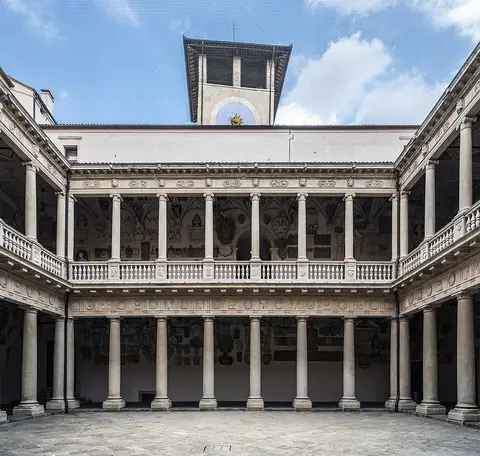 Historic sites03
Palazzo Bo
Via VIII Febbraio, 2 · Padua● Website● Phone Historic sites04
You need a free account to leave reviews and photos – that keeps comments genuine and lets you edit them later.