About Basilica di Sant'Antonio
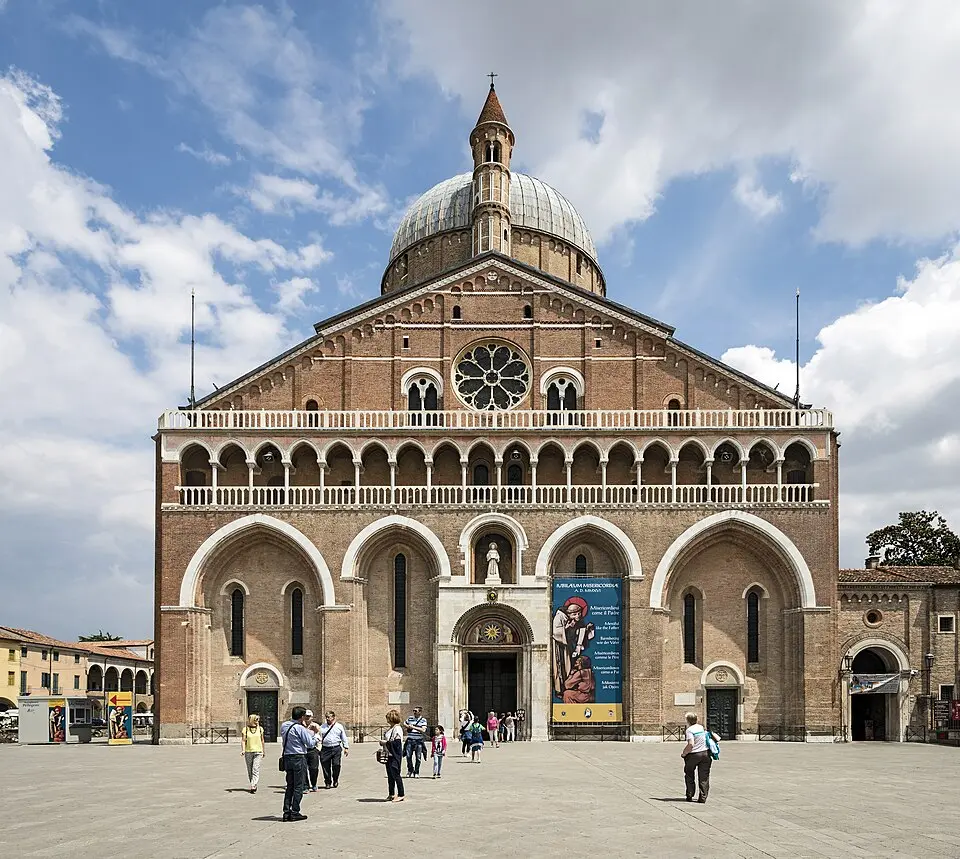
The Basilica of St. Anthony in Padua is one of Italy's most important and most visited pilgrimage sites. As a papal basilica and one of eight international shrines worldwide, it draws the faithful and art lovers alike. Built between 1232 and around 1310, it was erected to house, in fitting fashion, the tomb of the Franciscan Anthony of Padua, who died in 1231. A small chapel dedicated to the Virgin Mary originally stood on this site, and it was here that Anthony himself chose his final resting place. The church combines Romanesque and Gothic elements into a unique ensemble and is considered the first large vaulted building of its kind on the Terraferma.
The basilica's architecture reflects a fascinating blend of influences. The 121-foot-high (37 m) red-brick façade combines Venetian-Byzantine, Lombard-Romanesque, and Gothic forms. Particularly striking are the five blind arcades with pointed Gothic arches supporting a Romanesque dwarf gallery, as well as the large rose window in the gable. Inside, the eight domes, reminiscent of the system used in St. Mark's Basilica in Venice, dominate the space, along with two slender hexagonal bell towers. The three-aisled nave with a broad transept and polygonal choir creates an interior whose harmonious mix of Gothic and Romanesque details is especially captivating.
A central highlight for visitors is the chancel, dominated by the works of the sculptor Donatello. The sculptural group of seven statues and numerous reliefs is regarded as one of the basilica's most famous works of art. Among other figures, it depicts St. Anthony, St. Francis of Assisi, and the Madonna and Child. Especially impressive is the large bronze crucifix that visually dominates the space. The walls also feature reliefs depicting the saint's miracles, such as the scene of the kneeling mule before the Host. The rich furnishings, including tombs and side chapels dating from the 15th to the 17th centuries, underscore the historical significance of the site.
In the right transept you'll find the Chapel of St. James, a masterpiece of 14th-century Italian art. The elegant Gothic designs are by Andriolo de Santi, while the frescoes were created by Altichiero da Zevio and Jacopo di Pietro Avanzi. They tell the story of the Apostle James and include an impressive Crucifixion scene. Behind the high altar lies the Treasury Chapel, which has existed since the 17th century. It displays precious relics of the saint, including his tongue, which was found intact when his tomb was opened, as well as his lower jaw and the cartilage of his vocal cords, all preserved in gilded silver reliquaries.
In the left transept, the path leads to the Chapel of the Black Madonna, which incorporates part of the original monastery. This is where Anthony prayed and was first buried, before his remains were moved to the adjoining tomb chapel. Completed in the late 16th century, this chapel is adorned with 16th-century marble reliefs depicting scenes from the saint's life. The basilica's five cloisters offer further insight into the monastery's history. The Cloister of the Magnolia, the Cloister of the General, and the Cloister of Blessed Luca Belludi invite you to take a quiet stroll and admire tombstones, sculptures, and frescoes.
On the square in front, the Piazza del Santo, stands the famous equestrian statue of the condottiere Erasmo da Narni, known as Gattamelata. This work by Donatello, dating from 1453, is considered the first equestrian statue cast in Italy since Roman antiquity. Next to the basilica are the Oratory of St. George and the Scuola del Santo. The latter houses frescoes on which the young Titian also worked and is among the most significant testimonies to art history in Padua. Together, these buildings and the basilica form a cultural ensemble that impressively reflects the city's spiritual and artistic tradition.
At a glance
- Category
- Sight › Historic sites
- Rating
- no reviews yet · write a review
- Address
- Piazza del Santo, 11
35123 Padua, Italy - Phone
- 0497294478
- Website
- ilsantodipadova.it
- —
- Coordinates
- 45.40113° N · 11.87967° E
- Data quality
- confidence 0.97
- Identifier
- ID e3412031-844…
Part of the tour
Padua in a Day: Piazzas, Palazzi and the Santo →Location & surroundings
Toggle layersFAQ about Basilica di Sant'Antonio
quick answersWhat is the Basilica di Sant'Antonio in Padua?
The Basilica di Sant'Antonio at Piazza del Santo 11 in Padua is a papal basilica and one of the most important and most visited pilgrimage sites in Italy. It was built between 1232 and around 1310 to house the tomb of the Franciscan Anthony of Padua, who died in 1231. The site was originally occupied by a small chapel dedicated to the Virgin Mary, which Anthony himself had chosen as his final resting place. The basilica is also one of the world's eight international shrines.
What is the architecture of the Basilica di Sant'Antonio like?
The Basilica di Sant'Antonio in Padua combines Romanesque and Gothic elements and is considered the first large vaulted building of its kind on the Terraferma. The 123-foot (37-meter) red-brick facade blends Venetian-Byzantine, Lombard-Romanesque, and Gothic forms, with five blind arcades, a Romanesque dwarf gallery, and a large rose window in the gable. Other defining features are eight domes reminiscent of St. Mark's Basilica in Venice and two slender hexagonal bell towers.
What works of art can you see in the Basilica di Sant'Antonio?
The best-known artwork in the Basilica di Sant'Antonio in Padua is Donatello's sculptural ensemble in the sanctuary, with seven statues, numerous reliefs, and a large bronze crucifix. The reliefs depict miracles of the saint, such as the kneeling mule before the Host. In the right transept lies the Chapel of St. James, a masterpiece of 14th-century Italian art with designs by Andriolo de Santi and frescoes by Altichiero da Zevio and Jacopo di Pietro Avanzi.
What relics of St. Anthony are in the basilica in Padua?
Relics of St. Anthony are on display in the Treasury Chapel behind the high altar of the Basilica di Sant'Antonio in Padua. They include his tongue, which was found intact when the tomb was opened, as well as his lower jaw and the cartilage of his vocal cords in gilded silver reliquaries. The Treasury Chapel dates from the 17th century; in the left transept you can also visit the Chapel of the Black Madonna, where Anthony prayed.
What can you see around the Basilica di Sant'Antonio in Padua?
Right next to the Basilica di Sant'Antonio in Padua you'll find the equestrian monument to Gattamelata (about 95 feet / 29 meters away), the Scuola del Santo (about 130 feet / 40 meters), and the Oratorio San Giorgio (about 175 feet / 53 meters). The Museo Antoniano e Donatello al Santo is about 340 feet (104 meters) away, the Loggia e Odeo Cornaro about 820 feet (251 meters), and the Prato della Valle square about 1,145 feet (349 meters). travelguide195 also lists around 67 restaurants within 500 meters (about 1,640 feet), and the basilica is part of the tour "Padua Compact: Squares, Palazzi, and the Santo."
Ratings & comments
none yetNear Basilica di Sant'Antonio
closest 5 per category · 2 kmSights
Restaurants
Museums
Hotels
More:Historic sites in Padua (75)All sights in Padua (87)
242 places within 2 km loaded.
Don't miss in Padua
All sights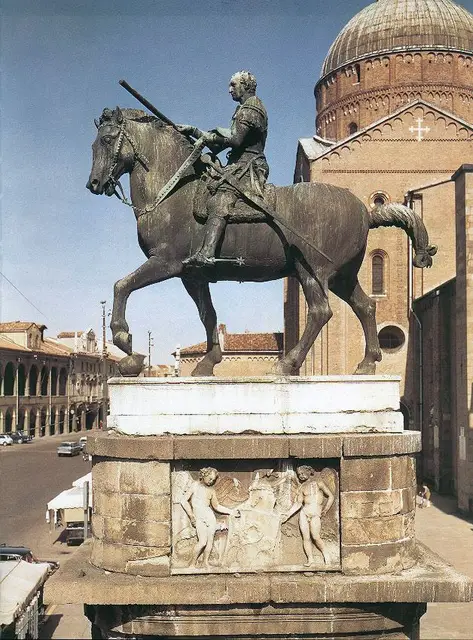 Monuments01
Monumento Equestre Al Gattamelata
Padova Suites C20, Piazza del Santo, 19 · Padua● Website○ Phone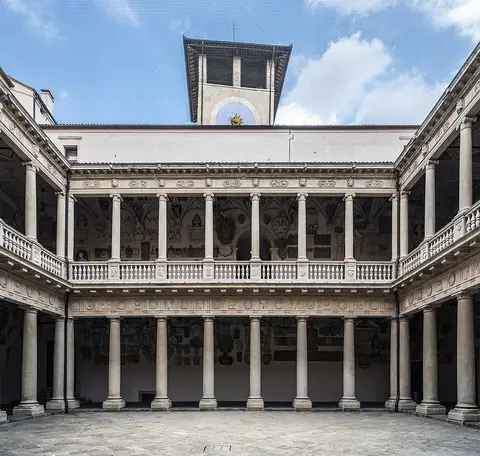 Historic sites02
Palazzo Bo
Via VIII Febbraio, 2 · Padua● Website● Phone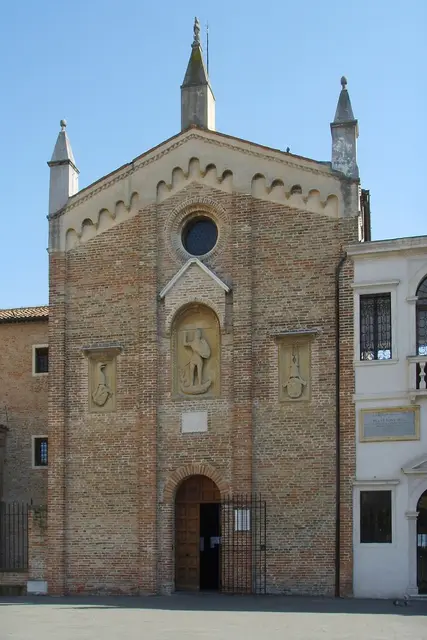 Historic sites03
Oratorio San Giorgio
Piazza Del Santo 11 · Padua● Website● Phone Historic sites04
You need a free account to leave reviews and photos – that keeps comments genuine and lets you edit them later.
Saint Anthony's Basilica is the best-known tourist site in Padova - millions of pilgrims visit every year. Built immediately after "The Saint's" death in the 1200s, it houses his tomb and notable relics. The statues and crucifix on the main altar are by Donatello, as is the statue of horse and rider in the square in front of the church (called "Gattamelata" - "the honeyed cat").
Source: Wikivoyage, „Padua“ · authors per page history · CC BY-SA 4.0