About Terrazze del Duomo
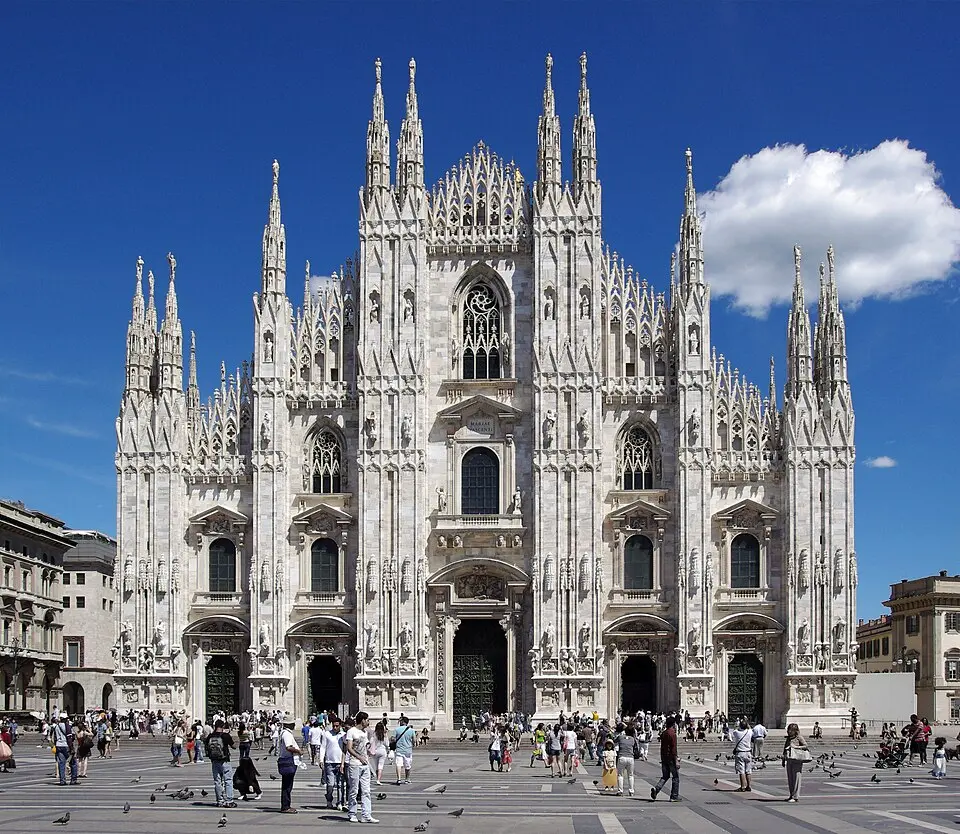
The Terrazze del Duomo in Milan is far more than just an architectural detail of the famous cathedral. It is a unique vantage point that lets you view the monumental facade and the intricate roofwork of the Duomo up close. As one of the most visited places in the city, this platform offers an unforgettable view of the heart of Milan and beyond. Access to the terraces is part of the general visit to the cathedral, though this specific area is charged separately. From here, you can take in the vast extent of the structure in all its splendor, an experience that combines views of the city and the surrounding landscape with a fascinating closeness to the stonemason's art.
The history of Milan Cathedral is closely tied to the political and cultural development of the city. Construction began in 1386 at the initiative of the city's ruler, Gian Galeazzo Visconti, who wanted the monumental project to underscore his claim to a leading role in northern Italy. He originally intended to use the cathedral as a dynastic mausoleum for the Visconti dynasty, but this met with strong resistance from Milan's citizens, who wanted to preserve their autonomy. The conflict led the Visconti family to build the Certosa di Pavia as their burial place instead. Despite these political tensions, the building grew into one of the largest churches in the world, and its construction continued for centuries.
The architectural design of the cathedral is the result of a long and complex building process that brings together various styles. The exterior walls, which date from the 15th to the 18th centuries, are articulated by rhythmically arranged buttresses and tall windows. A particular feature is the marble cladding of the building, whose core is made of brick, with marble from the quarries of Candoglia on Lake Maggiore. The material was transported via the Milanese canals and contributed to the structure's characteristic light color. The facade, which only received its neo-Gothic completion in the 19th century under Napoleon, forms the striking entrance area, while the side walls and the roof combine Gothic tradition with later influences.
A central element of the terraces is the chance to admire, in all their variety, the more than 2,000 statues and 135 spires that adorn the building. This sculptural work comes from local and foreign artists of different eras and tells the story of Lombard and European art. The top of the crossing tower is crowned by the gilded statue of the Virgin Mary ascending into heaven, known as La Madonnina. This figure, which was put in place in 1774, is a landmark visible from far and wide and is celebrated in the unofficial Milanese city anthem. From the terraces, you can make out the fine details of this statue and the surrounding ornamental elements in a way that would be impossible from the ground.
You can reach the rooftop terrace either by a staircase of 158 steps or comfortably by elevator. This choice lets you shape the experience to your own preferences. Whether you take on the physical effort of the stairs or use the elevator, the route leads to a platform with a 360-degree view of the city. On clear days, the view extends as far as the Alps, which makes the outlook especially impressive. The combination of the city panorama and a detailed look at the architecture makes the terraces one of the highlights of a visit to Milan.
Inside the cathedral, which is accessible through the portals, you'll find a space of great spiritual and artistic significance. The floor plan forms a Latin cross with five aisles, with the nave and the crossing twice as wide as the square side aisles. The vaults are supported by 52 clustered piers, whose capitals are decorated with niches and figures of saints. The floor, laid in its present form from 1585 with white, red and black marble slabs, covers an area of 8,000 square meters. The stained-glass windows, some of which date back to the 14th century, show large-scale scenes from the Bible and the lives of the saints, flooding the interior with colored light.
The choir and the crypt beneath it deserve special attention. The choir was remodeled in the early Baroque style in the 16th century and houses the high altar, which stands beneath a ciborium in the form of a circular temple. In the circular crypt of 1606, the mortal remains of Saint Charles Borromeo rest in a crystal urn. The chapel's lining of silver reliefs depicting the life of the saint was made by Milanese goldsmiths of the 19th century. These sacred spaces offer a quiet contrast to the lively atmosphere of the rooftop terrace and invite you to contemplate the art treasures.
At a glance
- Category
- Sight › Monuments
- Rating
- no reviews yet · write a review
- Address
- Piazza del Duomo
20123 Milan, Italy - District
- 1
- Phone
- +390272022656
- Website
- duomomilano.it
- —
- Coordinates
- 45.46416° N · 9.19104° E
- Data quality
- confidence 0.86
- Identifier
- ID 9d757aed-102…
Part of the tour
Milan in One Day: Duomo, Galleria, Castello and Brera →Location & surroundings
Toggle layersRatings & comments
none yetNear Terrazze del Duomo
closest 5 per category · 2 kmSights
Restaurants
Museums
Hotels
More:Monuments in Milan (69)Sights in 1 (254)All sights in Milan (573)
300 places within 2 km loaded.
You need a free account to leave reviews and photos – that keeps comments genuine and lets you edit them later.