About Port of Genoa
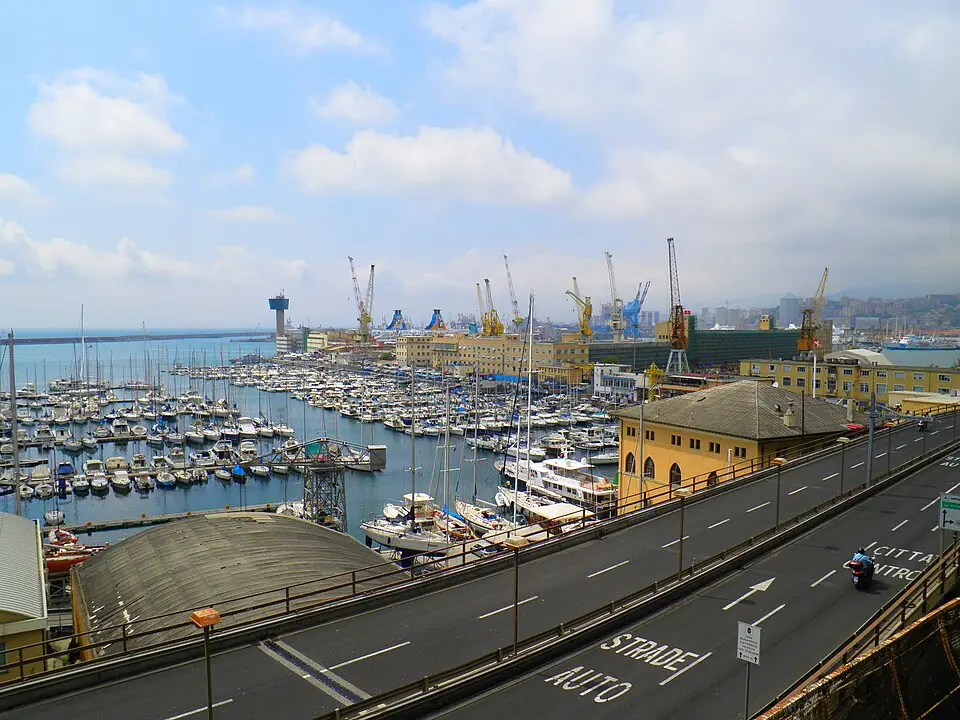
The Port of Genoa shapes the cityscape and economic strength of the Ligurian metropolis in a very special way. As the largest seaport in Italy by area, it spreads across a vast expanse that includes both historic sites and modern industrial facilities. Strategically located at the northernmost point of the Ligurian Sea, the port serves as an important link between the Mediterranean and the heavily industrialized hinterland of northern Italy and Europe beyond. Despite natural barriers such as the Ligurian Apennines and the Alps, which make inland shipping difficult, the port is superbly connected by a dense network of highways and rail lines. This infrastructure allows goods to flow efficiently and underscores Genoa's role as the southern gateway to Europe.
The history of this place reaches deep into antiquity. The site around today's old port was already settled in the Neolithic era, and from the 5th century B.C. a permanent settlement took shape, probably inhabited by a mix of Ligurians, Etruscans, and Greeks. After being destroyed in the Second Punic War, the town was rebuilt and developed into a regional trading center. In the Middle Ages, the port became the military base of the Republic of Genoa, whose naval forces gave it a dominant role in the Mediterranean. Victories in battle against rivals such as Pisa and Venice secured Genoa access to important trade routes, especially into the Black Sea, and established the city's reputation as a maritime power.
The heart of the modern visitor experience is the Porto Antico, the old port in the Mandraccio Bay. This historic complex was extensively restored by 1992 and transformed into a lively tourist and cultural space. Here you can visit the Galata Maritime Museum, whose interactive exhibits and large aquarium offer a fascinating glimpse into the underwater world. The convention center and several marinas are also located in this area. An architectural highlight is the Palazzo San Giorgio, which today houses the port authority. This palace was once the center of the republic's financial system and was home to the important Banco di San Giorgio.
An unmistakable landmark that lets your gaze sweep across the entire port and the city is the Torre della Lanterna lighthouse. It towers on the San Benigno promontory between the old port and the industrial port. The tower has a long history that goes back to the High Middle Ages, when the first lighthouse was built on this headland. The surroundings of the tower have changed dramatically over the centuries, as the San Benigno hill on which it stood was largely leveled in the 20th century to make room for new port facilities and the Diga Foranea breakwater. Today this breakwater protects the harbor basins as well as the runway of the airport built into the harbor basin.
Beyond the tourist charm of the old port, Genoa is a hub of modern shipping and industry. The western part of the port, especially the area off Sampierdarena, is home to large industrial terminals for containers, general cargo, and tankers. Ships from the world's most important shipping lines are handled here. A special feature is the Fincantieri shipyard in Sestri Ponente, known for building cruise ships and currently being expanded to accommodate even larger vessels. The proximity to the airport, whose runway lies right on the water, makes this stretch a unique ensemble of aviation and seafaring.
The port's development has not always been one of steady growth. After the republic's peak in the 15th century came a long decline, accelerated by the discovery of America and the shift of the trading center to the Atlantic. The Napoleonic occupation in 1797 marked the end of the republic. Modernization began in the 19th century, driven by the construction of dry docks and the connection to the railway network. The opening of the Suez Canal in 1869 brought a new golden age, as the Mediterranean's isolation was over. Despite this progress, the port suffered from competition from other ports and had to contend with economic difficulties and labor disputes in the 1970s and 1980s, which led to a drop in cargo handling.
In recent decades, the port has recovered and specialized. Container handling has risen significantly thanks to new terminals, such as the large terminal in Voltri-Pra'. At the same time, the old port was freed of industrial activity and redesigned for passenger traffic and tourism. This reorganization was completed in 1992, the so-called Columbus Year. Today Genoa is an important hub for cruises and ferry connections, with the capacity for millions of passengers a year. The city has preserved its maritime identity while adapting to the demands of modern logistics.
The port's infrastructure is complex and varied. It stretches along several kilometers of shoreline and includes various basins of differing depths, ranging from nine to fifty meters. There are four main entrances that open up the port from east to west. The Bocca di Levante near Foce, the Bocca di Ponente, the Imboccatura di Multedo, and the Imboccatura di Pra' provide access to the different sectors. This layout allows for efficient management of ship traffic and the separation of passenger, cargo, and yacht traffic. The Sopraelevata Aldo Moro elevated highway, which runs between the port and the city center, is a controversial but defining element of the city skyline.
For visitors, the Port of Genoa offers a fascinating mix of history, culture, and maritime activity. In the Porto Antico, restaurants, shops, and museums invite you to linger, while the view of arriving and departing ships keeps the maritime tradition alive. The Duca degli Abruzzi marina in the east is home to luxury boats and hosts international boat shows. The regatta course near the container terminal in Voltri also shows the sporting side of seafaring. The University of Genoa and various maritime academies further underscore the place's scientific and educational importance for shipping and the maritime economy.
The port is not only an economic powerhouse but also a place of memory and learning. The history of the dockworkers, who banded together into unions in the 19th century and fought for better working conditions, is an important part of Genoa's social history. These struggles shaped labor law and the city's social structure. Today this period is remembered through various cultural initiatives and exhibitions. The Port of Genoa remains a dynamic place that combines its rich past with the challenges of the future and is regarded as a symbol of Italy's maritime strength.
At a glance
- Category
- Sight › Historic sites
- Rating
- no reviews yet · write a review
- Address
- —
Genoa, Italy - District
- Centro Ovest
- Phone
- —
- Website
- www.porto.genova.it
- —
- Coordinates
- 44.40417° N · 8.90417° E
- Data quality
- confidence 0.80
- Identifier
- ID 2eaf59b5-32f…
Location & surroundings
Toggle layersRatings & comments
none yetNear Port of Genoa
closest 5 per category · 2 kmSights
Restaurants
Museums
Hotels
More:Historic sites in Genoa (172)Sights in Centro Ovest (24)All sights in Genoa (254)
171 places within 2 km loaded.
Don't miss in Genoa
All sights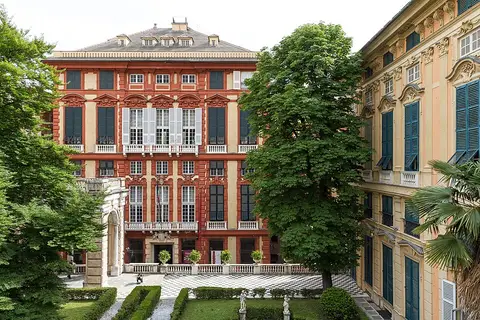 Historic sites01
Palazzi dei Rolli
Via Garibaldi · Genoa● Website○ Phone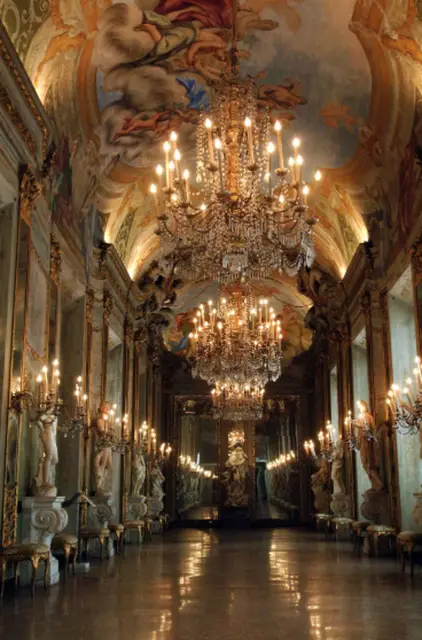 Historic sites02
Le Strade Nuove and system of Palazzi dei Rolli
Via Balbi, 2 · Genoa○ Website○ Phone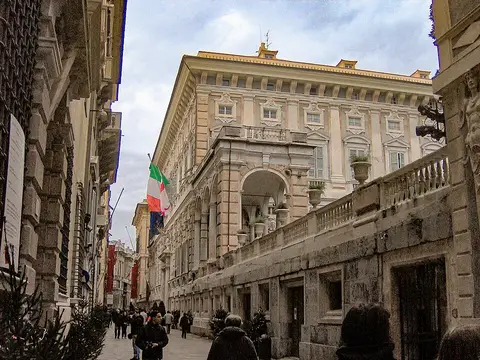 Palaces03
Palazzo Doria Tursi
Via Garibaldi, 9 · Genoa● Website● Phone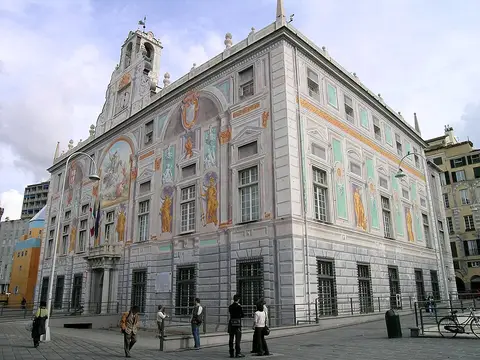 Palaces04
You need a free account to leave reviews and photos – that keeps comments genuine and lets you edit them later.