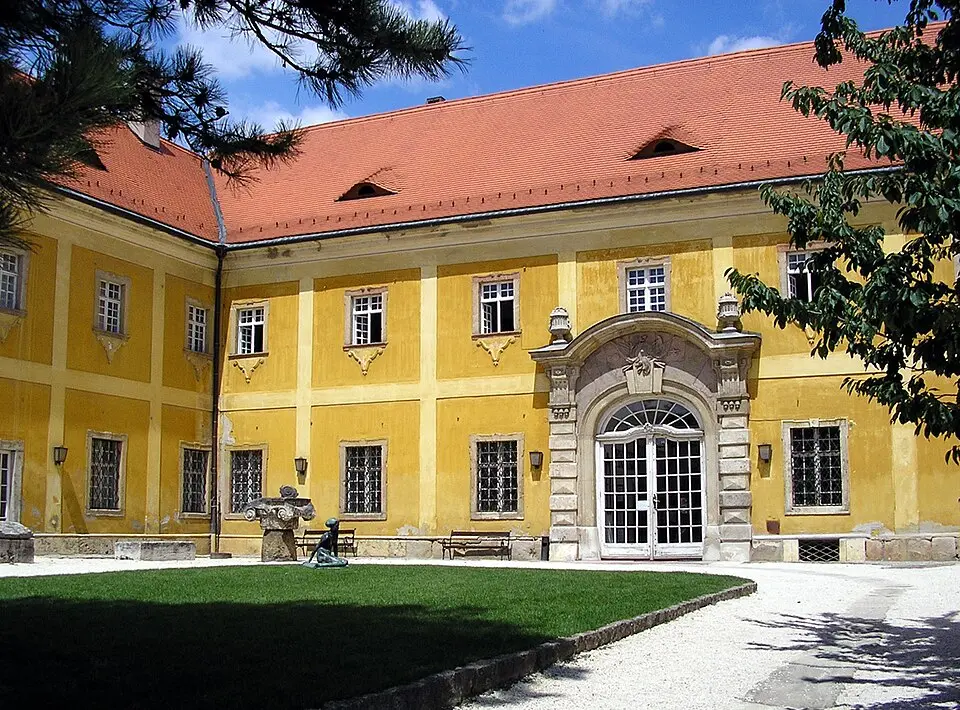
About Kiscelli Museum
The Kiscelli Museum in Budapest's third district houses two independent collections of the Budapest History Museum (Budapesti Történeti Múzeum) that have been brought together under one roof. The Baroque complex on Kiscelli Hill was built between 1745 and 1758 as a Trinitarian monastery, based on plans by Johann Entzenhoffer. After the religious orders were dissolved in 1784, the grounds served a variety of purposes until furniture maker and art collector Miksa Schmidt bought them in 1911, restored them, and in 1935 bequeathed them to the city in his will as a museum. After heavy damage in World War II and the unrest of 1956, the complex underwent extensive renovation. The former monastery building now holds the city history collections, while the former church serves as a modern exhibition and event space for concerts and temporary displays.
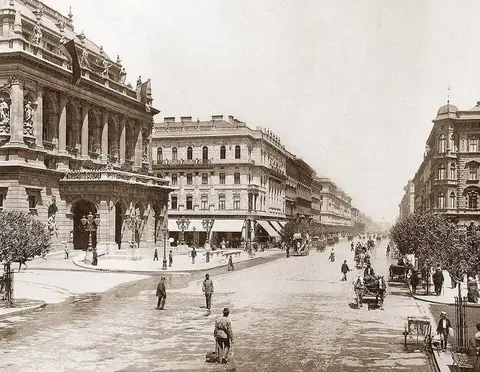
The city history collection covers the capital's history from 1686 onward and includes a wide range of documents and everyday objects. Highlights include one of the richest photo archives in the region, with images by György Klösz, an extensive map collection with prints from the 15th century, and technical artifacts such as the world's first transformer, dating from 1885. On the ground floor, a Baroque hall displays the original sculptures of the Holy Trinity Column on Castle Hill, which was erected after the plague of 1711. Another exhibition is devoted to the history of printing, with historic presses and newspapers that reflect the political and cultural life of the 19th century.
The permanent exhibition on the city's history, located on the gallery level, takes you through the eras from 1780 to 1940. It begins with the Reform Era and the unification of the cities, shows plans of Neoclassical palaces, and documents the change in urban life through furniture, porcelain, and silver. The second part looks at the Millennium period and Art Nouveau through to the Modernism of the 1930s. In parallel, the Budapest Gallery (Fővárosi Képtár) traces the development of Hungarian fine art from the end of the 19th century to the present day. In the upper rooms, you can admire works by masters such as Károly Ferenczy, Rippl-Rónai, and Csók, as well as later artists such as Derkovits, Gulácsy, and contemporary painters.
At a glance
- Category
- Museum › Museums (general)
- Rating
- no reviews yet · write a review
- Address
- Kiscelli u. 108
1037 Budapest, Hungary - District
- Óbuda hegyvidéke
- Phone
- +3613888560
- Website
- www.kiscellimuzeum.hu
- kiscell@kiscellimuzeum.hu
- Coordinates
- 47.53815° N · 19.02820° E
- Data quality
- confidence 1.00
- Identifier
- ID be531e71-266…
Location & surroundings
Toggle layersRatings & comments
none yetNear Kiscelli Museum
closest 5 per category · 2 kmSights
Restaurants
Museums
Hotels
More:All museums in Budapest (284)
127 places within 2 km loaded.
You need a free account to leave reviews and photos – that keeps comments genuine and lets you edit them later.
Furniture, chests, signboard, silver, architecture collections, photo gallery, toy, technology, ethnography, poster, ballroom dancing collections, maps, manuscripts and printed matter, textile and flags, glass, ceramic and porcelain, mixed lifestyle collections. A beautiful complex of Baroque style buildings built for Trinitarian monks. The museum exhibits fine arts and items of modern history. Exhibitions on the ground floor reachable by wheelchair. On the ground floor for disabled basin site.
Source: Wikivoyage, „Budapest/Óbuda“ · authors per page history · CC BY-SA 4.0 · as of 3/26/2019