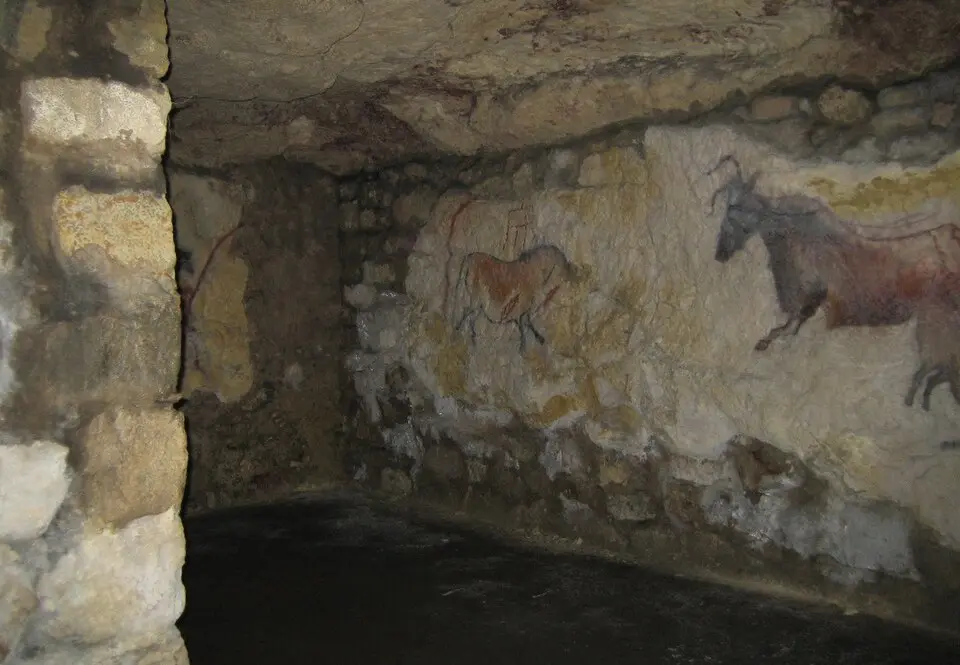
About Buda Castle Cave
The Buda Castle Cave, also known as Várbarlang, is a fascinating underground labyrinth inside Budapest's Castle Hill. It began as a natural formation created by hot springs, which washed out the rock between the limestone tuff and the marl beneath it. Over the centuries, these natural cavities were connected to the cellars and wells of the castle buildings and expanded further. The entire system runs about 12 meters below the surface and, including the artificial extensions, stretches over a length of 3.3 kilometers. Archaeological finds show that the cave niches were already used by early humans around 350,000 years ago. In the Middle Ages, the chambers served mainly for storing water and as wine cellars, before being linked into a complex labyrinth for military and economic reasons.
The history of the complex is closely intertwined with the modern use of the hill. During the construction of the Buda Castle tunnel in the second half of the 19th century, water intrusions occurred that prompted the first systematic investigations of the cave system. In the 1930s, the cave explorer Ottokár Kadić led a methodical survey that confirmed the natural origin of the system. During World War II, part of the complex was converted into an emergency hospital for the wounded, which was severely overcrowded during the siege of Buda. After the war, the complex temporarily served as a vaccine production site and was expanded in the 1950s into a top-secret bunker intended to offer protection even against chemical or nuclear attacks. Later it was used as a prison hospital and finally as a museum again.
Today, the Buda Castle Cave is a strictly protected natural monument and a popular destination. Visitors can explore the sections open to the public only in guided groups, with tours offered in Hungarian or English. Advance reservations through the website of the Danube-Ipoly National Park are required. The complex houses various exhibitions on the history of the site, cave biology, and local finds. Beyond its historical significance, a visit offers a unique look at the geological and human layers beneath the famous Castle Hill.
At a glance
- Category
- Museum › History museums
- Rating
- no reviews yet · write a review
- Address
- Úri utca 9
1014 Budapest, Hungary - District
- Castle District
- Phone
- +3612120207
- Website
- www.labirintus.eu
- —
- Coordinates
- 47.50011° N · 19.03408° E
- Data quality
- confidence 0.95
- Identifier
- ID b2945dc7-6ba…
Location & surroundings
Toggle layersRatings & comments
none yetNear Buda Castle Cave
closest 5 per category · 2 kmSights
Restaurants
Museums
Hotels
More:History museums in Budapest (74)All museums in Budapest (284)
277 places within 2 km loaded.

You need a free account to leave reviews and photos – that keeps comments genuine and lets you edit them later.