About Stoa Poikile
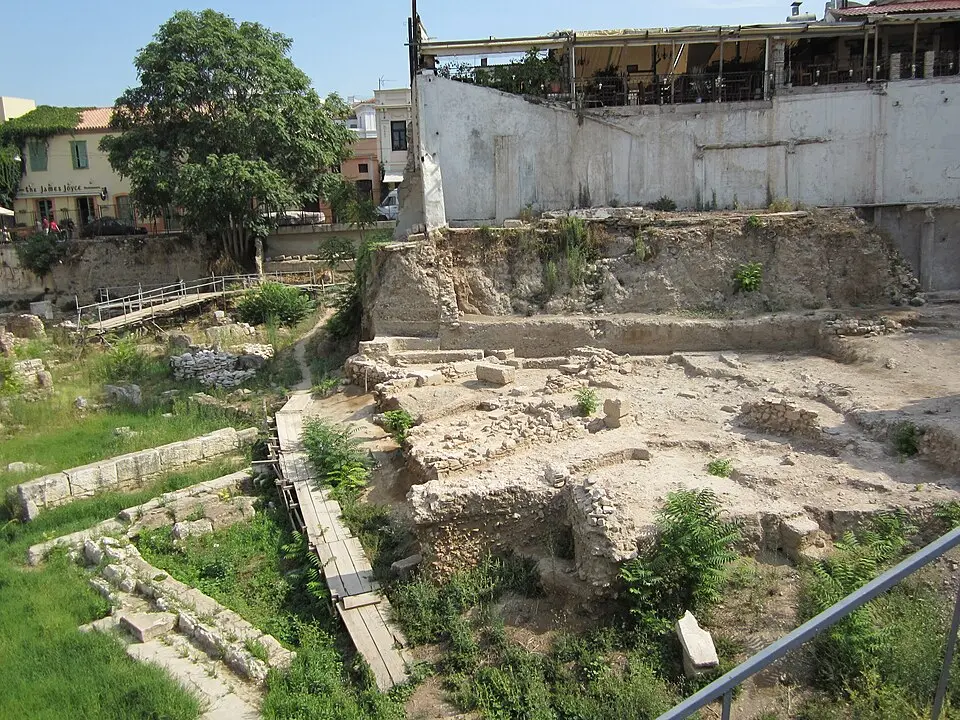
The Stoa Poikile, often called the Painted Stoa in English, was an important colonnaded hall on the northwest side of the Agora in ancient Athens. The structure was built around 470 or 460 BC in the Doric order by Peisianax, who was probably a brother-in-law of the general Cimon. The stoa was originally known as the Stoa of Peisianax. It gained historical fame for two main reasons: it housed outstanding panel paintings inside, and it served as a central gathering place for Greek philosophy. The hall was especially closely tied to Stoicism, whose founder, Zeno of Citium, taught here.
The stoa's architecture can only be partially reconstructed from archaeological evidence, since only the southwestern end has been excavated so far. The foundations are made of finely worked poros limestone, joined with iron clamps and sealed with lead. The main facade on the south side presented a row of Doric columns and a triglyph frieze that continued along the side walls. Inside, a row of slimmer Ionic columns supported the roof. This combination of Doric and Ionic orders makes the Stoa Poikile one of the earliest known buildings in Athens to unite both styles. A bench probably ran along the back wall, while the pinakes (panel paintings) with the famous artworks were mounted on the wall.
The hall's artistic program comprised four main works by painters such as Polygnotos, Mikon, and possibly Panainos. The subjects ranged from the Battle of Oinoe and an Amazonomachy to the sack of Troy and the Battle of Marathon. The latter was regarded as an important monument to the heroism of the Athenian ancestors. The contrast between mythical victories and historical events, especially the triumph over the Persians, was a recurring theme in Athenian art. In addition, bronze shields captured in wars with Sparta were displayed in the stoa and could still be seen there in the second century AD.
From the fourth century BC onward, the stoa developed into a lively center of philosophical debate. The Cynic Crates of Thebes spent his time there, before his student Zeno of Citium taught in the hall from about 300 BC until his death. The name of the Stoics, and with it the modern term Stoicism, derives from Zeno. Philosophers often delivered their lectures while walking back and forth in the hall, which drew a bustling crowd. In the Roman imperial period, the area in front of the stoa also became a spot for jugglers and street entertainment.
The stoa survived the sack by the Heruli in AD 267 unscathed. Not until the fifth century AD were the paintings removed by a Roman governor, as letters from that period attest. The building was still standing when a Late Roman stoa was built to the west of it, but it fell out of use in the sixth century and was subsequently used as a source of building material. Archaeological excavations by the American School of Classical Studies at Athens uncovered the foundations between 1980 and 1982. Only in 2022 were the modern buildings in the northeastern area demolished to allow further archaeological investigation at this important site of ancient history.
At a glance
- Category
- Sight › Historic sites
- Rating
- no reviews yet · write a review
- Address
- Astiggos 1-19
105 55 Athens, Greece - District
- Monastiràki
- Phone
- —
- Website
- —
- —
- Coordinates
- 37.97645° N · 23.72270° E
- Data quality
- confidence 0.60
- Identifier
- ID 0bccc78c-6e0…
Part of the tour
From the Olympieion to the Areopagus: Ancient Athens on Foot →Location & surroundings
Toggle layersFAQ about Stoa Poikile
quick answersWhat is the Stoa Poikile in Athens?
The Stoa Poikile, often called the "Painted Stoa," was an important colonnaded hall on the northwest side of the Agora in ancient Athens. Peisianax, probably a brother-in-law of the general Cimon, had it built in the Doric order around 470 or 460 BC. For this reason it was originally called the Peisianakteian Stoa. Because it had Doric columns on the outside and Ionic columns on the inside, it is one of the earliest known buildings in Athens to combine both styles.
What does the Stoa Poikile have to do with Stoicism?
The Stoa Poikile in Athens gave Stoicism its name, since its founder, Zeno of Citium, taught here from around 300 BC until his death. Before him, his teacher, the Cynic Crates of Thebes, had already spent time in the hall. The philosophers often paced back and forth in the hall during their lectures, which drew many listeners.
What paintings were in the Stoa Poikile?
In the Stoa Poikile in Athens hung four famous panel paintings by artists such as Polygnotus, Micon, and possibly Panaenus. They depicted the Battle of Oenoe, an Amazonomachy, the Sack of Troy, and the Battle of Marathon, which was regarded as a monument to the heroism of the Athenian ancestors. In the fifth century AD, a Roman governor had the paintings removed.
What remains of the Stoa Poikile today?
Of the Stoa Poikile in Athens, archaeologists have so far uncovered only the southwestern end, so the architecture can be reconstructed only in part. The foundations are made of finely worked poros limestone, joined with iron clamps and sealed with lead. The remains lie in the Monastiraki neighborhood at Astiggos 1-19.
What can you see around the Stoa Poikile?
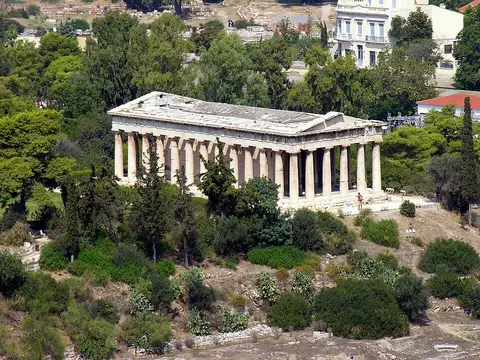
Around the Stoa Poikile in Athens, several ancient sites of the Agora and museums lie within walking distance. travelguide195 lists, among others, the Altar of the Twelve Gods (about 64 m), the Temple of Ares (about 102 m), the Temple of Apollo Patroos (about 114 m), the Agora Museum (about 129 m), the Altar of Zeus Agoraios (about 143 m), and the Temple of Hephaestus (about 146 m). The Stoa Poikile is also part of the tour "From the Olympieion to the Areopagus: Ancient Athens on Foot," and travelguide195 lists about 286 restaurants within 500 m.
Ratings & comments
none yetNear Stoa Poikile
closest 5 per category · 2 kmSights
Restaurants
Museums
Hotels
More:Historic sites in Athens (406)Sights in Monastiràki (15)All sights in Athens (497)
300 places within 2 km loaded.
You need a free account to leave reviews and photos – that keeps comments genuine and lets you edit them later.