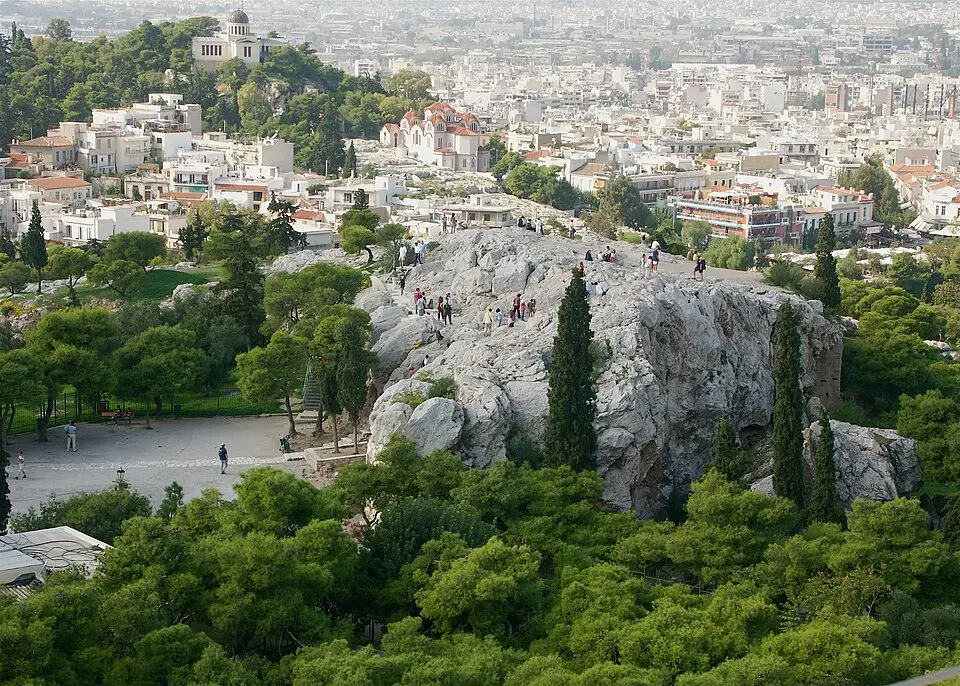
About Aeropago
The Areopagus, also known as Mars Hill, is a 115-meter-high rocky outcrop rising northwest of the Acropolis in the heart of Athens. In antiquity, this spot served as the meeting place of the city's supreme council, which also bore the name Areopagus. This body is considered the oldest institution in Athens, with roots reaching back to the city's mythical early days. The hill is also the setting of a famous legend explaining the origin of the marathon run. According to the story, a messenger made the journey back to Athens after the Athenians' victory over the Persians at Marathon and died on the summit of the hill after announcing the victory, although this account is disputed by historians.
The history of the Areopagus is closely tied to the development of the Attic constitution. Originally made up of leaders of the high nobility, the council later consisted of former archons and, besides sacred duties, mainly exercised jurisdiction over homicide cases. Its verdicts were irrevocable, which gave it great power in the early period. Over time, however, especially through the reforms of Solon and Ephialtes, its powers were gradually curtailed and reduced to religious and kinship-related matters. Its duties were transferred to other bodies such as the popular assembly and the jury court, although in times of crisis the Areopagus still gained influence thanks to the political experience of its members.
In Christian tradition, the Areopagus is known from the Acts of the Apostles, in which the Apostle Paul is said to have explained his teachings there. Whether he actually stood on the rock or in the Royal Stoa on the Agora has been debated among historians, but there is much to suggest that the council continued to meet on the hill during the Roman imperial period as well. For today's visitors, the site matters above all as a historical symbol. Greece's supreme court, which traditionally is also called the Areopagus, no longer meets on the rock but in the Palace of Justice on Alexandras Avenue. The rock itself remains a silent witness to the city's long political and legal history.
At a glance
- Category
- Sight › Historic sites
- Rating
- no reviews yet · write a review
- Address
- —
Athens, Greece - Phone
- —
- Website
- —
- —
- Coordinates
- 37.97222° N · 23.72361° E
- Data quality
- confidence 0.75
- Identifier
- ID 2e5d91b0-95d…
Part of the tour
From the Olympieion to the Areopagus: Ancient Athens on Foot →Location & surroundings
Toggle layersFAQ about Aeropago
quick answersWhat is the Areopagus in Athens?
The Areopagus, also known as Mars Hill, is a rocky outcrop 115 meters high, northwest of the Acropolis in the heart of Athens. In antiquity, the city's supreme council met here; it was also called the Areopagus and is considered the oldest institution in Athens. Today the rock is significant above all as a historical symbol of the political and legal history of Athens.
What were the duties of the ancient council on the Areopagus in Athens?
Besides religious duties, the council on the Areopagus in Athens primarily exercised jurisdiction over homicide cases, and its verdicts were irrevocable. It originally consisted of leaders of the high nobility, and later of former archons. Through the reforms of Solon and Ephialtes, its powers were gradually reduced to religious and kinship matters and transferred to the popular assembly and the jury court. Greece's highest court today traditionally bears the name Areopagus as well, but it meets in the Palace of Justice on Alexandras Avenue rather than on the rock.
What does the Areopagus in Athens have to do with the Apostle Paul and the marathon?
The Areopagus in Athens is linked to two well-known traditions: the appearance of the Apostle Paul and the legend of the origin of the marathon. According to the Acts of the Apostles, Paul is said to have explained his teachings at the Areopagus, though historians debate whether this took place on the rock or in the Royal Stoa on the Agora. According to legend, after the Athenians' victory over the Persians at Marathon, a messenger is said to have died on the summit of the hill after announcing the victory, although this is historically disputed.
What can you see around the Areopagus in Athens?
Around the Areopagus in Athens, several structures of the Acropolis lie a short distance away. travelguide195 lists, for example, the Monument of Agrippa at about 110 meters, the Temple of Athena Nike at about 135 meters, and the Propylaea at about 150 meters away. Also nearby are the Odeon of Herodes Atticus (Ωδείο Ηρώδου Αττικού) and the Brauroneion, both about 165 meters away.
Are there restaurants and guided tours near the Areopagus in Athens?
Yes, the area around the Areopagus in Athens has numerous restaurants and at least one tour that includes the site. travelguide195 lists around 74 restaurants within 500 meters. The Areopagus is also part of the tour "From the Olympieion to the Areopagus: Ancient Athens on Foot."
Ratings & comments
none yetNear Aeropago
closest 5 per category · 2 kmSights
Restaurants
Museums
Hotels
More:Historic sites in Athens (406)All sights in Athens (497)
300 places within 2 km loaded.
Don't miss in Athens
All sights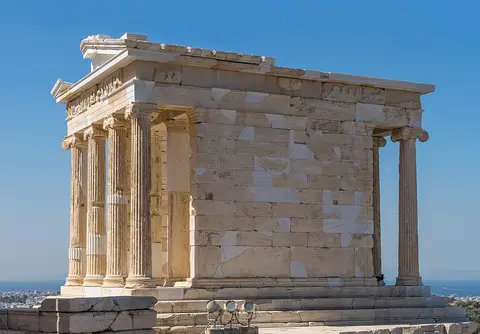 Monuments01
Temple of Athena Nike
Acropolis, Dionysiou Areopagitou · Athens● Website● Phone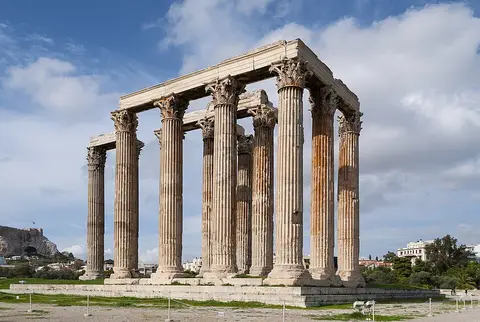 Monuments02
Olympieion
Λεωφόρος Ανδρέα Συγγρού 2-8 · Athens○ Website○ Phone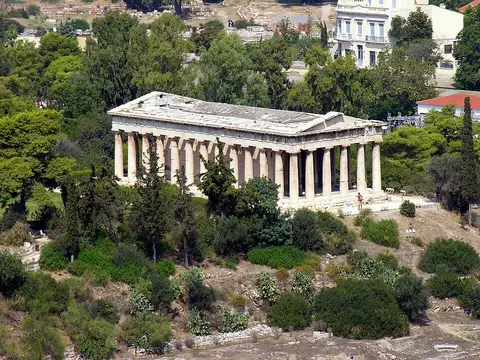 Historic sites03
Temple of Hephaestus
Stirieon 3 · Athens● Website● Phone Historic sites04
You need a free account to leave reviews and photos – that keeps comments genuine and lets you edit them later.