About Pandroseion
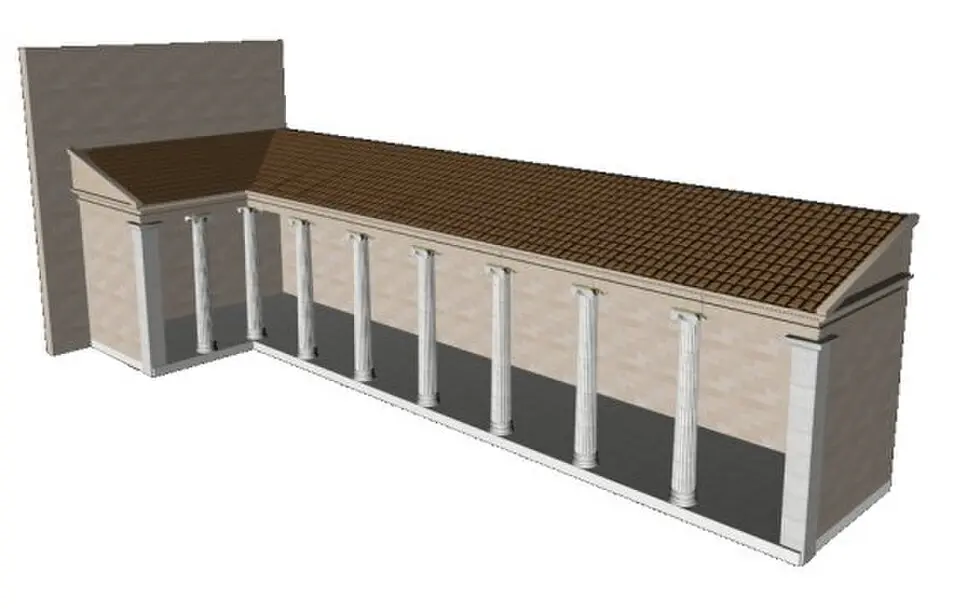
The Pandroseion was an ancient temple on the north side of the Athenian Acropolis, dedicated to the legendary Pandrosos, who is considered the first priestess of the goddess Athena. The sanctuary included a small square temple building connected to the surrounding courtyard by an L-shaped Ionic colonnade. In this sacred precinct, worshippers honored not only Pandrosos but also the fertility goddess Thallo. The courtyard housed the tomb of King Cecrops I as well as an altar to Zeus Herkeios. Especially famous was the sacred olive tree, which grew at the spot where Athena had driven her spear into the ground. This tree survived the Persian destruction of 480 B.C. and was interpreted as a symbol of Athens' invincibility. Today, an olive tree planted in 1900 commemorates the site. In the eastern part of the grounds stood the tomb of Erechtheus, where sacred mountain snakes were also kept. Later, the entire complex was incorporated into the construction of the Erechtheion, with the western part of the new building erected directly over the old Pandroseion.
At a glance
- Category
- Sight › Historic sites
- Rating
- no reviews yet · write a review
- Address
- Ακρόπολη Αθηνών
Athens, Greece - Phone
- —
- Website
- www.planetware.com
- —
- Coordinates
- 37.97221° N · 23.72595° E
- Data quality
- confidence 0.56
- Identifier
- ID ec11bcf5-3f8…
Location & surroundings
Toggle layersFAQ about Pandroseion
quick answersWhat is the Pandroseion in Athens?
The Pandroseion was an ancient sanctuary on the north side of the Acropolis in Athens, dedicated to the legendary Pandrosos, who is regarded as the first priestess of the goddess Athena. It consisted of a small square temple building connected to the surrounding courtyard by an L-shaped Ionic colonnade. Alongside Pandrosos, the fertility goddess Thallo was also worshipped there.
What is the significance of the olive tree in the Pandroseion on the Acropolis?
According to tradition, the sacred olive tree in the Pandroseion on the Athenian Acropolis grew on the spot where Athena had driven her spear into the ground. It survived the Persian destruction of 480 B.C. and was therefore seen as a symbol of Athens' invincibility. Today, an olive tree planted in 1900 commemorates the site.
What does the Pandroseion have to do with the Erechtheion and the royal tombs?
The Pandroseion in Athens was later incorporated into the construction of the Erechtheion, whose western section was built directly over the old sanctuary. The courtyard of the Pandroseion contained the tomb of King Cecrops I and an altar to Zeus Herkeios. In the eastern part of the site stood the tomb of Erechtheus, where sacred snakes were also kept.
What can you see around the Pandroseion?
Around the Pandroseion on the Acropolis in Athens, numerous other ancient sites lie in close proximity. travelguide195 lists, among others, the Arrephorion (about 3 meters away), the Old Temple of Athena (about 58 meters), the Propylaea (about 88 meters), the Brauroneion and the Parthenon (each about 94 meters), and the Hekatompedon temple (about 103 meters). The Kanellopoulos Museum, about 73 meters away, is listed as a museum.
Are there restaurants near the Pandroseion in Athens?
Yes, there are plenty of dining options around the Pandroseion at the Athenian Acropolis. travelguide195 lists about 143 restaurants within 500 meters.
Ratings & comments
none yetNear Pandroseion
closest 5 per category · 2 kmRestaurants
Museums
Hotels
More:Historic sites in Athens (406)All sights in Athens (497)
300 places within 2 km loaded.
You need a free account to leave reviews and photos – that keeps comments genuine and lets you edit them later.