About Munich Massacre Memorial Panel
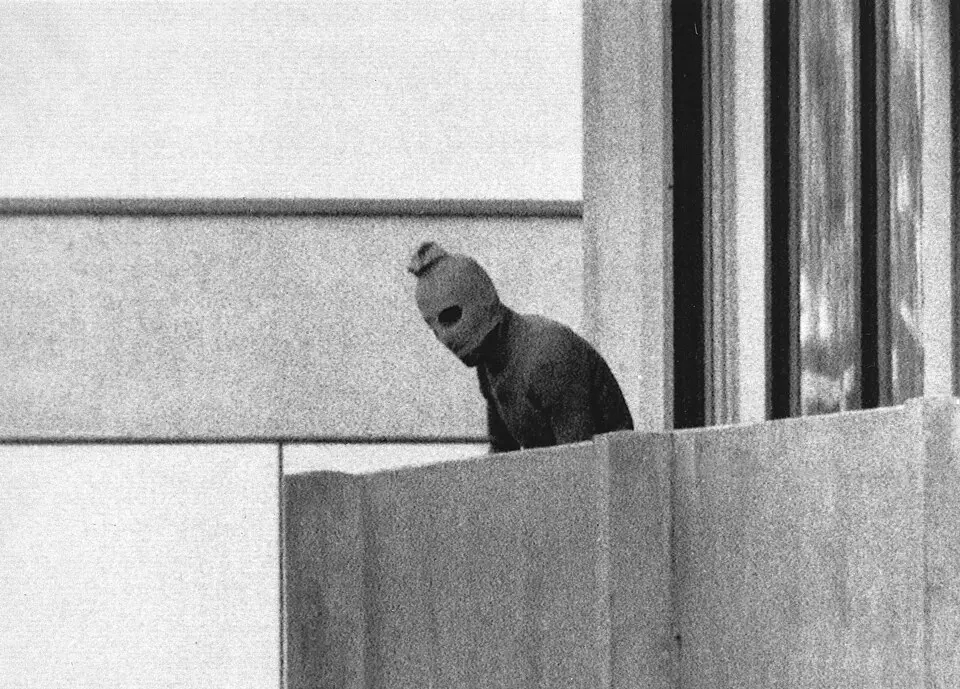
The memorial panel for the victims of the 1972 Munich Olympic massacre is a central place of remembrance in Munich's Olympic Park. It commemorates the terrorist attack by the Palestinian organization Black September on the Israeli delegation during the 20th Summer Olympic Games. In the early morning of September 5, 1972, armed terrorists broke into the quarters of the Israeli athletes in the Olympic Village. In this assault, two athletes were killed immediately and nine others were taken hostage. The tragedy ended in the night of September 6 at the Fürstenfeldbruck airbase, where a failed police rescue attempt took place. All nine remaining hostages and one police officer died. In total, eleven of the fourteen Israeli Olympic participants were murdered, including five active athletes.
The actual monument was installed in Olympic Park on September 27, 1995. It was created by the German sculptor Fritz Koenig, who lived from 1924 to 2017. This memorial forms the historic core of the site and marks the place where the athletes lost their lives. The design of the monument is simple and dignified, intended to pay the victims appropriate respect. It serves as a permanent reminder of the shattered fragments of Olympic peace destroyed by the act of terror. Here, visitors can pause and remember the eleven dead, who lost their lives that night for their convictions and their sport.
In addition to Fritz Koenig's historic monument, another important element of the memorial site opened in 2017. The so-called Einschnitt ("Cut") is a multimedia pavilion that was dedicated on September 6, 2017, in the presence of the victims' families. The project was carried out by the Free State of Bavaria in cooperation with the city of Munich, the German Olympic Sports Confederation, and the International Olympic Committee. The pavilion offers a modern approach to the history of the attack and complements the older monument with contemporary information media. It is designed both to serve an educational purpose and to create a space for personal grief and reflection.
The construction of the new memorial was accompanied by considerable debate. The site was originally planned for the so-called Connollyberg, but this met with strong resistance from residents of the former Olympic Village. Locals objected to the memorial's proximity to their residential area. This opposition was criticized from various quarters, including by the Jewish journalist Daniel Zylbersztajn, a former resident of the village. There were also reports of efforts to cut costs during planning, which further fueled the debate. Despite this resistance, the pavilion was ultimately built at its current location in Olympic Park, which is regarded as a compromise and an important step in coming to terms with this history.
A visit to the memorial offers insight into the lives of the murdered athletes and coaches. Multimedia displays make the course of events easy to follow in detail. You learn how the hostage-taking began, what negotiations took place, and why the rescue attempt failed. The presentation is factual and respectful, avoiding sensationalism and focusing on the human stories. The victims' families were involved in designing the pavilion to ensure that the remembrance remains authentic and dignified. The site is thus not only a historical monument but also an active place of learning for future generations.
The story of the attack is closely tied to the political circumstances of the time. Security during the Olympic Games was deliberately kept relaxed to demonstrate a positive change in Germany since the 1936 Games. Police officers were unarmed and dressed in plain clothes, which made the attack easier for the terrorists. The terrorists' demands, the release of Palestinian prisoners and safe passage, were rejected by the Israeli government under Golda Meir. This decision was based on the concern that giving in would permanently endanger the lives of all Israeli citizens abroad. Negotiations dragged on throughout the entire day without an agreement being reached.
The failed rescue attempt at the Fürstenfeldbruck airbase was a catastrophic failure of the German security forces. The police officers deployed were inadequately trained and equipped. There were no armored vehicles and too few experienced sharpshooters. Communication between the units was poor, leading to confusion and tragic mistakes. As a result of this failure, the German counterterrorism unit GSG 9 of the Federal Police was founded. The state police forces followed by setting up special response units. These institutional changes were a direct reaction to the weaknesses exposed in Munich and Fürstenfeldbruck.
Coming to terms with the events in Germany was a long and difficult process. For decades there were disputes over the release of files and appropriate compensation for the victims' families. While humanitarian payments were made in 1972 and 2002, the Federal Republic officially acknowledged its responsibility for the inadequate protection of the athletes only in 2022. On the occasion of the 50th anniversary of the attack, an agreement was reached providing for compensation of around €28 million. A commission of historians was also appointed to examine the events scientifically and to release the files. This step marks an important milestone in reconciliation and in Germany's historical responsibility.
Today, the memorial in Olympic Park is a site of international remembrance. At the 2020 Olympic Games in Tokyo, a minute of silence for the victims was observed during an opening ceremony for the first time. Previously, the IOC had refused an official commemoration at earlier Games so as not to offend other members of the Olympic community. The memorial panel and the pavilion invite you to keep the victims in mind and to reflect on the importance of peace and security at international events. A visit to this site is a must for anyone who wants to understand the history of the Olympic Games and the tragedies of the 20th century.
The site combines the families' personal grief with society's collective memory. It stands as a warning against terrorism and as a tribute to the value of human life. The architecture of the pavilion and the design of Fritz Koenig's monument create a dignified setting for this message. Visitors from around the world come here to remember the victims and engage with the history. The memorial is thus an important part of Munich's cultural identity and of Germany's reckoning with its past. It shows how history can be kept alive through art and media, and how it reminds us of our responsibility for the future.
At a glance
- Category
- Sight › Historic sites
- Rating
- no reviews yet · write a review
- Address
- Connollystraße 31
80809 Munich, Germany - District
- Milbertshofen-Am Hart
- Phone
- —
- Website
- —
- —
- Coordinates
- 48.17981° N · 11.54930° E
- Data quality
- confidence 0.33
- Identifier
- ID 50d02e42-824…
Location & surroundings
Toggle layersRatings & comments
none yetNear Munich Massacre Memorial Panel
closest 5 per category · 2 kmSights
Restaurants
Museums
Hotels
Cocktail bars
More:Historic sites in Munich (291)Sights in Milbertshofen-Am Hart (16)All sights in Munich (375)
112 places within 2 km loaded.
You need a free account to leave reviews and photos – that keeps comments genuine and lets you edit them later.