


Occitanie: From the Pyrenees to the Mediterranean
Travel guide · editorialOccitanie, or Occitania in English, is the region between the Pyrenees, the Massif Central, and the Mediterranean, named after the old language of the south, Occitan. A vacation in Occitanie combines the pink brick city of Toulouse with Cathar castles, Roman monuments in Nîmes, seaside resorts on the Mediterranean coast, and hikes in the Pyrenees.
Landscapes of the South
In terms of area, the region is the second largest in France. In the south, the Pyrenees form a wall along the Spanish border, with the Cirque de Gavarnie, a massive rock amphitheater, and the Pic du Midi, whose summit is home to an observatory. In the northeast lie the Causses and the Cévennes, limestone plateaus and deeply cut gorges such as the Gorges du Tarn. In between stretch wine-growing areas such as the Languedoc, Corbières, and Minervois. The flat Mediterranean coast is lined with lagoons, the étangs, where flamingos wade and oysters are farmed.
Cities and Towns
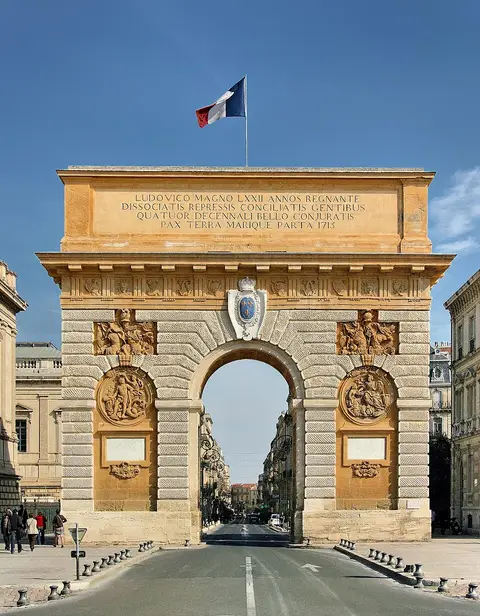
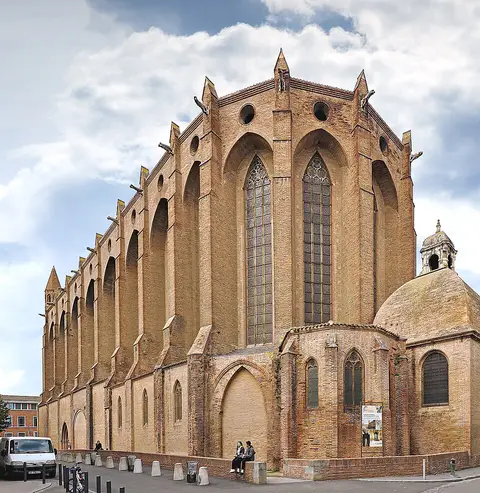
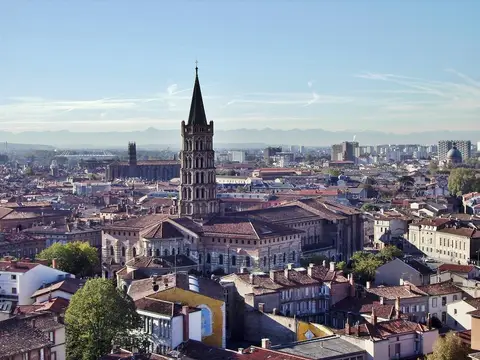
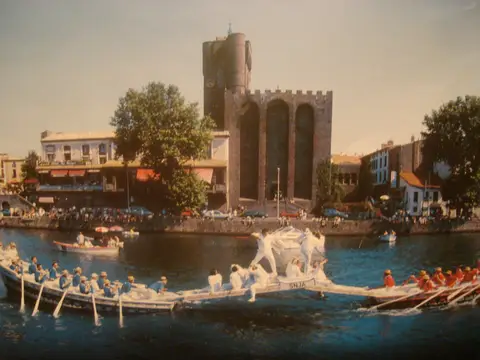
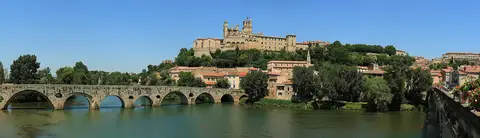
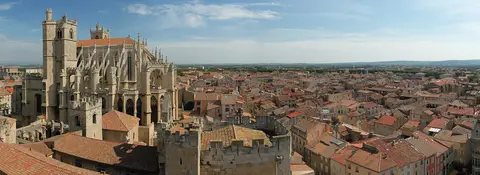
Toulouse, the "Ville Rose," owes its nickname to its pink-colored bricks. The Romanesque Basilica of Saint-Sernin, the Jacobins Convent, and the Capitole shape the old town, while the Garonne and the Canal du Midi line its banks. As the home of Airbus and the aerospace industry, the city shows its technological side at the Cité de l’Espace and the Aeroscopia museum. Montpellier is a youthful university city with the Place de la Comédie and the modern Antigone district. Nîmes has one of the best-preserved Roman arenas and the Maison Carrée. Perpignan has a Catalan flair, with the Palace of the Kings of Majorca, while Carcassonne is a medieval fortress town with a double ring of walls. Béziers and Narbonne are old wine towns, and Agde, with Cap d’Agde, is a major seaside resort.
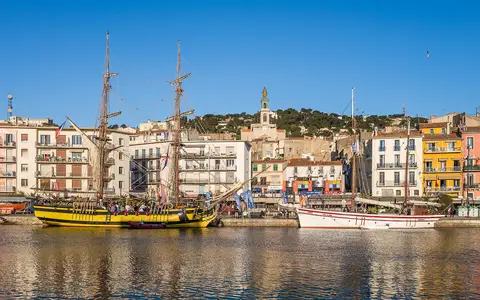
Smaller towns are just as rewarding: Cordes-sur-Ciel perches on a hill above the Tarn, Saint-Cirq-Lapopie clings to a cliff above the Lot, and Collioure on the Côte Vermeille, with its bell tower by the water, inspired Matisse and Derain to create Fauvism. Sète is a port town built on canals, Uzès has one of the loveliest markets in the south of France, and Conques preserves a treasure of Romanesque goldsmithing in the abbey church of Sainte-Foy. Mountain destinations in Occitanie include Bagnères-de-Luchon and the Pyrenean spa towns.
Sights in Occitanie
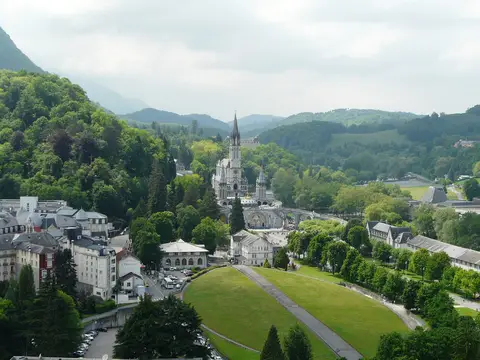
Among the best-known sights in Occitanie are the Pont du Gard, a Roman aqueduct over the Gardon; the Canal du Midi, a 17th-century canal between Toulouse and the Mediterranean; and the Cité of Carcassonne—all three UNESCO World Heritage sites. Lourdes in the Pyrenees is one of the largest pilgrimage sites in the world. Rocamadour clings to a rock face above the Alzou, and the Millau Viaduct spans the Tarn valley as one of the tallest bridges in the world. Cathar castles such as Peyrepertuse and Quéribus crown rocky ridges, and the episcopal city of Albi has a massive brick cathedral as well as the Toulouse-Lautrec Museum.
In the Hérault, it's worth making a detour to the Grotte de Clamouse or the Grotte des Demoiselles, stalactite caves with huge chambers, and on the coast to the Narbonnaise Regional Nature Park with its lagoons and vineyards.
History and Culture
In the Middle Ages, the courtly lyric poetry of the troubadours flourished here. The Cathars, a Christian religious movement, were persecuted in the 13th century during the Albigensian Crusade. In Roussillon around Perpignan, people still speak and dance in Catalan, and in many towns the street signs also carry an Occitan name. Rugby is almost a religion in Toulouse and many small towns, and ferias with bull runs are part of summer in Nîmes and Béziers.
Food and Drink
Castelnaudary, Carcassonne, and Toulouse all claim cassoulet, made with white beans, duck, sausage, and pork, as their own. Roquefort ripens in limestone caves in the Aveyron, while foie gras and confit come from the Gers. On the coast, you can eat oysters from the Étang de Thau, and in Sète the spicy tielle, an octopus pie. The Languedoc is one of the largest wine-growing regions in the world, joined by Blanquette de Limoux, a sparkling wine, and sweet wines from Banyuls.
Getting There and Best Time to Visit
Toulouse and Montpellier have international airports, and Montpellier and Nîmes can be reached from Paris by TGV in just over three hours. The best time to visit is May and June as well as September and October; in July and August it is hot and crowded on the coast, but ideal for hiking in the Pyrenees.