About Arc de Triomphe
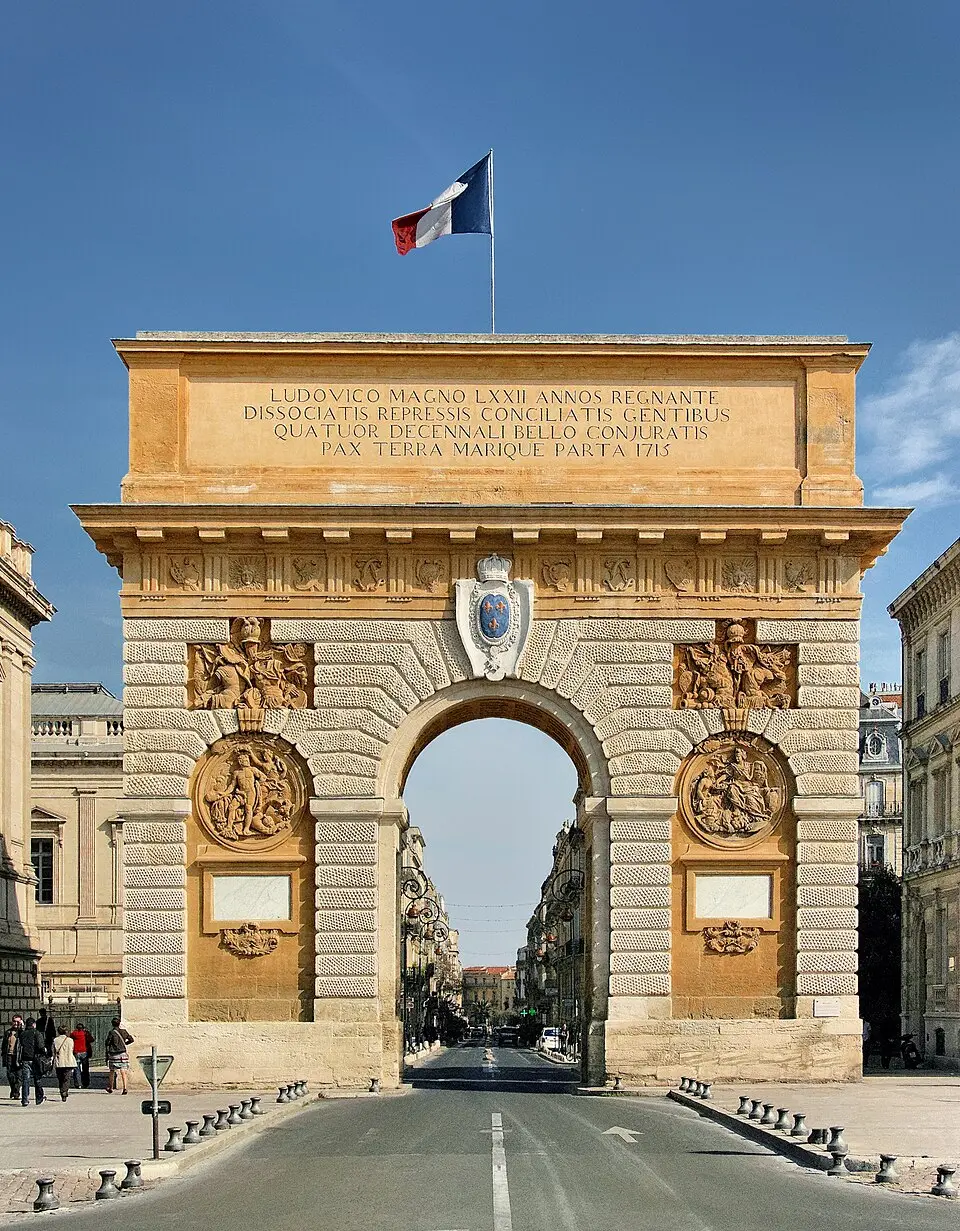
The Porte du Peyrou is a historic triumphal arch in Montpellier that forms the eastern entrance to the stately Place Royale du Peyrou park. The structure was completed in 1693 to designs by François Dorbay and was modeled on the Porte Saint-Martin in Paris. Its rusticated facade gives the gate a martial character, while the Bourbon coat of arms is displayed above the passageway. The city gate was later remodeled into a monument to Louis XIV. Today, metopes bearing the royal monogram, sun motifs, and military emblems, along with allegorical medallions and trophy reliefs, adorn the structure. Here you'll find an impressive site that reflects the history of the city and the reign of the Sun King.
At a glance
- Category
- Sight › Monuments
- Rating
- no reviews yet · write a review
- Address
- Rue Foch
34000 Montpellier, France - District
- Centre Historique
- Phone
- +33467606060
- Website
- www.montpellier-tourisme.fr
- —
- Coordinates
- 43.61114° N · 3.87238° E
- Data quality
- confidence 0.96
- Identifier
- ID 175bd42b-85c…
Part of the tour
Montpellier in One Day: Écusson, Peyrou and Musée Fabre →Location & surroundings
Toggle layersFAQ about Arc de Triomphe
quick answersWhat is the Arc de Triomphe in Montpellier?
The Arc de Triomphe in Montpellier, also known as the Porte du Peyrou, is a historic triumphal arch on Rue Foch in the Centre Historique district. It forms the eastern entrance to the stately Place royale du Peyrou park. The original city gate was later transformed into a monument to Louis XIV and reflects the reign of the Sun King.
When and by whom was the Arc de Triomphe in Montpellier built?
The Arc de Triomphe in Montpellier was built by 1693 to plans by François Dorbay. The Porte Saint-Martin in Paris served as the model. Only later was the city gate converted into a monument in honor of Louis XIV.
What is there to see at the Arc de Triomphe in Montpellier?
At the Arc de Triomphe in Montpellier, you can admire a richly decorated, rusticated facade that gives the gate a martial character. The coat of arms of the Bourbons adorns the space above the passageway. You'll also see metopes with the royal monogram, sun motifs, and military equipment, as well as allegorical medallions and trophy reliefs.
What can you visit around the Arc de Triomphe in Montpellier?
Around the Arc de Triomphe in Montpellier, several sights and museums are within walking distance. travelguide195 lists, among others, the Place du Peyrou (about 84 m), the Statue équestre de Louis XIV (about 130 m), the Esplanade du Peyrou (about 184 m), and the Château d'Eau du Peyrou (about 271 m). Nearby museums include the Fondation GGL (about 170 m), the Carré Sainte-Anne for contemporary art (about 191 m), the Musée Atger (about 198 m), and the Musée et Conservatoire d'Anatomie (about 243 m); the historic site Mikvé Médiéval is also about 258 m away.
Are there restaurants and tours near the Arc de Triomphe in Montpellier?
Yes, the area around the Arc de Triomphe in Montpellier offers plenty of dining options: travelguide195 lists around 337 restaurants within 500 meters. The triumphal arch is also part of the tour "Montpellier in a Day: Écusson, Peyrou and Musée Fabre."
Ratings & comments
none yetNear Arc de Triomphe
closest 5 per category · 2 kmSights
Restaurants
Museums
Hotels
More:Sights in Centre Historique (17)All sights in Montpellier (73)
213 places within 2 km loaded.
Don't miss in Montpellier
All sights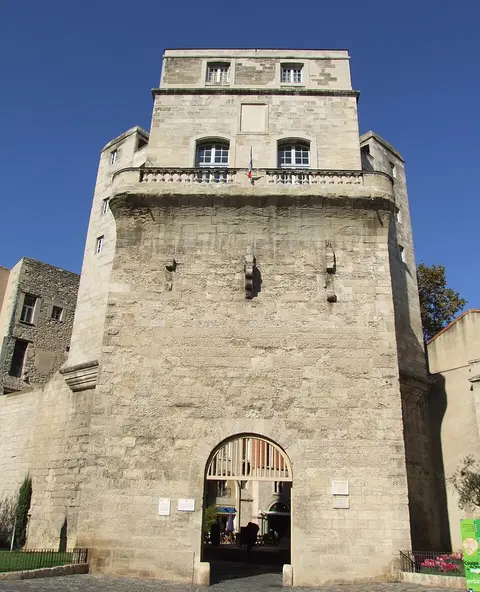 Monuments01
La Tour de la Babote
17 Bd de l'Observatoire · Montpellier● Website● Phone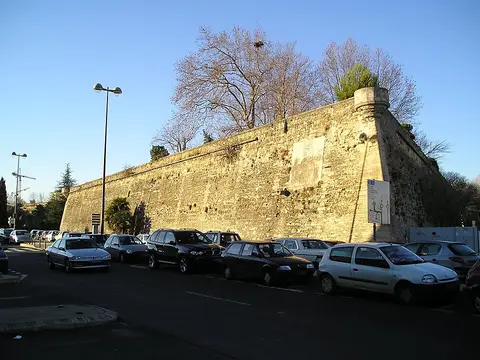 Historic sites02
Citadelle de Montpellier
No address · Montpellier○ Website● Phone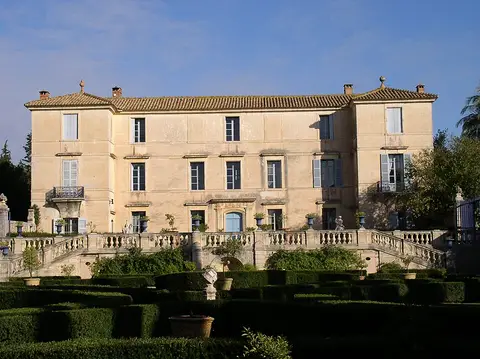 Historic sites03
Château De Flaugergues
1744 Av. Albert Einstein · Montpellier● Website● Phone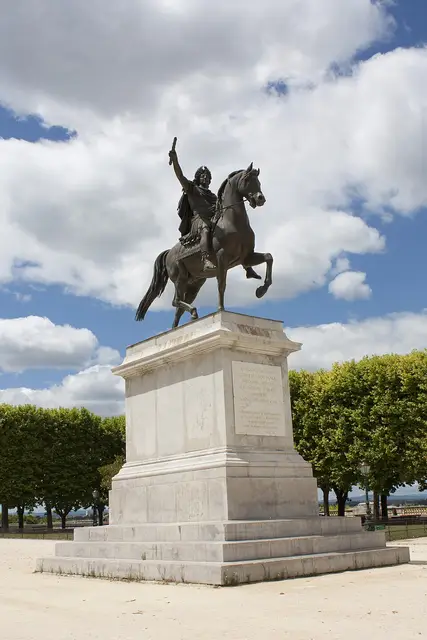 Monuments04
You need a free account to leave reviews and photos – that keeps comments genuine and lets you edit them later.
A triumphal arch inspired by Porte Saint-Denis in Paris. You can climb to the top but you can only get access on one of the walking tours from the information centre. The view is amazing.
Source: Wikivoyage, „Montpellier“ · authors per page history · CC BY-SA 4.0