Discover Marseille: Vieux-Port, Le Panier and the Calanques
Travel guide · editorialMarseille is loud, colorful, chaotic and very direct – and that's exactly why so many people love it. France's oldest city looks back on some 2,600 years of port history, and to this day the Mediterranean, North Africa and Provence meet here. A trip to Marseille combines old-town alleys, a fish market and wild limestone coves that you can reach by city bus.
The City of the Greeks
Around 600 B.C., Greek seafarers from Phocaea founded the trading colony of Massalia on the Lacydon, today's Old Port. The city flourished under the Romans, in the Middle Ages and above all in the 19th century, when the colonies and the Suez Canal made Marseille France's gateway to Africa and Asia. The revolutionary anthem "La Marseillaise" bears the city's name because volunteers from Marseille sang it on their march to Paris in 1792. Over the decades, immigrants arrived from Italy, Armenia, Algeria and the Comoros – a diversity that shapes the city. As European Capital of Culture in 2013, Marseille gained new museums and a spruced-up waterfront.
Sights in Marseille
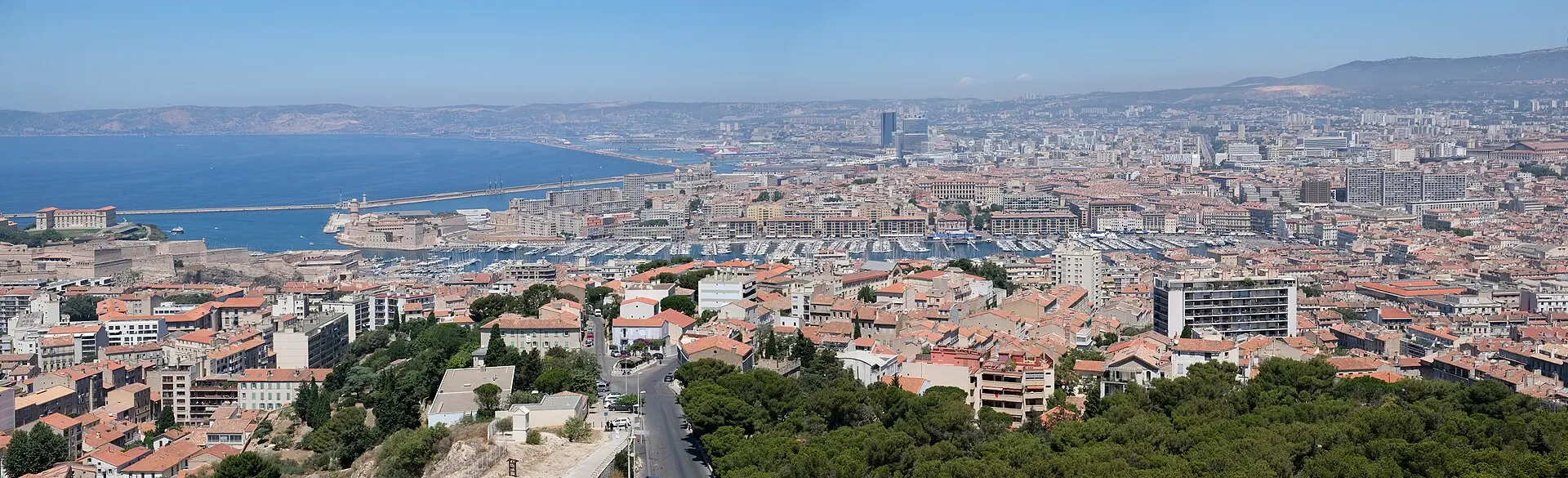
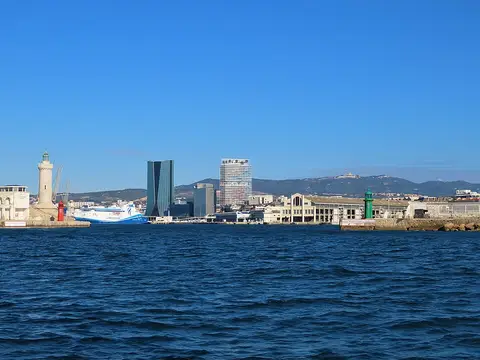
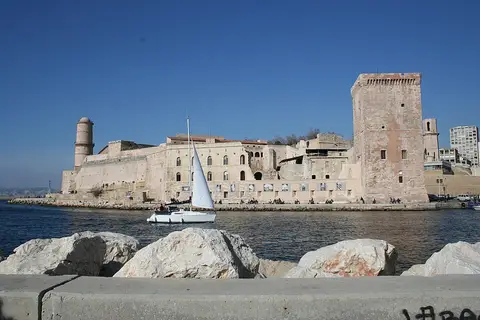
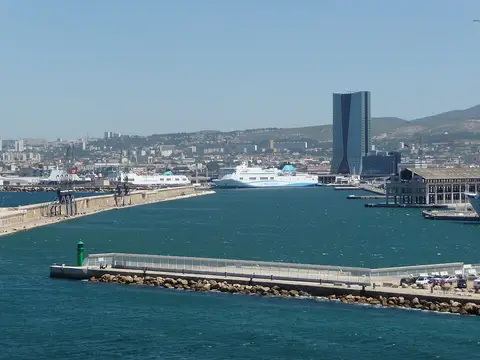
The Vieux-Port in the 1st and 2nd arrondissements is the heart of the city. In the morning, fishermen sell their catch straight from the boat on the Quai des Belges, and passersby are reflected in the mirrored pavilion designed by Norman Foster. High above it all stands the Basilica of Notre-Dame de la Garde, "la Bonne Mère," whose golden statue of the Virgin Mary watches over sailors and whose terrace offers views across the city, the islands and the sea. The MuCEM, the Museum of European and Mediterranean Civilizations, is housed in a cube with a concrete lace facade and is connected to Fort Saint-Jean by a footbridge. Next to it stands La Major Cathedral in the Romanesque-Byzantine style. Boats leave from the harbor for the Château d'If, the island fortress made famous by Alexandre Dumas' "The Count of Monte Cristo."
Neighborhoods: Le Panier, Cours Julien and the Corniche
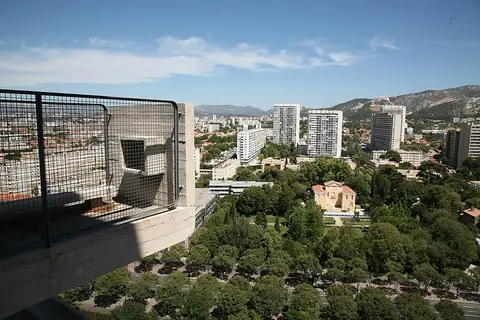
Le Panier, the oldest neighborhood in the 2nd arrondissement, is a maze of steep alleys, stairways and colorful house facades covered in street art; the Vieille Charité, a former almshouse with an arcaded courtyard, now houses museums. Around the Cours Julien in the 6th arrondissement, everything is covered in graffiti, and you'll find bars, record shops and concerts. Noailles in the 1st arrondissement, with its spice merchants and fabric shops, feels almost like a souk. In the 7th arrondissement, the Corniche Kennedy runs along the sea to the little fishing harbor of Vallon des Auffes, where boats lie between houses under a bridge arch. The 8th arrondissement, with the beaches of the Prado and the Parc Borély, is the affluent south, and you can visit Le Corbusier's Cité Radieuse, a "machine for living" from the 1950s and a UNESCO World Heritage Site.
Eating in Marseille: Bouillabaisse and Panisse
Authentic bouillabaisse consists of several rockfish cooked in a saffron-infused broth and served in two courses – the soup with croutons and rouille, followed by the fish. Good restaurants charge a hefty price for it; anything cheaper is usually an imitation. More affordable and just as typical are panisses, fried sticks made from chickpea flour; pieds paquets, mutton feet and tripe; and navettes, boat-shaped cookies flavored with orange blossom water, which you can buy at the city's oldest bakery near the Abbey of Saint-Victor. Pastis, the anise liqueur, is part of the aperitif ritual. Thanks to the many immigrants, restaurants in Marseille are especially diverse, from Algerian couscous to Armenian cuisine.
The Calanques and the Sea
Between Marseille and Cassis lies Calanques National Park, a coastline of white limestone cliffs, narrow inlets and turquoise water. Hiking trails lead to coves such as Sormiou, Morgiou and Sugiton, which you reach from the 9th arrondissement; in summer, access to Sugiton is sometimes possible only with a reservation, and trails are closed when the fire risk is high. Alternatively, boats run along the coast from the Old Port. The Frioul Islands off the city also offer swimming coves.
Getting Around and Best Time to Visit
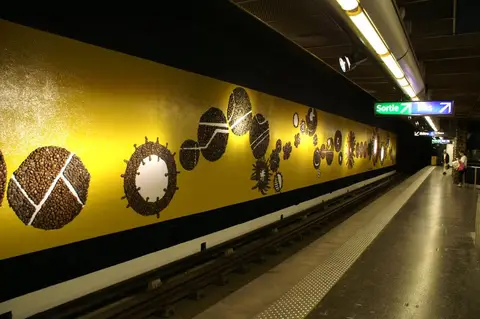
Marseille Provence Airport (MRS) is about 25 kilometers northwest; shuttle buses run to Saint-Charles station, from which the TGV reaches Paris in just over three hours. In the city, two metro lines, trams and small ferries across the Old Port are available. Some neighborhoods in the north have social problems; for visitors, the usual big-city caution is enough. The best times to visit are spring and fall, when the weather is warm and the Calanques are accessible; in summer, the mistral often blows.