Discover Finland: Lakes, Saunas, and Lapland
Travel guide · editorialFinland has around 188,000 lakes and roughly three million saunas, and both shape a vacation in Finland more than any single sight. Between the design city of Helsinki in the south and the fells of Lapland in the north lie more than 1,100 kilometers of forest, water, and stillness.
Lakeland, Archipelago, and Lapland: Finland's Landscapes
The Finnish Lakeland in the east and center of the country is a labyrinth of waterways, islands, and wooded ridges left behind by the Ice Age. Lake Saimaa, Finland's largest lake, is home to one of the rarest seal species in the world, the Saimaa ringed seal. In Savonlinna, Olavinlinna Castle sits on a rocky island, and in July it becomes the backdrop for an opera festival. Along the southwest coast, the mainland breaks up into the Turku Archipelago, a chain of more than 20,000 islands that you can explore on a circular route using small free ferries. Farther out lie the Åland Islands, autonomous, Swedish-speaking, and best explored by bike.
Lapland begins north of the Arctic Circle. Here the forests thin out, and gentle fell summits, as in Pallas-Yllästunturi National Park or around Saariselkä, rise above bogs and rivers. Around 200,000 reindeer live in the region; they belong to reindeer herders, even though they roam freely. Right at the top, on Lake Inari, is the cultural center of the Finnish Sámi; the Siida museum explains their history and their relationship with nature.
Helsinki, Turku, Tampere, and Rovaniemi
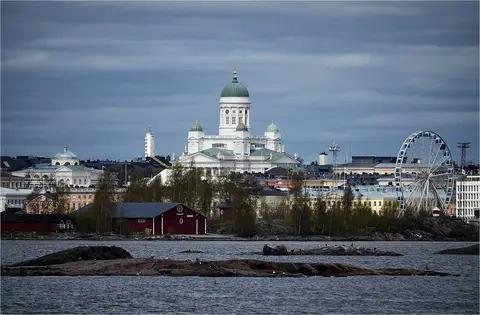
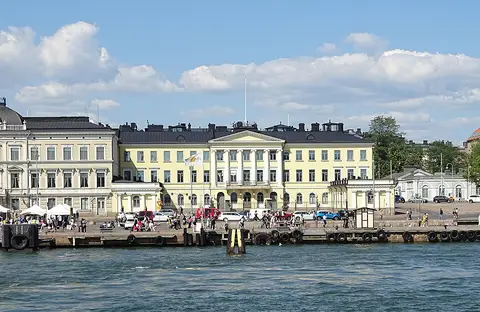
Helsinki is a young capital, named so only in 1812 under Russian rule, and you can see it in the neoclassical Senate Square with its white cathedral. One of the best-known sights in Finland is the sea fortress of Suomenlinna, a World Heritage site just a quarter-hour ferry ride from Market Square. Alongside it, the city shows its modern side: the Temppeliaukio Rock Church, the Oodi library with its curved wooden roof, the design district around Uudenmaankatu, and public saunas like Löyly by the sea, where you can jump into the Baltic between rounds. In neighboring Espoo, Nuuksio National Park is a half-hour bus ride from the center.
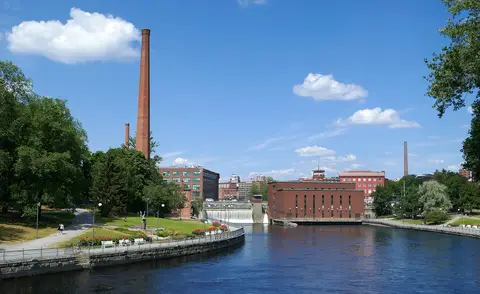
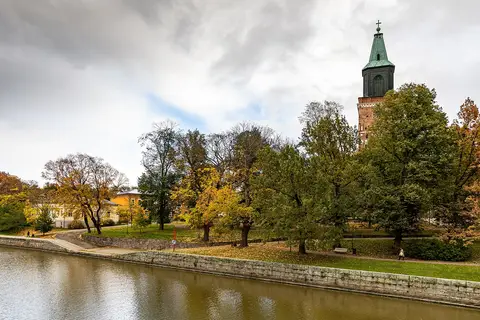
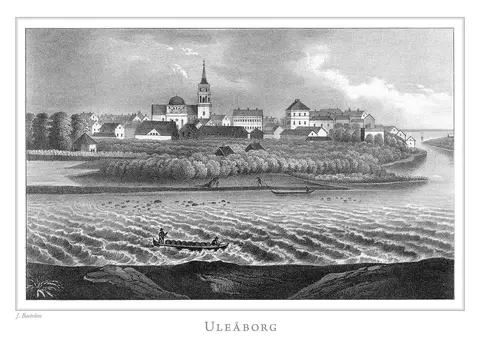
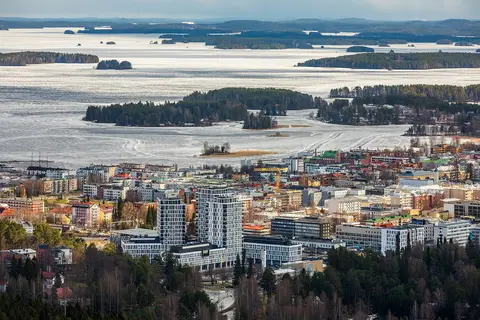
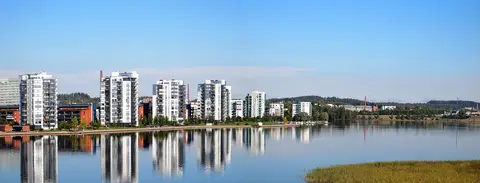
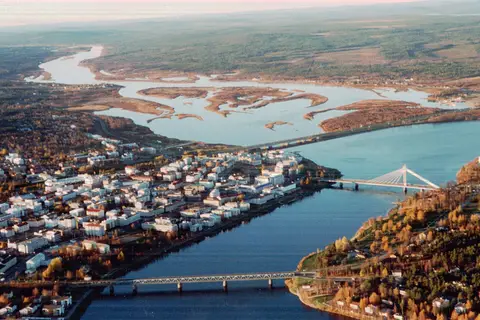
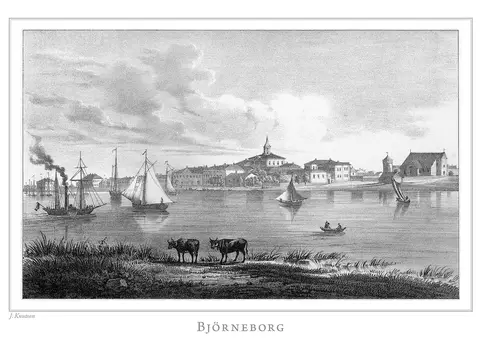
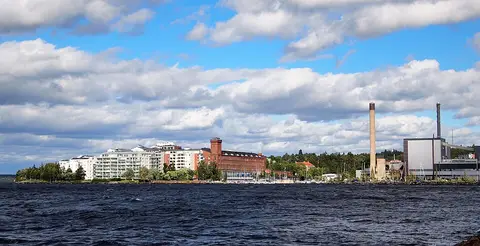
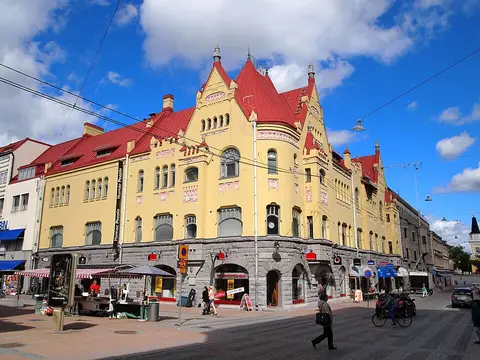
Turku, the country's oldest city, was the capital until 1812. The cathedral and castle stand on the Aura River, and in summer people dine late on restaurant boats. Tampere, set between two lakes, was the Manchester of Finland; its old brick factories now house museums, including one devoted to the Moomins, and the city is considered the capital of public saunas. Among Finland's destinations in the north, Rovaniemi is the best known: Santa Claus Village on the Arctic Circle draws families from all over the world, while the Arktikum science museum is the better reason to stay longer. Oulu, European Capital of Culture 2026, is opening up more to visitors, and Kuopio and Jyväskylä are good bases for the Lakeland, the latter also for its buildings by Alvar Aalto.
Culture and History: Sauna, Sisu, and Design
Finland belonged to Sweden for about 600 years and then, for more than a century, to Russia as a grand duchy before becoming independent in 1917. This position between East and West explains why Helsinki has both a Lutheran and an Orthodox cathedral and why Swedish is still the second official language. In the 19th century, the national epic Kalevala provided the basis for a distinct identity, as did the music of Jean Sibelius. The sauna is not a wellness offering here but part of everyday life: you go with family, colleagues, or friends, tap yourself with birch twigs, and cool off in the lake, in winter even in a hole in the ice. Finnish sauna culture has been on UNESCO's list of intangible cultural heritage since 2020. And then there's sisu, that hard-to-translate word for tenacious perseverance, of which the Finns are rather proud.
Food and Drink: Karelian Pies and Licorice
Finnish cuisine is down-to-earth and closely tied to the seasons. Karjalanpiirakka, Karelian pies made with rye dough and filled with rice pudding, are eaten with egg butter; Kuopio is the home of kalakukko, a rye bread in which vendace and bacon are baked. In summer there is muikku, small fried vendace from the market, served with new potatoes and dill, and in July and August blueberries, lingonberries, and cloudberries from the forest. In Lapland, sautéed reindeer with mashed potatoes and lingonberries, salmon soup, and bread cheese with cloudberry jam land on the table. Finns drink more coffee per capita than almost any other people, preferably with a cinnamon roll. Salmiakki, salty licorice, is an acquired taste.
Getting There and Getting Around in Finland
Direct flights from Germany usually land at Helsinki-Vantaa; in winter there are also connections to Rovaniemi, Kittilä, and Ivalo. If you're driving, you can take the ferry from Travemünde to Helsinki, which takes about 30 hours, or drive through Sweden and cross from Stockholm to Turku or Helsinki. Helsinki can also be reached from Tallinn by ship in two hours. Within the country, the railway works reliably: express trains connect Helsinki with Tampere, Turku, and Oulu, and a night train runs as far as Rovaniemi and Kolari, with car transport on request. In the Lakeland, rental cars and excursion boats are the best choice; many holiday cottages, the mökkis, sit far off the beaten path by the water.
Best Time to Visit Finland
For the Lakeland and Helsinki, the best time to visit Finland is from June to August. Temperatures are then usually between 18 and 25 degrees Celsius (64 to 77°F), on some days higher, and the lakes become pleasantly warm. Around Midsummer, celebrated on the weekend around June 21 with bonfires by the water, it barely gets dark even in Helsinki, and in Lapland the midnight sun shines. In September, ruska, the autumn foliage, begins there, turning the fells red and gold. Winter in Lapland lasts from November to April. The northern lights are possible from late August to early April, most often over Lake Inari and in Saariselkä. In December and January, the polar night brings blue twilight; for husky and ski tours, February and March are ideal, with temperatures of minus 10 to minus 20 degrees Celsius (14 to minus 4°F), plenty of snow, and longer days.