Discover Denmark: Coastlines, Copenhagen, and Hygge
Travel guide · editorialNo place in Denmark is more than 52 kilometers from the sea, so a vacation in Denmark almost always revolves around coast, wind, and light. Add to that a capital that sets the standard for cycling and dining, Viking heritage, and more than 400 islands, about 70 of which are inhabited.
Jutland, Funen, and the Islands: Denmark's Landscapes
Jutland, the peninsula that borders Schleswig-Holstein, shows a rugged face to the west. The North Sea coast from Rømø to Skagen is an almost unbroken sandy beach with dunes, World War II bunkers, and holiday homes tucked into the heath. Off the southern coast lies the Wadden Sea, which, as in Germany, is a World Heritage site; in spring and fall, hundreds of thousands of starlings sweep across the marshes in rolling flocks during the "black sun" spectacle. Way up north, at Grenen near Skagen, the Skagerrak and Kattegat meet, and you can stand with one foot in each sea. The Råbjerg Mile migrating dune moves several meters inland every year.
Jutland's eastern side is gentler, with fjords, beech forests, and the lake district around Silkeborg, where Denmark's highest points barely reach 170 meters. Funen is considered the country's garden, with orchards, manor houses like Egeskov, and the islands of the South Funen Archipelago, which are easy to explore by sailboat or bike. Bornholm, far out in the Baltic Sea, is made of granite instead, with rocky coasts, round churches, and smokehouses with white chimneys. And on the east coast of Zealand, chalk cliffs gleam above the sea at Stevns Klint and Møns Klint.
Copenhagen, Aarhus, and Odense
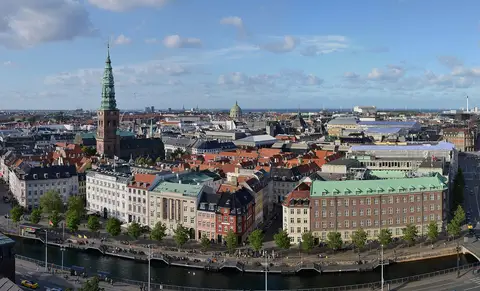
Over the past twenty years, Copenhagen has grown into one of Northern Europe's most popular destinations. Nyhavn with its colorful gabled houses is the classic postcard view, but the city really comes alive in everyday life: at the harbor baths where you swim right in the center of town, on the wide bike lanes, and in neighborhoods like Vesterbro and Nørrebro. Among the top sights in Denmark are Rosenborg Castle with the crown jewels, Amalienborg Palace, the royal family's residence, and Tivoli, one of the oldest amusement parks in the world. The free town of Christiania remains an experiment with its own rules, and the Little Mermaid at Langelinie surprises many visitors with her modest size. A half hour north by train, Kronborg Castle in Helsingør, the setting of Shakespeare's "Hamlet," stands guard, and along the coast in between you'll find the Louisiana Museum of Modern Art.
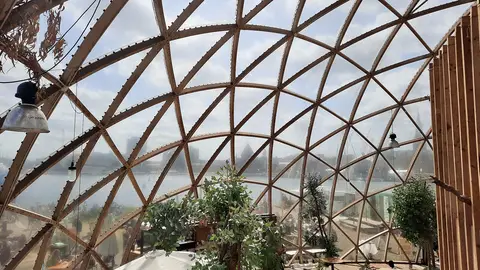
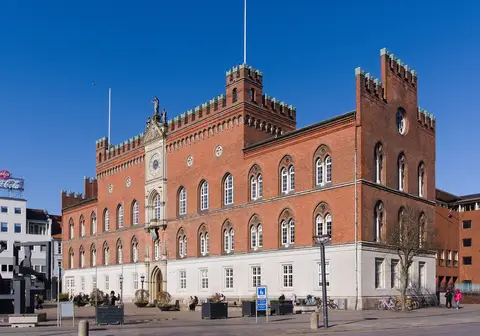
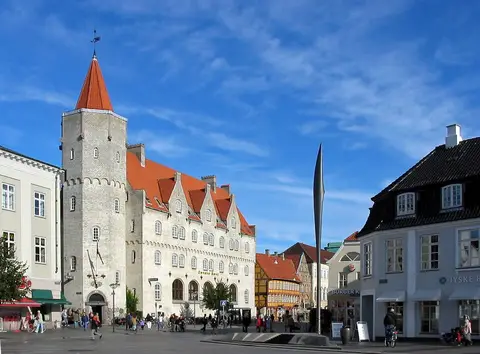
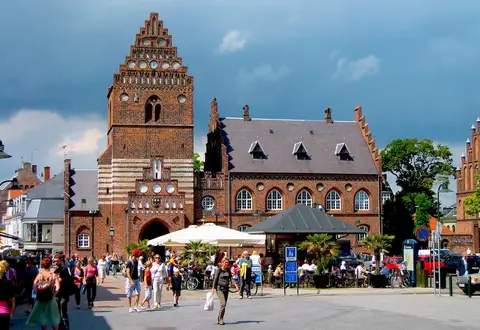
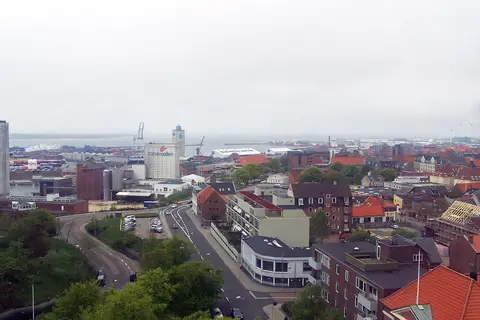
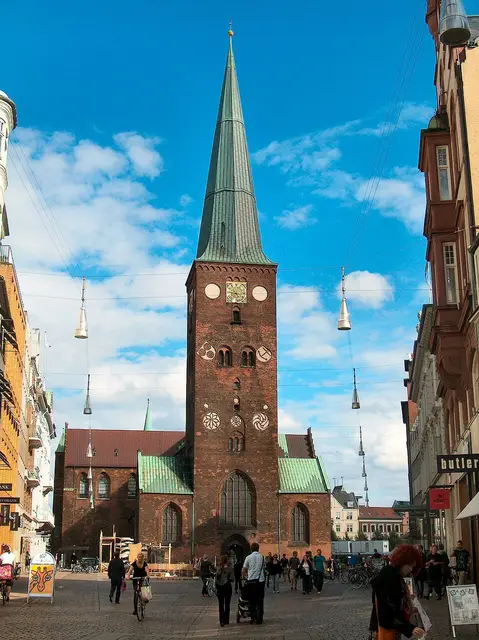
Aarhus, the second-largest city, combines student life with architecture: on the roof of the ARoS art museum, you walk through a rainbow of colored glass, and the Den Gamle By open-air museum has houses from five centuries. Odense is the birthplace of Hans Christian Andersen, to whom a museum with an enchanted garden is dedicated. Among Danish destinations rich in history, Roskilde stands out with its cathedral of the Danish kings and the Viking Ship Museum, as does Ribe, the country's oldest town, with its cobblestones and night watchman tour. Aalborg in the north has reinvented itself with its harbor promenade and the Utzon Center.
History and Culture: Rune Stones, Design, and Hygge
The history of Denmark as a kingdom begins in Jelling, where Harald Bluetooth had a rune stone erected in the 10th century, considered Denmark's "birth certificate." Viking ring fortresses like Trelleborg on Zealand have also been World Heritage sites since 2023. Later, Denmark ruled over Norway, Scania, and parts of northern Germany; Greenland and the Faroe Islands still belong to the kingdom today as autonomous territories. For many people, though, modern Denmark is better known than its history: furniture by Arne Jacobsen and Hans Wegner, Lego from Billund, and that cozy feeling that became an export hit as hygge. It simply means being together by candlelight with coffee and pastries, and it's especially cherished on dark winter evenings. On June 23, Saint John's Eve, bonfires burn on the beaches, symbolically burning a witch.
Eating and Drinking in Denmark
Smørrebrød is the heart of Danish lunch: dark rye bread piled high with pickled herring, roast beef with fried onions, liver pâté, or shrimp, eaten with knife and fork and often accompanied by an aquavit. In the evening, you'll find classics like stegt flæsk, crispy fried pork belly with parsley sauce, which was voted the national dish in 2014. At hot dog stands you can get røde pølser with remoulade, fried onions, and pickles. Copenhagen is also a center of New Nordic cuisine, which became famous through restaurants like Noma and puts regional ingredients like seaweed, sea buckthorn, and fermented vegetables front and center. In the countryside, you buy strawberries, potatoes, and honey at roadside stands, paying through an honor box or an app. The sweet pastry we call a "Danish" is, incidentally, called wienerbrød by the Danes.
Getting There and Getting Around: Car, Train, Ferry, and Bike
Most German visitors travel by car via the A7 and Flensburg to Jutland, or take the Puttgarden–Rødby and Rostock–Gedser ferries to Lolland and Falster. The Fehmarnbelt Tunnel, which is meant to shorten the trip to Copenhagen considerably, is under construction and is expected to open only after 2030. By train, Copenhagen can currently be reached from Hamburg in about five hours. The main airports are Copenhagen-Kastrup, Billund, near Legoland, and Aalborg. Within the country, bridges like the Storebælt Bridge link Zealand with Funen, and smaller islands are reached by ferry. Denmark is ideal for cycling, with signposted long-distance routes like the North Sea Cycle Route and trains that allow bikes on board.
Best Time to Visit Denmark
The best time to visit Denmark is between May and September. In July and August, temperatures climb to between 68 and 75°F (20 to 24°C), the Baltic Sea reaches about 63 to 66°F (17 to 19°C), and on the North Sea there's almost always a breeze that makes the heat bearable. June is especially lovely because the days around midsummer are light for almost 18 hours and the vacation-home areas aren't yet crowded. In fall, when storms on the west coast whip up the surf, many people come for beach walks and amber hunting. Copenhagen itself is worth a visit all year, especially in December with its Christmas markets and the illuminated Tivoli.