Discover Copenhagen: Harbor, Bicycles, and Smørrebrød
Travel guide · editorialIn summer, office workers dive into the harbor basin at Islands Brygge after work, and in the morning cyclists roll across the bridges in wide columns. Copenhagen lives on and with the water – a vacation in Copenhagen combines royal palaces, Scandinavian design, and one of the most exciting restaurant scenes in Europe. A city break is worthwhile in any season, though it's brightest between May and August.
From Fishing Village to Royal City
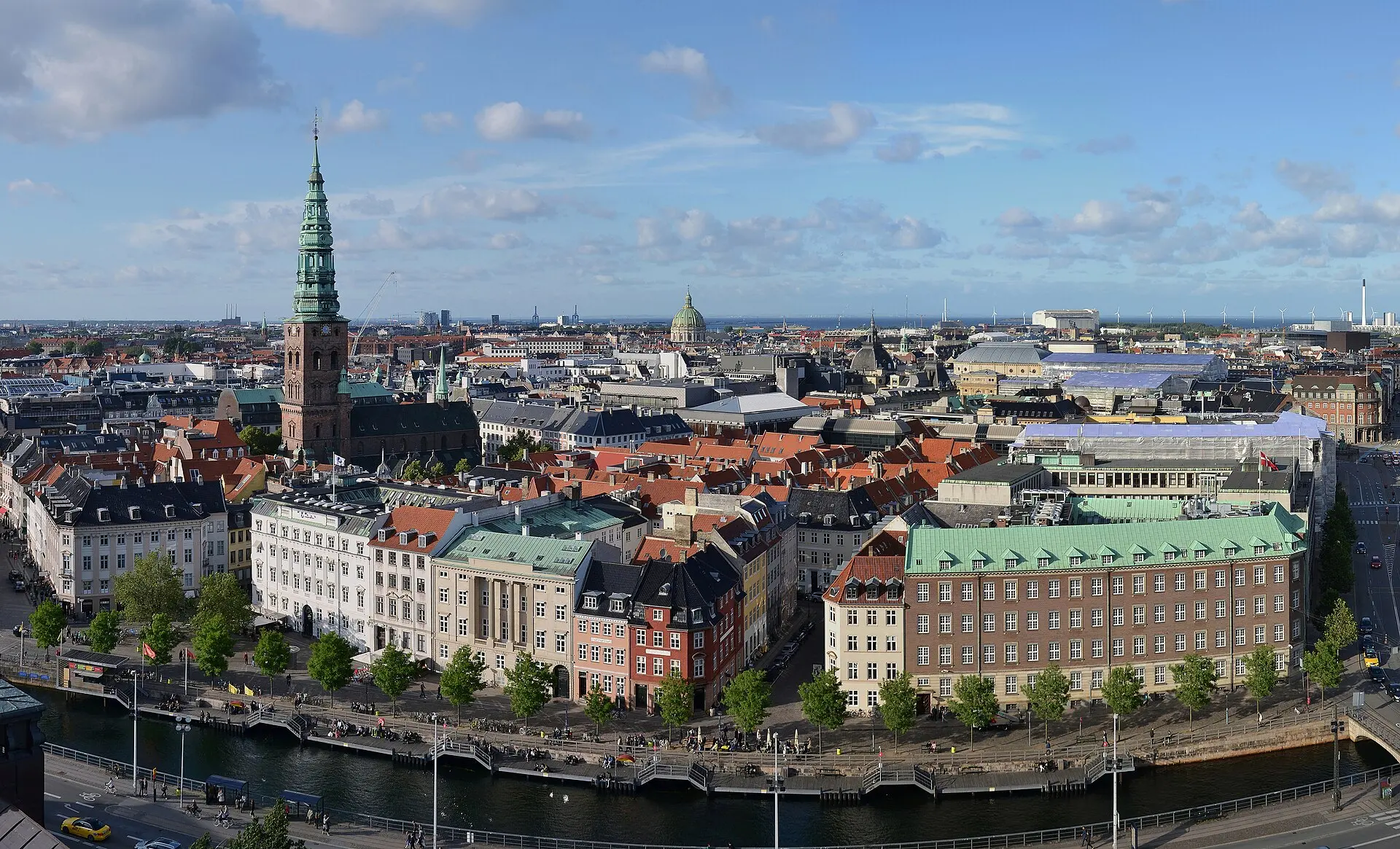
Around 1167, Bishop Absalon had a fortress built on what is now the palace island of Slotsholmen to protect the trading post of "Købmandshavn," the merchants' harbor. Under Christian IV in the 17th century, the buildings that still shape the cityscape today were created: the Renaissance palace Rosenborg, the Round Tower with its spiral ramp, and the Stock Exchange with its tower of intertwined dragon tails. The Stock Exchange suffered severe fire damage in April 2024 and has been under reconstruction ever since. On Slotsholmen, Parliament meets in Christiansborg Palace, while the royal family resides in the Rococo ensemble of Amalienborg, where the changing of the guard takes place at noon.
Sights in Copenhagen
The Nyhavn canal, with its colorful gabled houses and old sailing ships, is the most photographed spot in the city; Hans Christian Andersen lived in several of the houses here. His Little Mermaid has sat on a rock at Langelinie since 1913 and is smaller than many people expect. Tivoli, opened in 1843, is one of the oldest amusement parks in the world and is especially enchanting in the evening with its string lights and concerts. The pedestrian street Strøget runs from City Hall Square to Kongens Nytorv. On the other side of the harbor lies Christianshavn, with its canals and the Church of Our Saviour, whose exterior staircase winds all the way to the top of the spire. Next to it is the alternative free town of Christiania, which has existed since 1971 and is reinventing itself after the closure of Pusher Street in 2024.
Neighborhoods with Their Own Character
Nørrebro is multicultural and young; Jægersborggade strings together small shops, coffee roasters, and bakeries, and Andersen and Kierkegaard are buried in Assistens Cemetery. In Vesterbro, the former slaughterhouse district of Kødbyen has become a nightlife area with restaurants and clubs. Frederiksberg, an independent municipality in the middle of the city, feels genteel and green with its park and palace. In the medieval core around the lanes that were once called Pisserenden, you'll find cafés and record stores. On Amager, in the Sundbyerne, new residential neighborhoods have sprung up, and you can even ski on the waste-to-energy plant CopenHill. Farther north, on the coast near Skovshoved, villas and bathing piers line the shore, and in the Jægersborg Dyrehave deer park, herds of deer graze in front of the Eremitage hunting lodge. Right next to it is Dyrehavsbakken, the oldest amusement park in the world still in operation.
Museums and Design
The National Museum tells the story from the Vikings to the present, the Ny Carlsberg Glyptotek displays ancient sculpture and French painting beneath a palm garden, and the Statens Museum for Kunst holds the most important collection of Danish art. At the Design Museum you can study the chairs of Arne Jacobsen and Hans Wegner. About 35 kilometers to the north, the Louisiana Museum of Modern Art beckons with a sculpture park on the Øresund.
Eating in Copenhagen
The city made New Nordic cuisine world-famous: seasonal, regional ingredients, fermented foods, wild herbs. Alongside it, smørrebrød remains indispensable – rye bread topped with herring, roast beef, or shrimp, traditionally eaten at lunch with a schnapps. At the Torvehallerne food hall by Nørreport station you'll find fish, pastries, and coffee. Breakfast includes a cinnamon-roll wienerbrød. In the evening, locals gather in wine bars and brewery pubs, and in summer on the quays of Refshaleøen.
Getting Around and Best Time to Visit
From Kastrup Airport, the driverless metro takes about 15 minutes to reach the center, and it runs around the clock. The M3 Cityringen connects the main neighborhoods, but Copenhagen is most beautiful by bike, which you can rent almost anywhere. Malmö is reachable in about 35 minutes via the Øresund Bridge. The best time to visit is from May to September, when the jazz festival fills the city in July; in December, Christmas markets and hygge at Tivoli are the draw.