
Central Jutland: Aarhus, the Lake District and the North Sea Coast
Travel guide · editorialCentral Jutland stretches across the peninsula from the Baltic bay at Aarhus to the dunes of the North Sea. A vacation in the Central Jutland region combines Denmark's second-largest city with canoe trips in the Lake District, hikes in the hills of Mols and beach holidays between Ringkøbing Fjord and the North Sea.
Landscape and Location
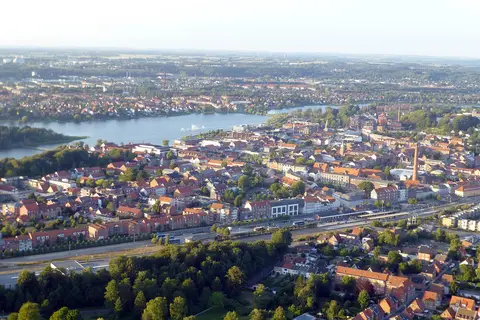
In the east, bays, forests and the Djursland peninsula with Mols Bjerge National Park shape the coast along the Kattegat. In the middle lies the Lake District around Silkeborg, with the Gudenå, Denmark's longest river, and Himmelbjerget, one of the highest points in the country. Toward the west the land becomes flatter and sandier, with heathland and plantations, until you reach the North Sea coast with Ringkøbing Fjord and the fishing village of Hvide Sande, a hotspot for surfers and anglers. Off the east coast lies Samsø, known as an energy island with its own wind turbines and for its early potatoes.
Sights in the Central Jutland Region
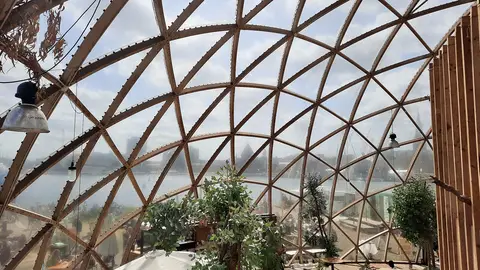
Aarhus is a youthful university city with major museums. At the ARoS art museum, the rainbow walkway "Your Rainbow Panorama" circles above the rooftops; the open-air museum Den Gamle By features historic town houses from all over Denmark; and the Moesgaard Museum, in a building with a grass-covered roof, presents prehistory and the Grauballe Man, a bog body. In the harbor district of Aarhus Ø, bold residential buildings such as the Iceberg are going up. In Silkeborg, the museum houses the Tollund Man, one of the best-preserved bog bodies in the world. Randers draws visitors with a tropical rainforest under domes, and Horsens with a prison museum in a former penitentiary. Viborg, the administrative seat, has a cathedral with frescoes by Joakim Skovgaard, and Herning has modern art at the HEART museum. Ebeltoft on Djursland has the frigate Jylland, the longest wooden ship in the world, in dry dock, and Holstebro is known for the sculptures throughout its cityscape. Silkeborg also has the Museum Jorn with works by the painter Asger Jorn, and the paddle steamer Hjejlen, built in 1861, sails on its lakes. In the west lies the harbor town of Ringkøbing, and the open-air museum Hjerl Hede shows village life from past centuries. In Herning stands Piero Manzoni's sculpture Socle du Monde, a pedestal that carries the whole world.
Food and Drink
Aarhus has a lively restaurant scene, with the market hall Aarhus Street Food in a former bus garage and several Michelin-starred restaurants. Typical Danish dishes include smørrebrød, frikadeller and stjerneskud with fish and shrimp. On the west coast you can get fresh fish at the smokehouses of Hvide Sande, and on Djursland there are farm shops and microbreweries. In summer, strawberries and potatoes from Samsø appear on many menus across the country.
Getting There and Best Time to Visit
Aarhus has a small airport, and Billund is about an hour away. The train connects Aarhus with Copenhagen in about three hours and with Hamburg. The best time to visit is May through September; the Aarhus Festival at the end of August is a cultural highlight. The Gudenå is well suited to multi-day canoe trips with campsites along the banks, and a long stretch of dunes extends between Hvide Sande and Søndervig. The Hærvejen, an old trade route, runs through the region as a hiking and cycling trail.