Zealand Region: Viking Ships, Chalk Cliffs, Castles
Travel guide · editorialThe Zealand Region covers most of the island of Zealand outside Copenhagen, plus the southern islands of Møn, Lolland, and Falster. A vacation in the Zealand Region pairs the royal city of Roskilde with white chalk cliffs, Viking fortresses, manor houses, and long sandy beaches – and it's often less than an hour's drive from the capital.
Landscape and Location
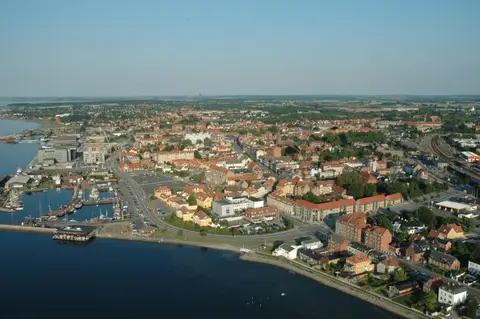
Zealand is gently rolling, with fields, beech forests, and fjords such as Isefjord and Roskilde Fjord in the north. In the west, the coast runs along the Great Belt, with Kalundborg and the Røsnæs peninsula. To the south lie the islands of Møn, Falster, and Lolland, the South Funen Archipelago's neighbor known as the Danish South Sea, with sandy beaches such as Marielyst. The region has more manor houses and castles per square mile than almost any other part of Denmark. In the west, the Great Belt Bridge links Zealand with Funen, and on Møn the night sky is so dark that the island is recognized as a Dark Sky area.
Sights in the Zealand Region
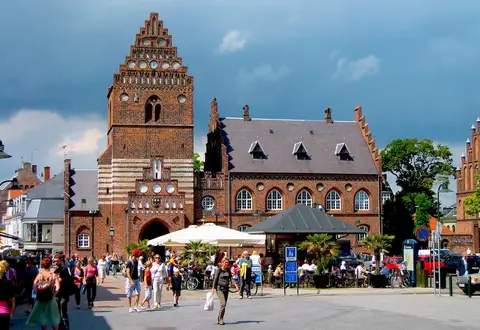
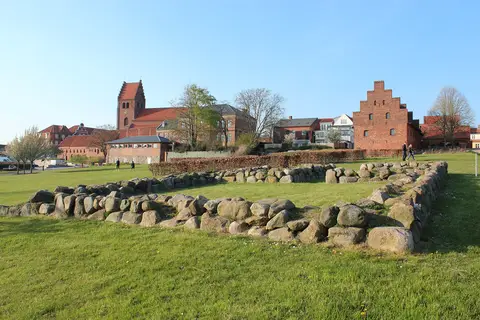
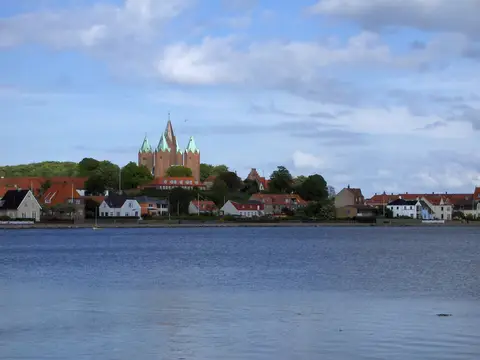
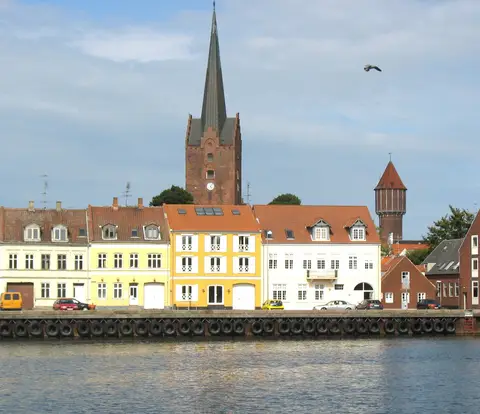
Roskilde was a royal seat and bishop's city; in its cathedral, a UNESCO World Heritage Site, almost all Danish kings and queens are buried. The Viking Ship Museum on the fjord displays five ships that were sunk around the year 1000 to block the channel, and it builds replicas in its boatyard. At the end of June, the Roskilde Festival draws tens of thousands of visitors. Near Slagelse lies the ring fortress of Trelleborg from the time of Harald Bluetooth, which is a World Heritage Site together with other Viking ring fortresses. Møns Klint, a chalk coast up to 128 meters high with forest and fossils, is one of Denmark's most spectacular natural monuments; on Møn, the frescoes in the village churches of Elmelunde and Fanefjord are also worth seeing. Næstved, the largest town in the south, is the starting point for the monastery church of Herlufsholm and Gavnø Castle with its tulip garden. Køge has an old town with half-timbered houses, Ringsted has the church with the tombs of the Valdemar kings, and Holbæk has a harbor on the Isefjord. In Nykøbing Falster, the Medieval Centre draws visitors with jousting tournaments and a trebuchet. On Lolland, Knuthenborg is one of Northern Europe's largest safari parks. Kalundborg has a striking five-towered church from the 12th century, and Odsherred in the northwest, with its beaches and a UNESCO geopark, is a popular summer retreat for Copenhageners. Near Lejre, the open-air center Sagnlandet Lejre recreates daily life in the Iron Age and Viking Age.
Food and Drink
Zealand is farm country, with farm shops selling strawberries, potatoes, and apples; Lolland was long the center of sugar beet cultivation. Along the fjords you'll find smoked fish and mussels, and many manor houses run cafés and restaurants. Beer from small breweries and fruit wine from orchards round out the offerings. Apples and strawberries are grown on Lolland and Falster, and many manor houses hold markets.
Getting There and Best Time to Visit
Trains connect Copenhagen with Roskilde, Køge, Næstved, and Slagelse. Ferries run from Puttgarden on Fehmarn to Rødby on Lolland; the Fehmarnbelt Tunnel is under construction. The best time to visit is May through September. The southern islands are great for exploring by bike, for example on a route around Møn. Ferries run from Gedser on Falster to Rostock.