Sight · Historic sites
Prague, Czechia
Staroměstská Radnice s Orlojem, Staroměstské náměstí 4/1, 110 00 Prague
About Prague, Czechia
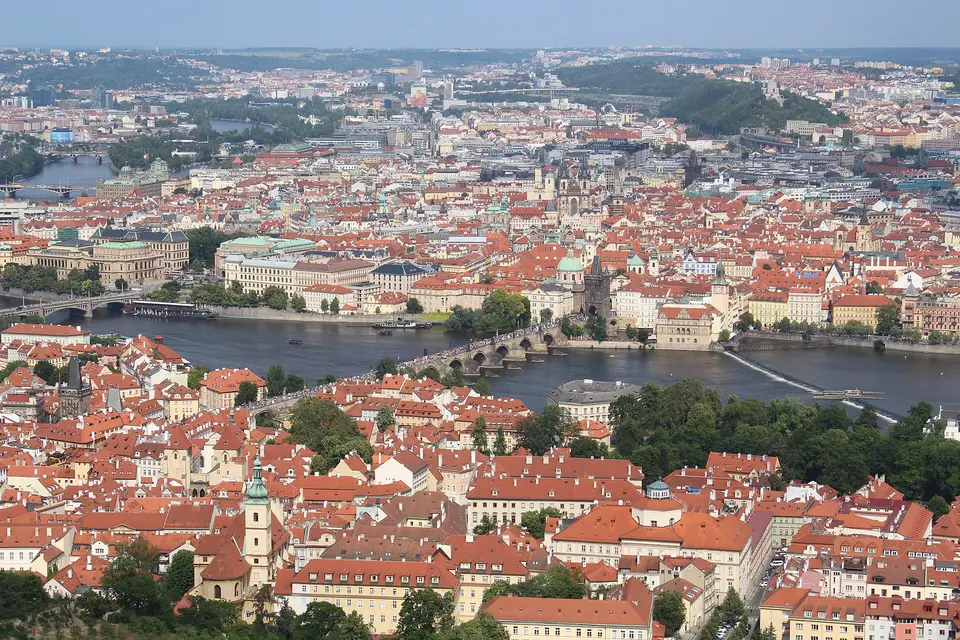
Prague, the capital of the Czech Republic, is the country's most populous city, with more than 1.3 million residents, and forms one of the wealthiest regions in Europe. As the historic capital of Bohemia, the city was for centuries an important royal and imperial residence within the Holy Roman Empire. Settlement of the area can be traced back to prehistoric times, but it was not until around 1230 that the settlement was raised to the status of a royal city. In the 14th century, under the reign of Charles IV, Prague experienced an enormous boom and developed into a political and cultural center of European importance. The city is shaped by the meeting of Czech, German, and Jewish cultures, which influenced one another over many generations.
Prague's historic center has been a UNESCO World Heritage Site since 1992 and impresses with a cohesive cityscape strongly marked by Gothic and Baroque architecture. The city is often called the "Golden City," a name that refers to the sandstone towers that shimmer in warm golden tones when the sun hits them. Another explanation for the nickname lies in the era of Emperor Charles IV, who had the towers of Prague Castle gilded, as well as in the city's appeal to alchemists during the time of Rudolf II. The epithet "City of a Hundred Spires" has also been in use for centuries and points to the countless towers that dominate the historic skyline.
Geographically, Prague lies in the center of western Czechia on the Vltava River, which flows through the city for a length of 30 kilometers. Much of the city spreads across a wide valley, with the historic center sitting on the southern bend of a large loop in the river. This center is dominated by two major castles: Prague Castle to the north and Vyšehrad to the south. The Vltava flows around several islands, including Kampa, which carries the western end of the famous Charles Bridge. The surrounding hills, such as Petřín, Letná, and Vítkov, offer sweeping views over the city and are popular recreation areas for locals and visitors alike.
Prague's architecture is a fascinating mosaic of different eras. Prague Castle with St. Vitus Cathedral, Charles Bridge, and Old Town Square with its medieval astronomical clock are probably the best-known landmarks. In Lesser Town and the Castle District, magnificent Renaissance and Baroque palaces dominate, while the Old Town is characterized by narrow lanes and old houses that often date back to the Romanesque and Gothic periods. Art Nouveau and Cubism, which found a strong architectural expression in Prague, also deserve special mention. A well-known example of Cubist architecture is the House of the Black Madonna. Modern buildings such as the Dancing House complement this historic picture.
An important part of the cityscape is the many bridges that cross the Vltava. Charles Bridge is the best known, but in all, 13 major bridges from various periods shape the skyline. Besides its architectural highlights, Prague also offers a rich museum landscape. The National Museum on Wenceslas Square is the city's oldest and largest museum and houses natural history and cultural history collections. The National Gallery spreads its exhibitions across several locations, including St. Agnes Convent and Sternberg Palace. In the Jewish Quarter of Josefov you will find the Jewish Museum, which comprises several synagogues and the Old Jewish Cemetery, one of the oldest surviving burial grounds of its kind in the world.
Prague's cultural scene is lively and diverse, which is also reflected in its theater landscape. The National Theatre and the State Opera are important stages for drama, opera, and ballet. Internationally renowned as well is the Laterna Magika, an avant-garde theater that combines film, light, music, and pantomime into an original total work of art. The Black Light Theatre, which relies on pantomime and lighting effects, also draws many visitors. The neoclassical Estates Theatre in the Old Town is of historical significance, as two operas by Wolfgang Amadeus Mozart premiered here. The city was also a hub for artists and writers, as seen in its rich tradition of coffeehouses, which are still regarded as meeting places of the intelligentsia today.
The history of Prague is marked by profound political and social change. After World War I, the city became the capital of the newly founded Czechoslovakia. During World War II, Prague was the scene of the Prague Uprising and of the deportation of the Jewish population. After the war, the city came under communist rule, which ended the Prague Spring in 1968 with the invasion of Warsaw Pact troops. The Velvet Revolution in November 1989 ended the socialist system and led to a strong economic and tourism boom. Today, Prague is a global tourist destination with just under nine million visitors a year.
For visitors, Prague offers numerous ways to explore the city. Riding tram line 22 is especially popular, as it passes Prague Castle, Star Castle, and Břevnov Monastery and offers wide views over the Vltava. Prague Zoo, with 1.5 million visitors, is the city's most visited leisure attraction. Parks such as Petřín, with its lookout tower, and Letná, with the Prague Metronome, also invite you to linger. The metronome commemorates the victims of communism and stands on the site of the former Stalin Monument, which was blown up in 1962.
The city has a well-developed public transportation network made up of the metro, trams, and buses. The metro's three lines intersect in the center at the stations Můstek, Muzeum, and Florenc. Václav Havel Airport in the Ruzyně district, one of the country's most important airports, serves international arrivals. Boat traffic on the Vltava is also possible thanks to several weirs and locks, which further connects the city to the surrounding regions.
Prague is not only a center of culture and history but also an important business location. The city is home to the Prague Stock Exchange and numerous industrial companies, particularly in food production, electrical engineering, and vehicle manufacturing. The unemployment rate has been very low for years, and the city contributes a considerable share of the entire country's economic activity. The mix of historic heritage, cultural diversity, and modern infrastructure makes Prague a fascinating travel destination that attracts visitors from around the world.
In summary, Prague is a city where history and modernity blend in a unique way. From the medieval lanes of the Old Town to the Baroque palaces of Lesser Town and on to the modern museums and theaters, the city offers a wide range of experiences. The UNESCO World Heritage Site at its center, the vibrant cultural scene, and the natural beauty of the Vltava and its riverside hills make Prague one of the most visited and, at the same time, most charming places in Europe.
At a glance
- Category
- Sight › Historic sites
- Rating
- no reviews yet · write a review
- Address
- Staroměstská Radnice s Orlojem, Staroměstské náměstí 4/1
110 00 Prague, Czechia - District
- Praha 1
- Phone
- —
- Website
- www.praguehere.com
- info@praguehere.com
- Coordinates
- 50.08671° N · 14.42054° E
- Data quality
- confidence 0.71
- Identifier
- ID 4a7f2465-f5c…
Part of the tour
From the Old Town Across the Vltava: Prague on Foot →Location & surroundings
Toggle layersRatings & comments
none yetNear Prague, Czechia
closest 5 per category · 2 kmSights
Restaurants
Museums
Hotels
More:Historic sites in Prague (736)Sights in Praha 1 (290)All sights in Prague (834)
300 places within 2 km loaded.
Don't miss in Prague
All sights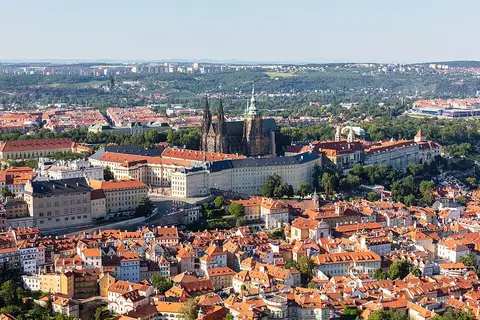 Historic sites01
Pražský hrad
Pražský hrad, 119 08 · Prague● Website● Phone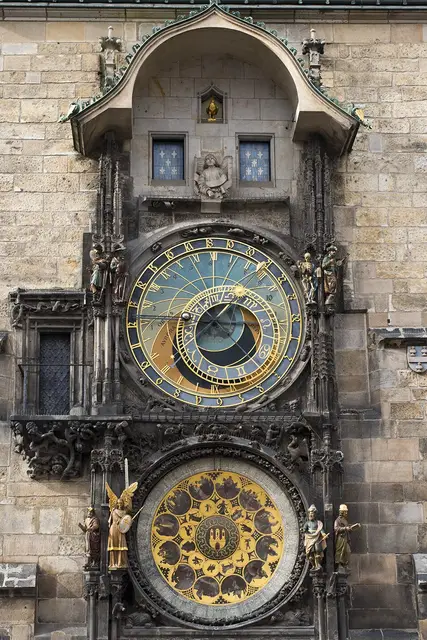 Historic sites02
Prague Astronomical Clock
Staroměstské nám. 1 · Prague● Website● Phone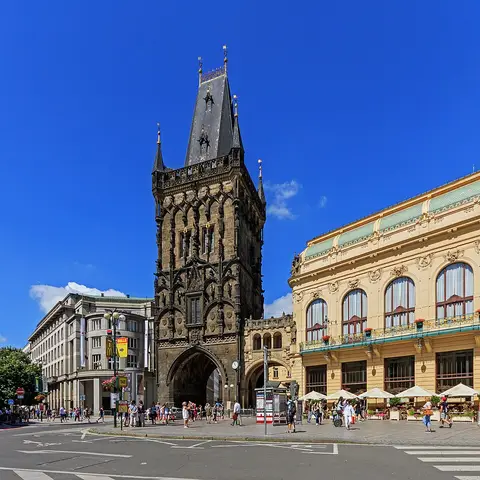 Historic sites03
Prasna brana
náměstí Republiky 1090/5 · Prague● Website● Phone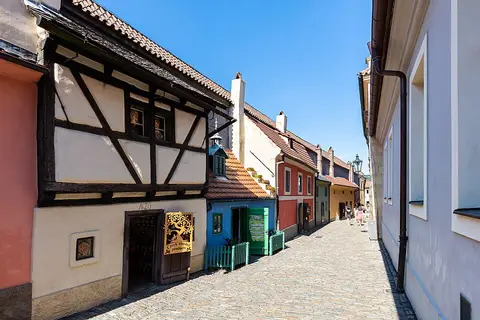 Historic sites04
You need a free account to leave reviews and photos – that keeps comments genuine and lets you edit them later.