Belarus: Forests, Castles, and Cities on the River
Travel guide · editorialThe German Federal Foreign Office strongly advises against travel to Belarus: the country supports Russia's war of aggression against Ukraine, there is a risk of arbitrary arrest, and consular assistance is extremely limited. This text therefore describes Belarus as a country and cultural region, not as a recommendation for a vacation in Belarus under the current circumstances.
Political Situation and Safety
Since the 2020 presidential election, which the European Union did not recognize, and the mass protests that followed, the state has cracked down hard on the opposition, independent media, and civil society. Thousands of people have been imprisoned, and many have left the country, including numerous artists and journalists who went to Lithuania and Poland. In 2022, Russia used Belarusian territory as a staging ground for its attack on Ukraine. The borders with Poland and Lithuania are open at only a few crossings, and there are no direct flights from the EU. Even seemingly harmless actions such as photographing government buildings or posting on social media can lead to trouble with the authorities.
Landscape: Forests, Lakes, and Marshes
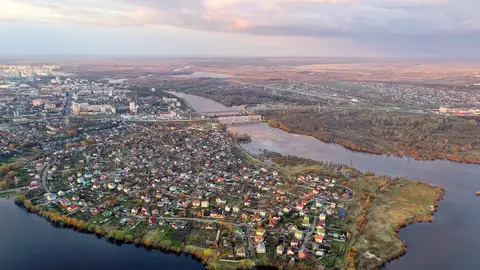
Belarus is flat, but anything but monotonous. Around 40 percent of the country is forested, and there are more than 10,000 lakes and extensive bogs. The Białowieża Forest on the Polish border, called Belavezhskaya Pushcha in Belarusian, is one of the last primeval lowland forests in Europe and, together with the Polish part, a UNESCO World Heritage Site. It is home to the largest population of free-roaming European bison. In the north lies the Braslaw Lakes region, with dozens of lakes connected by canals; in the south is Polesia, a vast marsh and river region along the Pripyat, where storks nest on nearly every village rooftop. Part of the southeast has been an exclusion zone since the Chernobyl disaster in 1986, as the country was particularly hard hit by the radioactive fallout.
Minsk: A Capital in Postwar Style
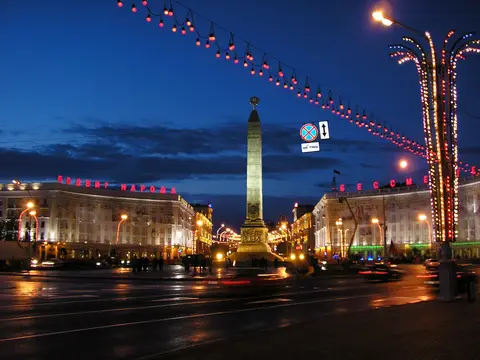
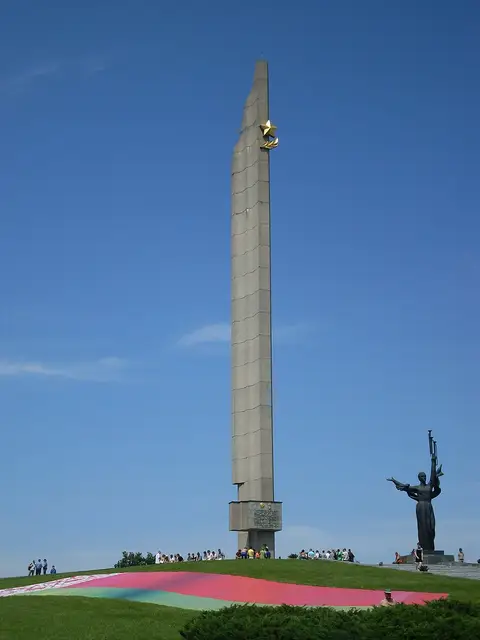
Minsk was almost completely destroyed in World War II and then rebuilt as a Soviet showpiece city. Independence Avenue, lined with monumental buildings in the Stalinist Neoclassical style, runs for miles through the city, and broad squares and well-kept parks define its look. A small remnant of the old city has survived in the Upper Town around the Town Hall and the Cathedral of the Holy Spirit, while the reconstructed Trinity Suburb on the Svislach River shows what Minsk might have looked like before the 20th century. The Museum of the History of the Great Patriotic War commemorates the suffering of a country in which roughly one in four inhabitants died between 1941 and 1944. The Khatyn Memorial north of Minsk stands for hundreds of villages that German occupiers burned down along with their residents.
Castles and Cities: Mir, Nesvizh, Brest, and Hrodna
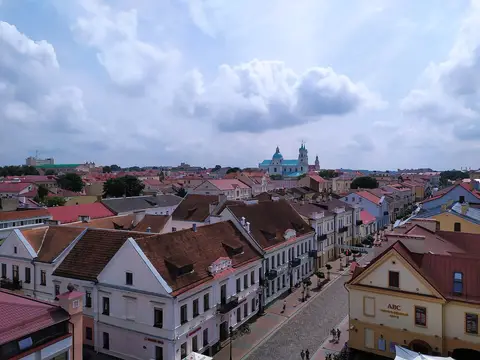
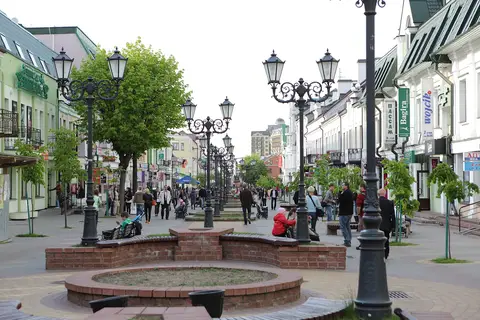
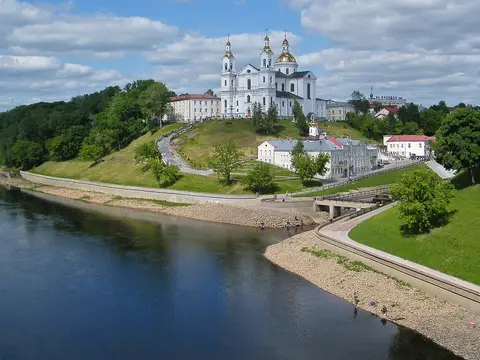
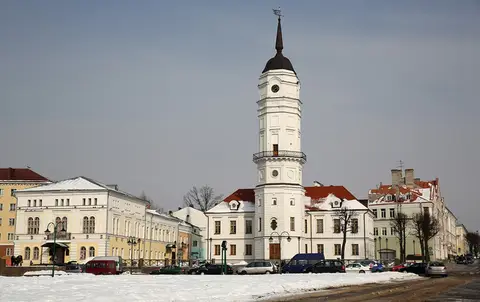
Among the best-known sights in Belarus are two castle complexes of the noble Radziwiłł family, both UNESCO World Heritage Sites. Mir Castle, with its red brick and white plaster and five towers, dates from the 16th century, while Nesvizh Castle, with its parks and Corpus Christi Church, was for centuries the seat of one of the most powerful dynasties of the Polish-Lithuanian Commonwealth. Hrodna in the west, near Poland and Lithuania, has one of the best-preserved old towns in the country, with Catholic Baroque churches, a synagogue, and the Old Castle above the Neman River. Brest on the Polish border is known above all for its fortress, which was defended for weeks in the first days of the war in 1941 and is now a huge memorial site. Many places also tell of the country's Jewish history, which shaped life in numerous small towns before the Holocaust. Vitebsk in the northeast is the birthplace of Marc Chagall; his childhood home is now a small museum, and the Slavianski Bazaar festival takes place there every year. Homel in the southeast has a palace of the Rumyantsev-Paskevich family in a large park on the Sozh River, and Mahilyow on the Dnieper has a 17th-century town hall.
Food and Drink
Belarusian cuisine revolves around the potato, known here as bulba and so important that Belarusians jokingly call themselves Bulbashi. Draniki, crispy potato pancakes with sour cream, are the national dish. Other staples include kalduny, potato dumplings filled with meat; machanka, a thick meat sauce for dipping pancakes; and babka, an oven-baked potato casserole with bacon. In summer there is cold beet soup called khaladnik, and in fall mushrooms and wild berries, which many families gather themselves. At the markets in Minsk and Hrodna, women farmers sell lingonberries, cranberries, and dried porcini from large sacks in late summer. People drink kvass, herbal balsams, and vodka, and in villages guests are traditionally welcomed with bread and salt.
Climate and Best Time to Visit Belarus
The climate is temperate continental. Summers from June to August are pleasantly warm at 20 to 25 degrees Celsius (68 to 77°F), occasionally hotter, while winters are long and cold, with temperatures often below minus 10 degrees Celsius (14°F) and continuous snow cover from December to March. In purely climatic terms, May through September are considered the best months, and in fall the great forests turn yellow and red. When planning a trip, however, the weather is not the deciding factor right now; the security situation is, and it continues to speak clearly against a visit.