Minsk: Grand Boulevards and a Reconstructed Old Town
Travel guide · editorialMinsk, the capital of Belarus, is one of the most impressive cities of postwar Soviet architecture, with broad boulevards, monumental squares, and plenty of greenery along the Svislach River. If you are considering a trip to Minsk, you should know that the German Federal Foreign Office currently advises against travel to Belarus because of the political situation and the country's support for Russia in its war against Ukraine. The following overview describes the city as it has shown itself to visitors until now.
A City Risen from the Rubble
Minsk was first mentioned in the 11th century and for a long time belonged to the Grand Duchy of Lithuania and the Polish-Lithuanian Commonwealth before falling to Russia in 1793. In World War II, the city was almost completely destroyed, and a large part of its population was killed, including tens of thousands of Jews in the Minsk Ghetto. Afterward, it was rebuilt according to a unified plan as a model city of socialism. Today, around two million people live in Minsk, about a fifth of the country's population. The city is its own administrative unit, surrounded by Minsk Region.
Sights in Minsk
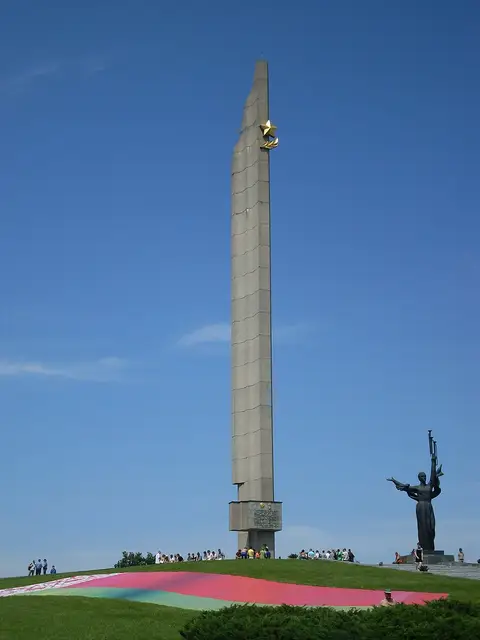
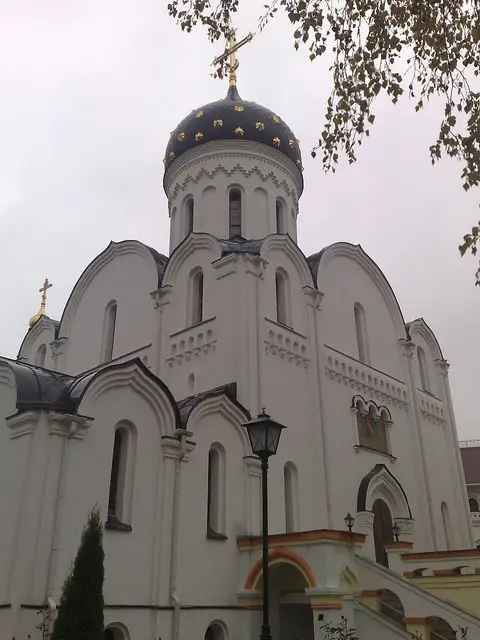
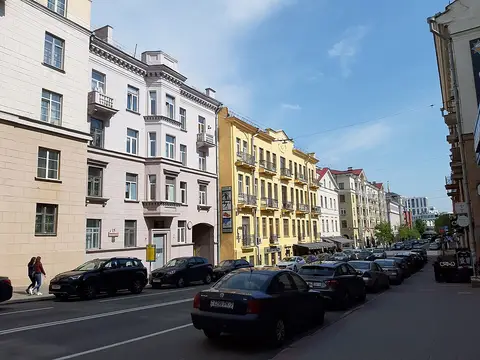
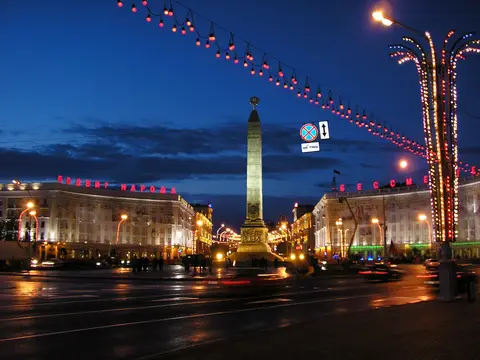
Independence Avenue, an axis about 15 kilometers (9 miles) long, is one of the most cohesive ensembles of socialist classicism, with columned facades, small towers, and arcades from the 1940s and 1950s. October Square is home to the Palace of the Republic, and Victory Square has an obelisk with an eternal flame. The Museum of the Great Patriotic War, housed in a modern building with a gleaming dome, is among the largest war museums in the world. The Upper Town, Vyerkhni Horad, with the Holy Spirit Cathedral and the reconstructed town hall, as well as the Trinity Suburb (Traetskaye Pradmestse) on the riverbank, show what old Minsk looked like; its colorful houses, however, are mostly reconstructions. The Island of Tears in the Svislach commemorates the Soviet soldiers who died in Afghanistan. The National Library, shaped like a rhombicuboctahedron, is one of the most unusual buildings in the city.
Surroundings and Memorial Sites
About 50 kilometers (31 miles) to the northeast lies the Khatyn memorial, on the site of a village whose inhabitants were murdered by German units in 1943; it stands for hundreds of destroyed villages in Belarus. In the south of the city, the Maly Trostenets memorial recalls one of the largest extermination sites on Soviet soil. Farther afield are the castles of Mir and Nesvizh, both UNESCO World Heritage Sites, as well as the Dudutki open-air museum with craft demonstrations, farmhouses, and an old windmill.
Food, Getting There, and Practical Tips
Belarusian cuisine is based on potatoes: draniki, potato pancakes with sour cream, are the national dish, along with machanka, a meat sauce for dipping, and kalduny, filled dumplings. Kvass and herbal balsam are popular drinks. There have been no direct flights from the EU to Minsk since 2021, and the overland route via Poland and Lithuania is possible only to a limited extent. The most pleasant time of year is May through September, when cafés set up tables along the boulevards and the parks by the Svislach are green; winter is long and cold, with temperatures often well below freezing. In July, Kupalle, or Midsummer Night, an old summer festival with bonfires and flower wreaths, is celebrated.