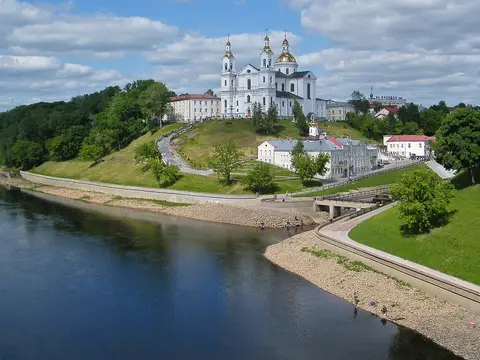
Vitebsk Region: Chagall's Vitebsk and the Lake District
Travel guide · editorialThe Vitebsk Region in northern Belarus is the home of Marc Chagall and a land of lakes: thousands of bodies of water lie between forests and hills along the border with Latvia and Lithuania. A trip here would lead to Vitebsk, the painter's city, and to Polotsk, the oldest city in the country; at present, however, travel to Belarus is not recommended.
Lakes and the Daugava
The region is one of the largest in Belarus by area. The Daugava, known in Belarusian as the Dzvina, flows through it from east to west on its way to Riga. In the northwest lie the Braslaw Lakes, a national park with around 30 lakes, islands, and hills left behind by the Ice Age; in the north is the Berezinsky Biosphere Reserve. Around 1.1 million people live here. Besides Vitebsk, the most important cities are Polotsk, Navapolotsk with its refinery, and Orsha.
Sights in the Vitebsk Region
Vitebsk was a center of Jewish life around 1900. Marc Chagall was born here in 1887; his childhood home is now a museum, and the Marc Chagall Art Center shows the artist's prints. After the Revolution, Chagall founded an art school in Vitebsk, where Kazimir Malevich also taught. Every July the city hosts the "Slavianski Bazaar" festival with musicians from many countries. Polotsk, first mentioned in 862, is considered the oldest city in Belarus. St. Sophia Cathedral above the Daugava and the Monastery of St. Euphrosyne, with a church dating from the 12th century, are among the country's most important holy sites. A monument marks the geographic center of Europe, which some geographers place here. Orsha on the Dnieper, an old railway hub, preserves the Kutein Monastery and a museum on the history of the city, which was the scene of a major battle in the 16th century; in summer, the lakes around Braslaw attract visitors with boat trips and campgrounds.
Food and Tips
Typical dishes include draniki (potato pancakes), fish from the lakes, mushroom dishes, and rye bread. In summer, berries and honey are sold at the markets. The borders with Latvia and Lithuania can currently be crossed only with restrictions, and you should heed official travel warnings.