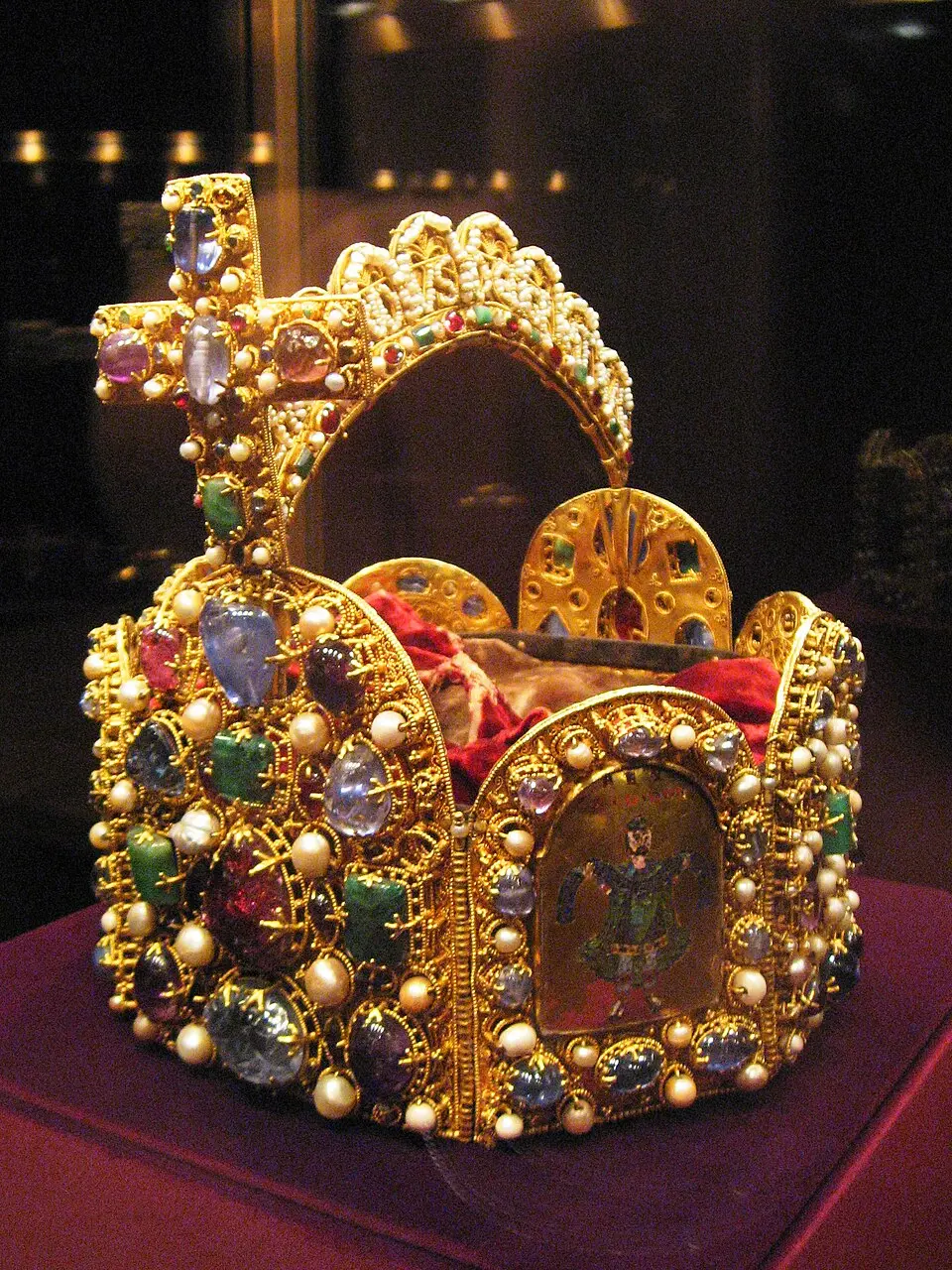
About Imperial Treasury
The Imperial Treasury in Vienna's Hofburg houses the most important objects from the former collections of the House of Habsburg, notable for their great dynastic or religious significance. A department of the Museum of Art History (Kunsthistorisches Museum), it is housed in the Swiss Wing, the oldest part of the Hofburg. The exhibition spans 23 rooms and is divided thematically into a Secular Treasury and a Sacred Treasury. Here you can marvel at one of the world's most important collections of its kind, ranging from the regalia of the Holy Roman Empire to the Habsburgs' private family treasures. The history of the collection goes back to the 16th century, when the first systematic efforts to administer the imperial treasures were undertaken under Emperor Ferdinand I. Over the centuries, particularly under Maria Theresa, the crown treasure was separated from other art collections and installed in the Hofburg, where it can still be seen today.
A central part of the Secular Treasury is the Imperial Regalia of the Holy Roman Empire, including the Imperial Crown, the Holy Lance, and the Coronation Mantle. These treasures were brought to Vienna in 1800 and remained there after the end of the empire. Also of great historical and artistic importance is the Burgundian Treasure, which came into the possession of the Habsburgs through the marriage of Mary of Burgundy to Maximilian I. Especially noteworthy is the Vestments of the Order of the Golden Fleece, a masterpiece of medieval embroidery that stands out for its combination of needle painting and couched embroidery in gold, silk, and pearls. This set of vestments is considered one of the most precious liturgical garments of its time and bears witness to a striving for religious light mysticism and princely display.
The Sacred Treasury is devoted primarily to devotional images and altars, most of which date from the Baroque period. It also contains objects that mark the transition to the sacred function of the treasures, such as christening sets. Over the course of its history, the Treasury has been moved and reorganized several times, most recently in the 1950s, when the objects were grouped more strongly according to their function for the Habsburgs as archdukes, Holy Roman emperors, or emperors of Austria. Today, the Treasury invites you to experience the opulent history of the Habsburg monarchy and the craftsmanship of its treasures in an impressive setting.
At a glance
- Category
- Museum › History museums
- Rating
- no reviews yet · write a review
- Address
- Schweizerhof, Hofburg
1010 Vienna, Austria - District
- Innere Stadt
- Phone
- +431525240
- Website
- —
- —
- Coordinates
- 48.20689° N · 16.36585° E
- Data quality
- confidence 0.91
- Identifier
- ID 3c919eac-326…
Location & surroundings
Toggle layersRatings & comments
none yetNear Imperial Treasury
closest 5 per category · 2 kmSights
Restaurants
Museums
Hotels
More:History museums in Vienna (57)Museums in Innere Stadt (86)All museums in Vienna (308)
300 places within 2 km loaded.
You need a free account to leave reviews and photos – that keeps comments genuine and lets you edit them later.
The best part of the Hofburg and an absolute must. It contains the Habsburgs' collection of jewels, crowns, and other valuables, perhaps the best on the Continent. Second only to a tour of the Kunsthistorisches Museum, of which the Schatzkammer is a part. There are 20 rooms of priceless treasures that give a fairly accurate representation of the ceremonial Habsburg court life over the centuries.
Source: Wikivoyage, „Vienna/Innere Stadt“ · authors per page history · CC BY-SA 4.0