Discovering Graz: Clock Tower, Murinsel, and Pumpkin Seed Oil
Travel guide · editorialGraz is Austria's second-largest city, yet many travelers still haven't heard of it: red tile roofs, Renaissance-style courtyards, and an art museum that looks like a blue creature from outer space. A city break in Graz combines Mediterranean flair, student life, and the cuisine of Styria.
Habsburg Residence and University Town
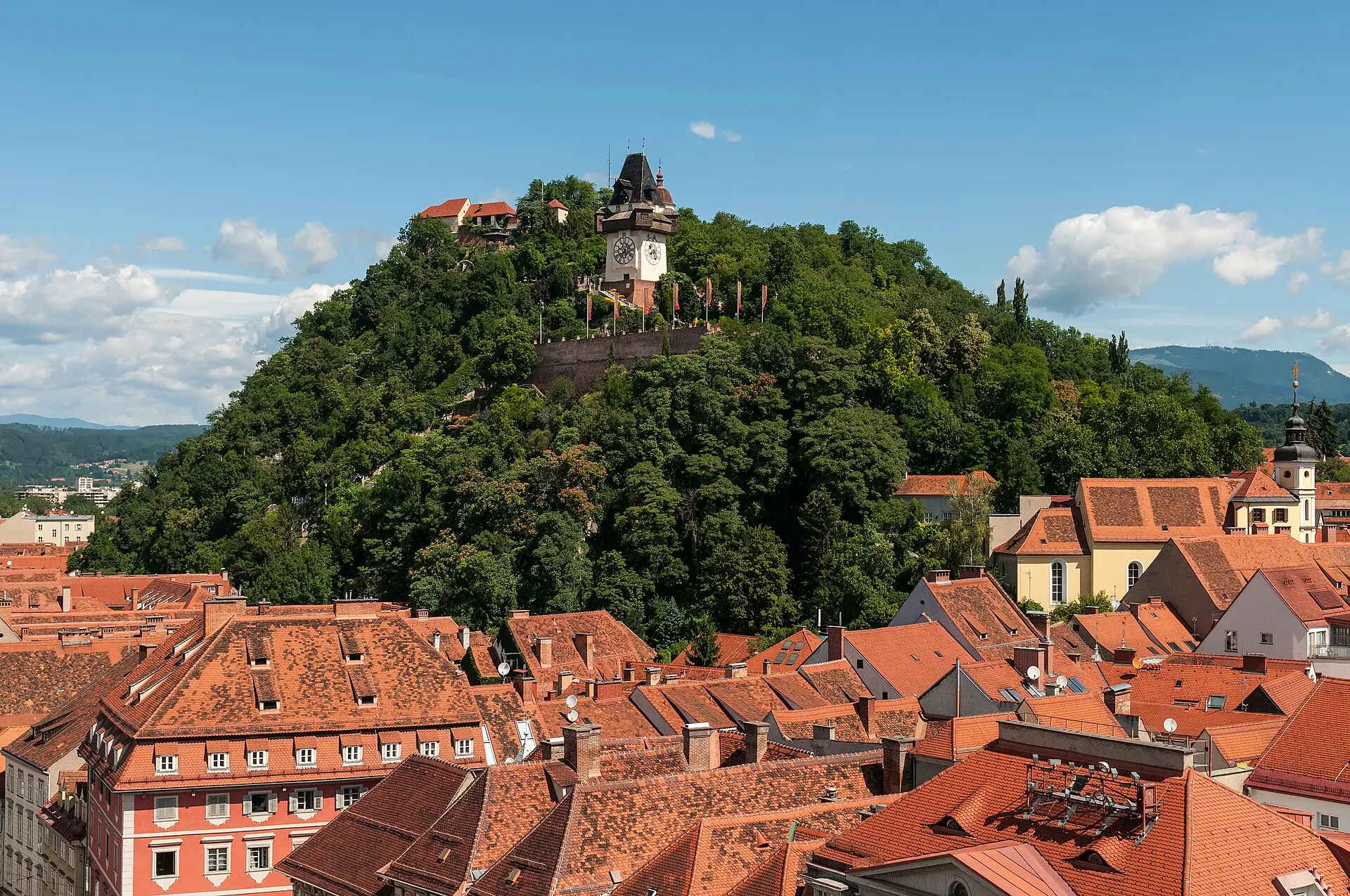
The name comes from the Slavic "gradec," meaning little castle. In the 15th century, Graz was the residence of Emperor Frederick III, and later the capital of Inner Austria and a bulwark against the Ottomans. The fortress on the Schlossberg was never taken; it was Napoleon who had it razed in 1809, and the townspeople bought the Clock Tower to save it. Today, with several universities, Graz is a young city; in 2003 it was a European Capital of Culture, and in 2011 it became a UNESCO City of Design. The Old Town, together with Eggenberg Palace, is a UNESCO World Heritage Site.
Sights in Graz
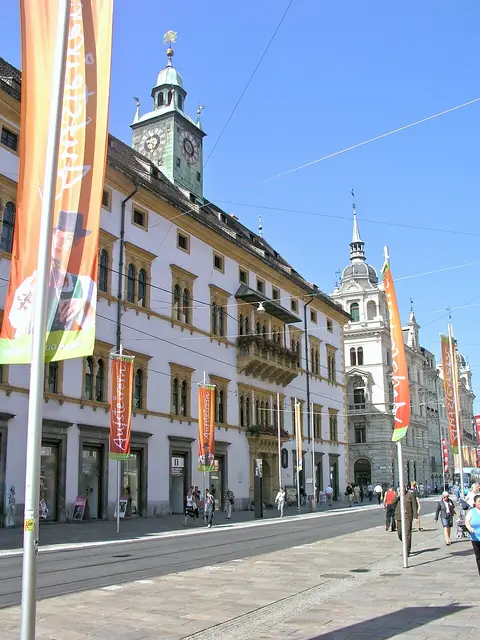
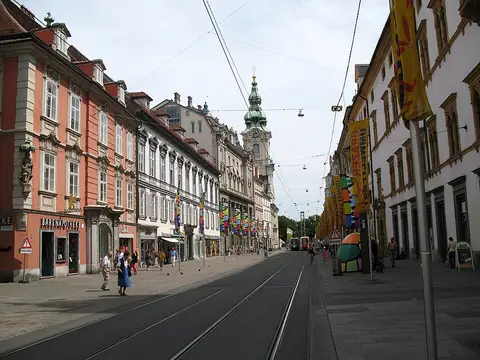
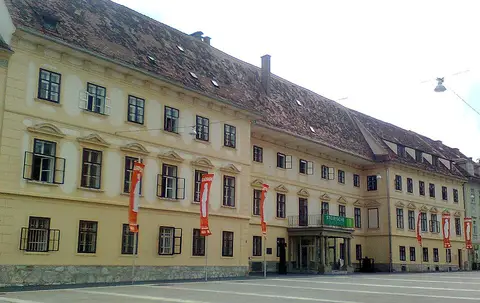
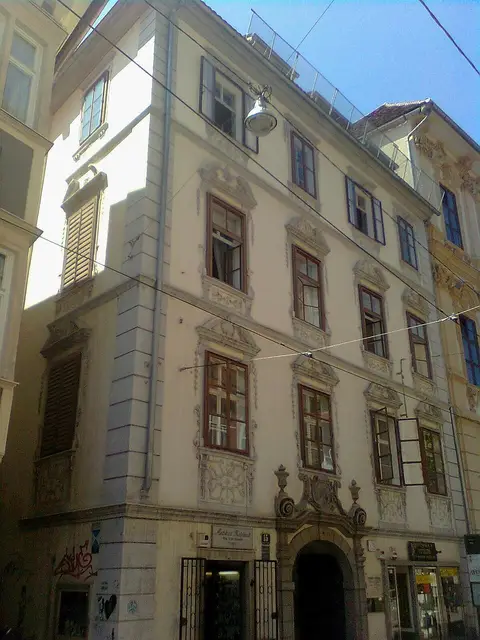
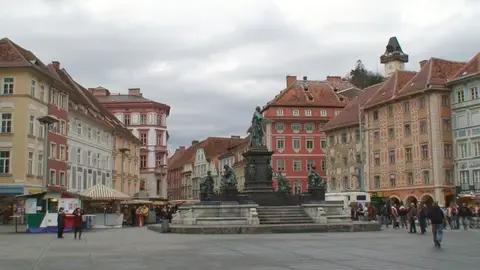
Above the Inner City rises the Schlossberg with the Clock Tower, whose hour hand is larger than its minute hand. You can get up there on foot via the Kriegssteig stairs, by funicular, by the elevator inside the rock, or you can come down the back side on the longest indoor slide in the world. The Hauptplatz with the town hall, the Herrengasse with the painted house, and the Landhaus with its Renaissance-style arcaded courtyard are the heart of the Old Town. The Landeszeughaus (Provincial Armory) holds more than 30,000 weapons and suits of armor, the largest historic armory in the world. The cathedral and the mausoleum of Ferdinand II stand close together. On the western edge lies Eggenberg Palace, with its state rooms and peacocks in the park; the building follows a symbolic program in which windows, rooms, and towers represent the days, weeks, and months of the year. Another gem is the Gothic double spiral staircase in the Burg, whose two flights of stairs repeatedly meet and part.
Murinsel, Kunsthaus, and Lend
On the other side of the Mur, in the Lend district, the Kunsthaus Graz "landed" in 2003, nicknamed the "Friendly Alien" because of its shape. The Murinsel, a floating platform of steel and glass by Vito Acconci, connects the two banks and houses a café. Lend and Gries have developed into creative neighborhoods with studios, secondhand shops, and restaurants, and around the Lendplatz there is a popular farmers' market. Geidorf, home to the university, and St. Leonhard are the student districts, while Jakomini offers cinemas, bars, and the Augarten park on the Mur.
Eating in Graz
Graz is considered Austria's capital of culinary delights. Pumpkin seed oil, dark green and nutty, goes on salads, in soups, and even on vanilla ice cream. Typical dishes include Backhendl (fried chicken), Styrian Wurzelfleisch (boiled pork with root vegetables), scarlet runner bean salad, and Verhackert, a bacon spread for bread. To drink, try wine from southern Styria, such as Sauvignon Blanc or Schilcher, a rosé from western Styria. At the Kaiser-Josef-Markt, farmers sell fruit, pumpkin seed oil, and scarlet runner beans. Restaurants in Graz combine Styrian tradition with creative cooking, and in the Bermuda Triangle around Färbergasse, night owls gather in the evenings.
Getting There and Best Time to Visit
Graz Airport is about six miles (ten kilometers) to the south, with suburban trains and buses running into the center. Trains connect Graz with Vienna in about two and a half hours, and since the end of 2025 the Koralm Railway has been getting travelers to Klagenfurt in around 45 minutes. Trams serve the city, and the Old Town is best explored on foot. The best time to visit is from April to October; in fall, the grape harvest and the South Styrian Wine Road are the draw.