



Virginia: Colonial History and the Blue Ridge
Travel guide · editorialJamestown, founded in 1607, was the first permanent English settlement in America, and eight later presidents came from Virginia – more than from any other state. A vacation in Virginia combines this history with Skyline Drive in the Blue Ridge Mountains, the beaches of Virginia Beach, and the wineries of the rolling Piedmont. The north, with Arlington and Alexandria, is closely tied to the capital, Washington, D.C.
Landscape and Geography
Virginia stretches from the Atlantic coast and the Chesapeake Bay in the east deep into the Appalachians in the west. The coastal plain, known as Tidewater, is cut through by river estuaries: the Potomac, Rappahannock, York, and James all flow into the bay here. To the west, the gentle Piedmont rises, followed by the Blue Ridge Mountains and the broad Shenandoah Valley. On the Delmarva Peninsula across the bay lies Chincoteague Island, famous for its wild ponies. In the southwest, the land becomes rugged and mountainous, with coal country and a bluegrass tradition.
Cities and Towns
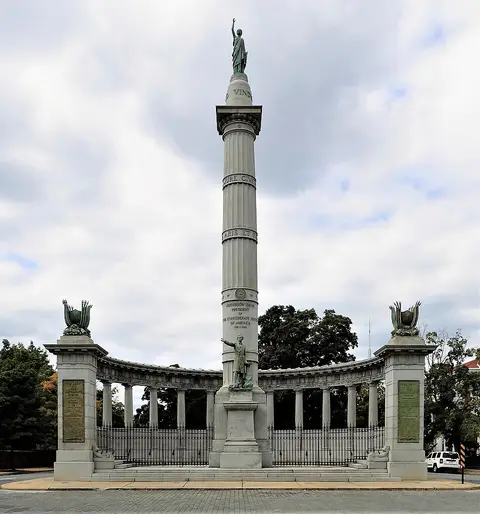
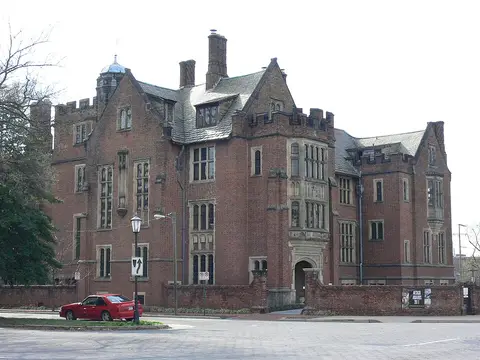
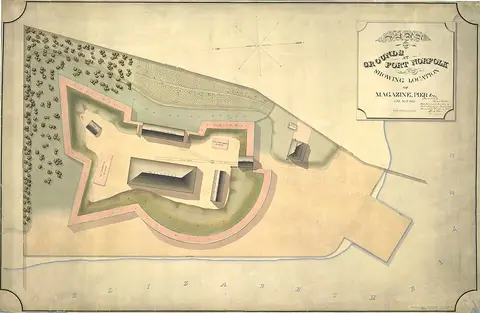
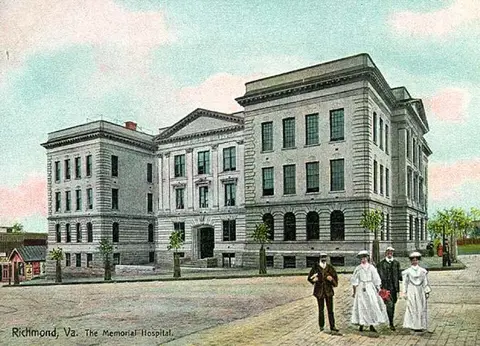
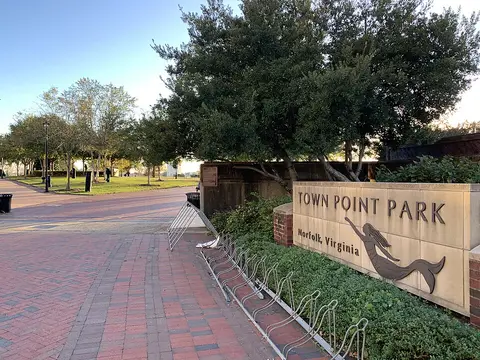
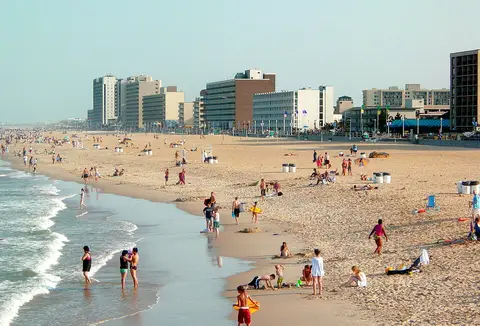
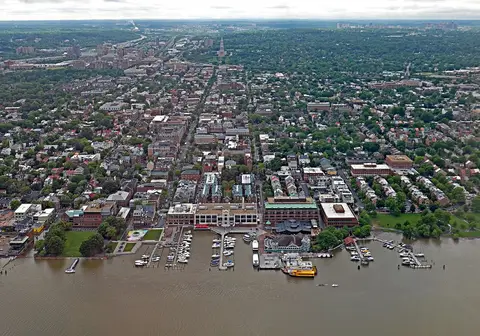
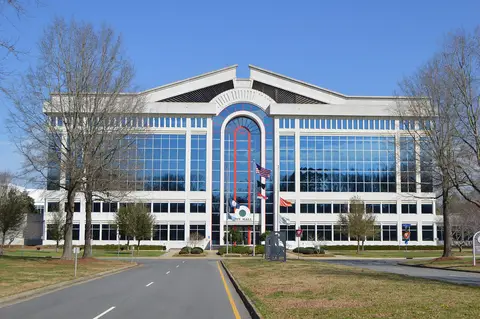
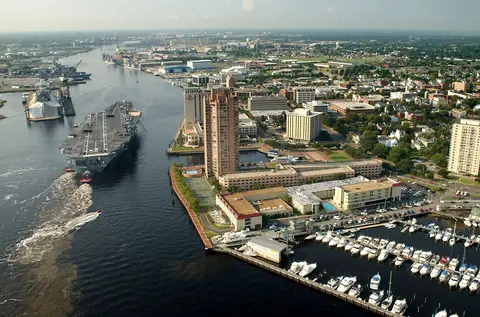
Richmond, the capital on the James River, was the capital of the Confederacy during the Civil War; today the city is known for its murals, a lively pub scene, and the Virginia Museum of Fine Arts. The Hampton Roads region at the mouth of the Chesapeake Bay includes Norfolk, home to the largest naval base in the world, Chesapeake, and Virginia Beach, Virginia's most populous city, with a long boardwalk. In the north you'll find Arlington, with its national cemetery and the Pentagon, and next to it Alexandria, with an Old Town of brick houses on the Potomac. Bethel Manor is a residential community of Langley Air Force Base near Hampton. Charlottesville is shaped by the University of Virginia, whose campus Thomas Jefferson designed himself.
Sights in Virginia
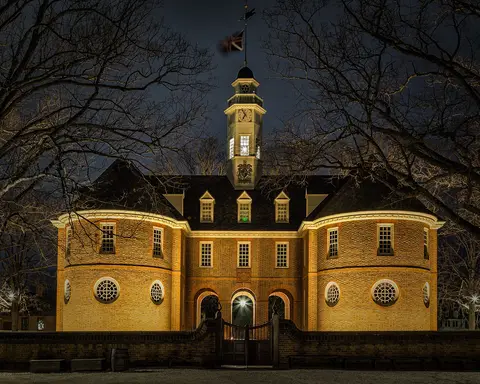
The Historic Triangle of Jamestown, Yorktown, and Williamsburg is the heart of many Virginia travel itineraries. In Colonial Williamsburg, the colony's 18th-century capital has been reconstructed, and craftspeople in period dress work in blacksmith shops and print shops. At Yorktown, the British troops surrendered in 1781. Monticello, Jefferson's estate near Charlottesville, is a UNESCO World Heritage Site together with the university. George Washington's estate, Mount Vernon, lies on the Potomac south of Alexandria. In Shenandoah National Park, Skyline Drive runs along the mountain ridge for about 105 miles, and below it lie the stalactite caves of Luray Caverns.
History and Culture
The colony was named after Elizabeth I, the "Virgin Queen." In 1619, the first enslaved Africans arrived at Point Comfort, and in the same year the first elected representative assembly in the colonies met in Jamestown. Virginia produced four of the first five presidents: Washington, Jefferson, Madison, and Monroe. During the Civil War the state was a major theater of fighting, and numerous battlefields such as Manassas and Fredericksburg are now memorial sites. In the mountains of the southwest, the musical tradition of Appalachia lives on: Bristol, on the Tennessee border, is considered the birthplace of country music, and the Crooked Road music trail connects towns with live music.
Food and Drink
Virginia ham, a long-cured, salted, and smoked ham from Smithfield, is a specialty of the Tidewater region. Peanuts from the south of the state, oysters, and blue crabs from the Chesapeake Bay are also part of the local cuisine. Virginia has also developed into a serious wine region, with more than 300 wineries, especially known for Viognier and Cabernet Franc around Charlottesville. Hard apple cider from the Shenandoah Valley is popular as well.
Getting There and Best Time to Visit
Most long-haul travelers land at Washington Dulles (IAD) in northern Virginia; other airports are Richmond (RIC) and Norfolk (ORF). Amtrak connects Washington with Alexandria, Richmond, Williamsburg, and Norfolk. For the mountains, you'll need a car. The best time to visit is in spring, when the dogwoods bloom, and in fall, when Skyline Drive glows in red and gold. Summers are warm and humid, ideal for the beaches of Virginia Beach and boat tours on the Chesapeake Bay. Winters on the coast are usually mild, while snow can lie in the mountains of the west, and some high-elevation sections of Skyline Drive are closed when there is ice.