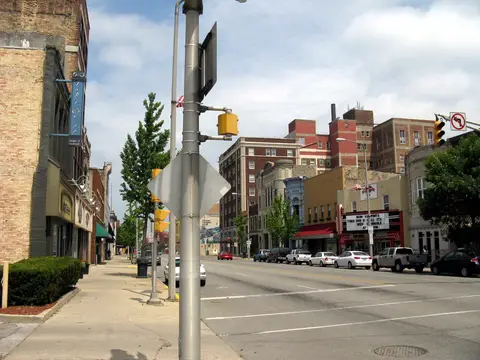
Indiana: Race Tracks, Dunes, and Amish Country
Travel guide · editorialOn the last weekend in May, motorsport fans from around the world turn their eyes to Indiana, when more than 300,000 spectators pack the grandstands for the Indianapolis 500. But a trip to Indiana is worth it even beyond the race: the "Hoosier State" in the Midwest offers shifting dunes on Lake Michigan, limestone gorges, Amish villages, and a surprisingly lively capital.
Landscape Between Lake Michigan and the Ohio River
Northern Indiana borders Lake Michigan along about 70 kilometers (roughly 45 miles) of shoreline. Here you'll find Indiana Dunes, a national park since 2019, with sand dunes up to 60 meters (about 200 feet) high, marshy meadows, and swimming beaches from which you can see the Chicago skyline on clear days. The middle of the state is flat, intensively farmed land planted with corn and soybeans. Farther south, the terrain becomes hillier and more heavily forested: Hoosier National Forest, Brown County State Park, and caves like Marengo Cave show a side of the state that many visitors don't expect. The southern edge is formed by the Ohio River, home to cities such as Evansville and historic Madison.
Indianapolis and Other Cities
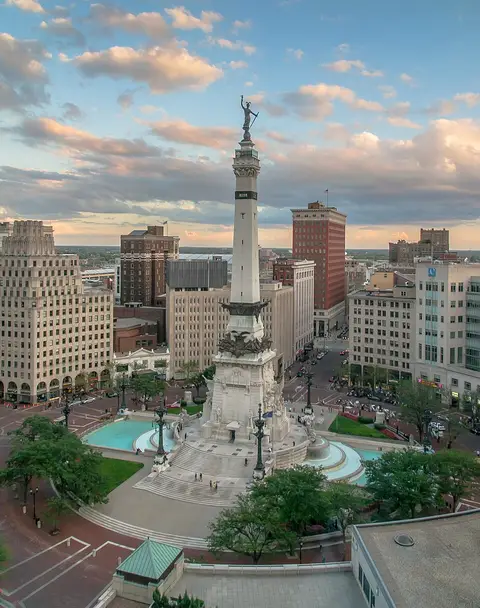
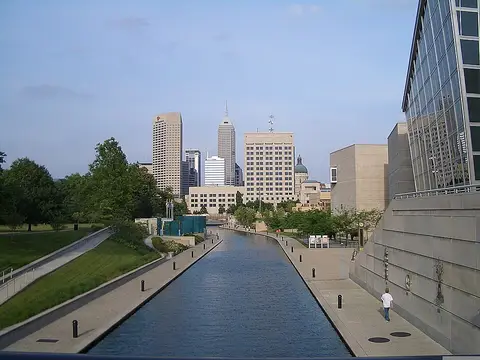
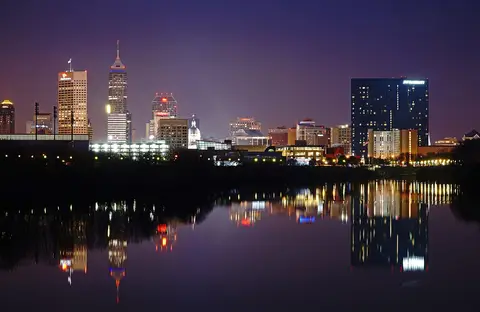
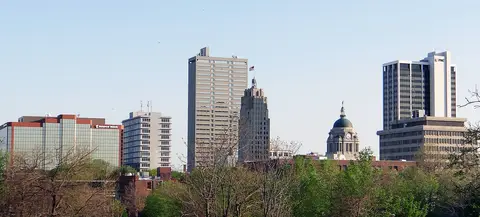
Indianapolis was laid out in 1821 as a planned capital; the streets radiate out like spokes from Monument Circle with the Soldiers' and Sailors' Monument. The Indianapolis Motor Speedway and its museum can also be visited outside of race days, and the Children's Museum is one of the largest children's museums in the world. The Cultural Trail, a bike and pedestrian path through downtown, leads to White River State Park and the Mass Ave district with its theaters and bars. The northern suburbs of Carmel and Fishers are among the fastest-growing cities in the state; Carmel is known for its countless roundabouts. Fort Wayne in the northeast has a renovated riverfront along three rivers. South Bend is inseparably linked with the University of Notre Dame and its golden dome, Bloomington with Indiana University, and Lafayette with Purdue University.
Attractions in Indiana
Besides the Speedway and the dunes, the small city of Columbus, with buildings by Eero Saarinen, I. M. Pei, and other giants of modernism, is among the most unusual attractions in Indiana. In the northeast, around Shipshewana and Nappanee, large Amish communities live; horse-drawn buggies, flea markets, and furniture workshops shape everyday life. In the 19th century, New Harmony on the Wabash River was the site of two utopian experiments—first by a German Pietist group led by Georg Rapp, then by the social reformer Robert Owen. In the south, the Lincoln Boyhood National Memorial commemorates the years Abraham Lincoln spent here as a child. And French Lick, with its magnificent spa hotels, shows how America's upper class vacationed around 1900.
Culture: Basketball and Small-Town Life
Hardly anywhere is basketball revered as passionately as in Indiana. High school tournaments fill huge arenas, the film "Hoosiers" paid tribute to this culture, and the Indiana Pacers play in Indianapolis. The state produced personalities such as Kurt Vonnegut, James Dean, Michael Jackson, and David Letterman. In summer, many counties celebrate their county fairs, and the Indiana State Fair in August is one of the major agricultural fairs of the Midwest.
Food and Drink
The unofficial state dish is the pork tenderloin sandwich: a paper-thin, breaded pork cutlet that extends far beyond the bun. Another classic is sugar cream pie, a custard-style pie dating back to the settlers. In Amish Country, you'll find hearty family-style meals with fried chicken and mashed potatoes; in the south, wineries along the Ohio; and in Indianapolis, the famously fiery shrimp cocktail sauce at St. Elmo Steak House.
Best Time to Visit and Getting There
The best time to visit is between May and October. May brings the Indy 500, summer the dunes on the lake, and in October the forests of Brown County turn color. Winters are cold and gray, summers humid. Indianapolis International Airport (IND) is served mainly via U.S. hubs; the north is easy to reach from Chicago by car or on the South Shore Line, a commuter railroad to South Bend. Within the state, a car is essential.