About USS Constitution
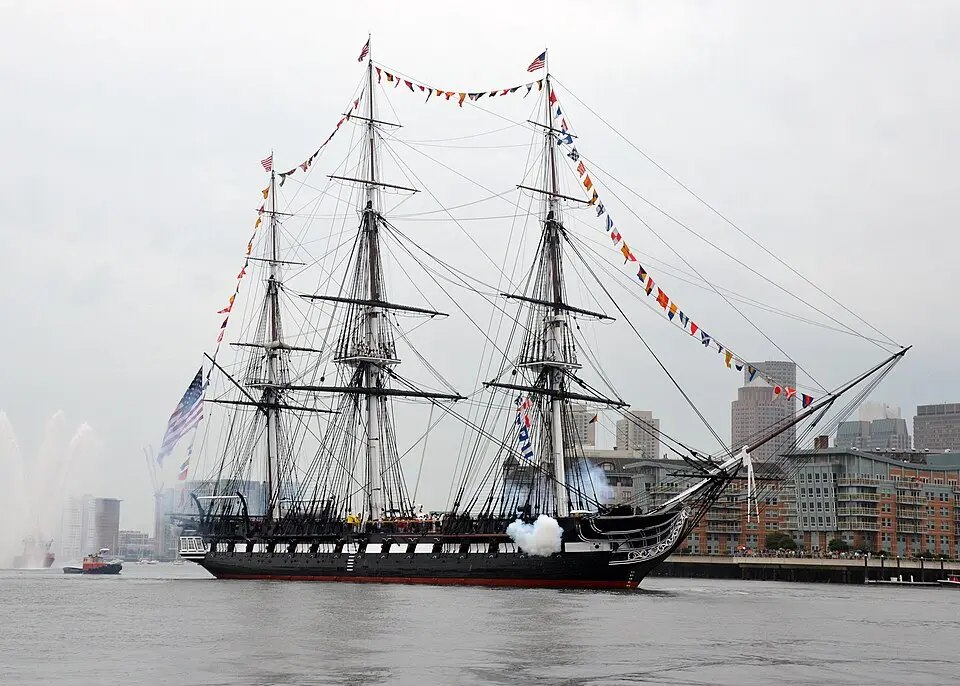
The USS Constitution, known by her nickname Old Ironsides, is a wooden heavy frigate of the United States Navy and the oldest commissioned warship afloat in the world. One of six ships ordered under the Naval Act of 1794, she was originally meant to protect the American merchant fleet from privateers. Her reputation as an invincible ship rests above all on three successful engagements against British warships in the War of 1812, in which she was never defeated. These historic achievements gave the frigate enormous national significance in the United States and made her a central symbol of the country's maritime history.
The Constitution was designed with the involvement of the naval architects Joshua Humphreys, William Doughty, and Josiah Fox. She was built at Edmund Hartt's shipyard in Boston, Massachusetts, where the keel was laid on November 1, 1794. Special attention went into selecting the timber to ensure the hull's extreme strength. For the structurally most important parts, dense, sturdy live oak was used, which had to be laboriously brought up from Georgia. In all, a good 60 acres (24 hectares) of forest were cleared to build the ship, with 2,000 oak trees alone going into her construction. The sides reached an impressive thickness of up to 21 inches (53 centimeters), which greatly increased the ship's resilience in battle.
An innovative architectural feature of the Constitution was her practically continuous spar deck. Unlike British frigates, which had only narrow gangways at this point, the larger American ships had a widened area above the waist. This gave the crew on the gun deck better protection from falling debris from the rigging and allowed additional guns to be temporarily mounted. The longitudinal strength of the long hull also posed a technical challenge, since the Constitution was as long as a contemporary ship of the line but had one deck fewer. To counter the tendency of the ends to sag, extra riders and diagonal braces were installed, though the latter proved not to be lastingly effective.
The frigate's launch on September 20, 1797, got off to a problematic start, as the hull stuck on the ways. Only after further attempts and repairs to the ways did the ship slide into Boston Harbor on October 21, 1797. She was christened by Captain James Sever, who broke a bottle of Madeira over the bowsprit. In her early years of service, the Constitution put her strength to use in the so-called Quasi-War against France, where she fought French privateers and recaptured American merchant ships. Later, in the First Barbary War, she became the flagship of the Mediterranean Squadron, tasked with pressuring the North African coastal states and forcing the release of American prisoners.
The high point of her military career was the War of 1812. After the declaration of war on Great Britain in June 1812, the Constitution put to sea under Captain Isaac Hull. In a dramatic chase, the ship managed to escape a British squadron by having the crew throw cargo overboard and speed the ship along by kedging with warp anchors. On August 19 of that year, the legendary battle against the British frigate Guerriere took place off the coast of Nova Scotia. The Constitution fired a full broadside that destroyed the enemy's mizzenmast. Within 20 minutes, the Guerriere was completely dismasted and had to strike her colors. The nickname Old Ironsides arose from the tale that British shot bounced off the Constitution's stout sides.
Another major victory followed in December 1812 off the coast of Brazil, where the Constitution, under Commodore William Bainbridge, defeated the British frigate Java. Despite the faster Java's advantage of the wind and the destruction of her own wheel by a British shot, the American frigate managed to dismast her opponent with heavy broadsides and force her to surrender. This third victory over a British 38-gun frigate led the British Admiralty to order that the heavy American frigates no longer be engaged singly. The Constitution thus became an American icon for good, while the defeats sparked fierce controversy in Britain and ultimately led to a naval reform.
After the War of 1812, the Constitution served as an active warship for many more years. From 1844 to 1846 she circumnavigated the globe, during which she was also involved in a failed attempt to free a French missionary in Vietnam. In the 1850s she patrolled the African coast against the slave trade and in 1853 captured the schooner H.N. Gambrill, her last prize. During the American Civil War the ship was used to train noncommissioned officers, and afterward served for a long time as a training ship for midshipmen. A notable episode was her voyage to the Paris Exposition in 1878, during which she ran aground on the return trip and had to be salvaged by the Royal Navy.
In the 20th century the frigate was repeatedly threatened with being broken up, but public protest saved her time and again. In 1905 she was spared from scrapping, and in 1925 she was repaired with donations. In 1931 she was recommissioned and made a grand tour of 90 U.S. port cities, where millions of people toured her. Since 1954, the Secretary of the Navy has been responsible for her upkeep, and she is moored in the former Boston Navy Yard in the Charlestown neighborhood. In 1960 the Constitution was designated a National Historic Landmark.
Today the Constitution is a living museum and a ceremonial ship of state. She is open to visitors free of charge and is operated by a crew of 55 active-duty sailors who take part in ceremonies, educational programs, and official events. The ship serves to represent the U.S. Navy and keep maritime history alive. To secure the preservation of the historic wood for the future, the Navy maintains the Constitution Grove in Indiana, a stand of white oaks from which replacement parts can be made in the future.
In recent years there have been further historic milestones. In 1997, for the 200th anniversary of her commissioning, the frigate put to sea under sail for the first time in more than 100 years. In 2012 came another sail to mark the 200th anniversary of the victory over the Guerriere. After extensive restoration work that renewed the deck and restored the hull, the ship was returned to her original condition. In 2022, for the first time in 224 years, a woman, Commander Billie J. Farrell, took command of the Constitution, marking yet another historic moment in the story of this legendary ship.
At a glance
- Category
- Museum › History museums
- Rating
- no reviews yet · write a review
- Address
- 22 Charlestown Navy Yard
02129-45ND Boston, USA - District
- Charlestown
- Phone
- +16175922550
- Website
- www.navy.mil
- ussc.pao@gmail.com
- Coordinates
- 42.37253° N · -71.05648° E
- Data quality
- confidence 0.95
- Identifier
- ID b13fa083-e47…
Location & surroundings
Toggle layersRatings & comments
none yetNear USS Constitution
closest 5 per category · 2 kmSights
Restaurants
Museums
Hotels
More:History museums in Boston (40)All museums in Boston (118)
255 places within 2 km loaded.
Don't miss in Boston
All sights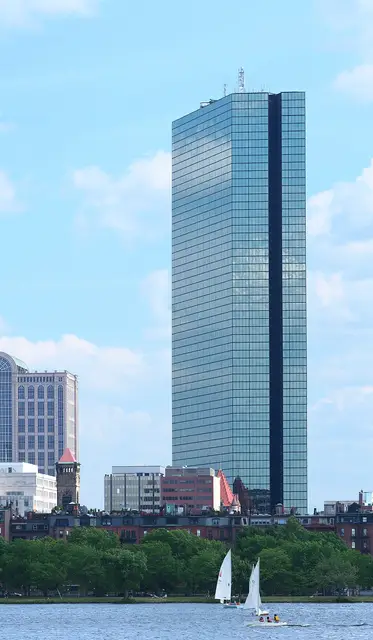 Historic sites01
John Hancock Tower
200 Clarendon St · Boston○ Website● Phone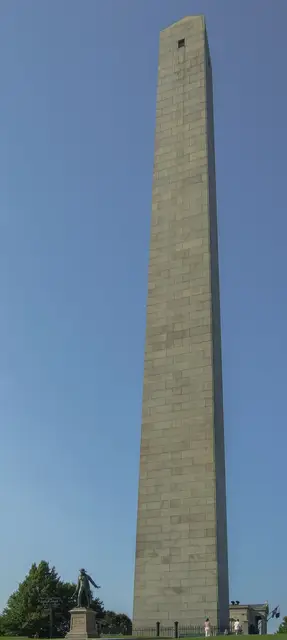 Monuments02
Bunker Hill Monument
100 Monument Sq · Boston● Website● Phone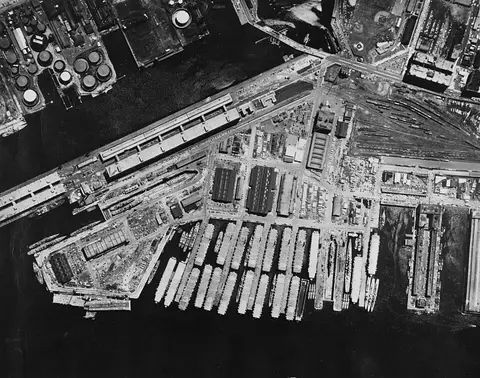 Historic sites03
Boston Naval Shipyard
Boston, Massachusetts · Boston● Website● Phone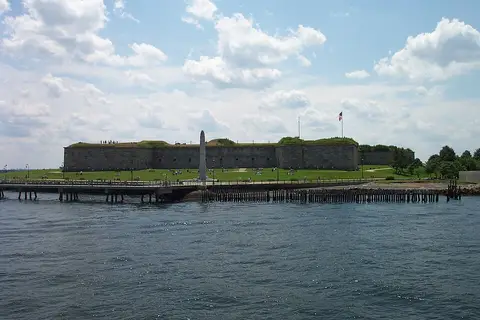 Forts04
You need a free account to leave reviews and photos – that keeps comments genuine and lets you edit them later.
After the Revolution, citizens proved their willingness to defend their newfound freedom and economic independence by developing and supporting a navy. From 1800 to 1974, Charlestown Navy Yard built, repaired, and outfitted US naval vessels. Today the yard is home to the USS Constitution , the oldest commissioned warship afloat in the world, and the USS Cassin Young , refitted and modernized in the yard's drydock, represents the type of ship built here during World War II.
Source: Wikivoyage, „Freedom Trail“ · authors per page history · CC BY-SA 4.0 · as of 2/6/2026