Wales: Castles, Mountains, and a Language of Its Own
Travel guide · editorialEven at the border, the place-name signs are bilingual, and by the time you reach the name Llanfairpwllgwyngyll, you realize that Wales is no appendage of England but a country with its own language and its own pride. A vacation in Wales means hiking in the mountains of Eryri, walking coastal paths in Pembrokeshire, and visiting more castles per square mile than almost anywhere else in Europe. And all this in a country barely larger than the state of New Jersey.
Mountains and Coasts
In the northwest lies Eryri National Park, still often known internationally as Snowdonia. Its highest peak, Yr Wyddfa (Snowdon), stands 3,560 feet (1,085 meters) tall and can be reached on foot or by rack railway from Llanberis. The center of the country is shaped by the gentle, sheep-dotted Cambrian Mountains, and the south by the bare heights of the Bannau Brycheiniog, formerly the Brecon Beacons. Nearly the entire coastline is accessible via the Wales Coast Path, about 870 miles (1,400 km) long. Particularly impressive are the cliffs and bays of Pembrokeshire in the southwest and the Gower Peninsula near Swansea, which in 1956 became the first area in Britain to be designated an Area of Outstanding Natural Beauty. Off the north coast lies the island of Anglesey, with its lighthouses and bird colonies.
Cities and Seaside Resorts
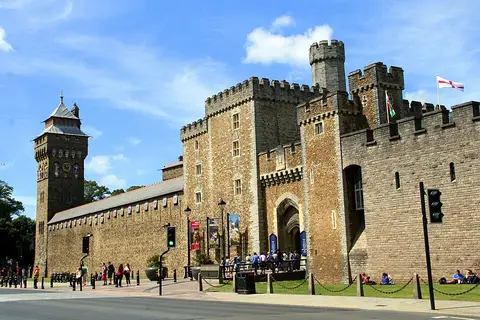
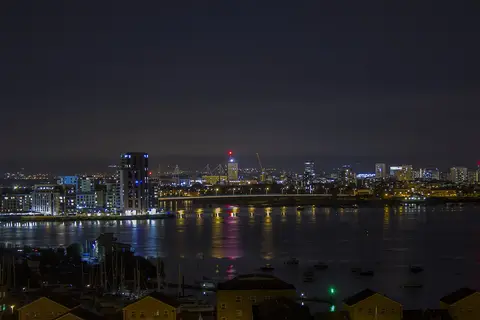
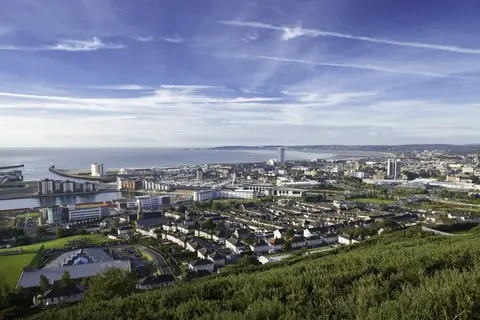
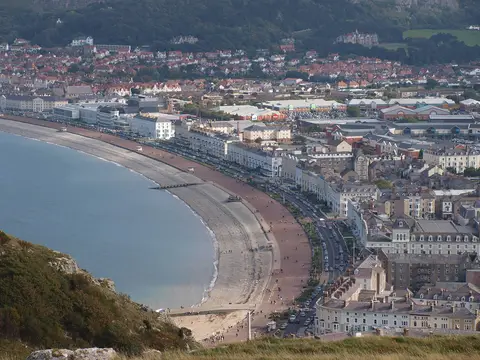
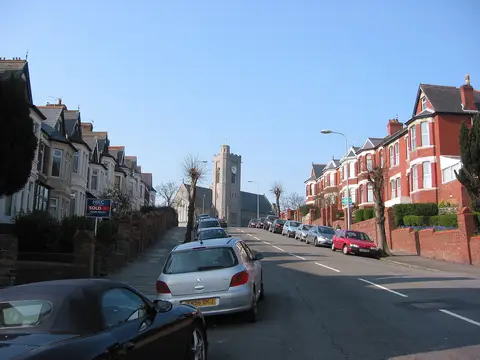
Cardiff has only been the capital since 1955 and has changed dramatically since then. Cardiff Bay grew up around the former coal docks, home to the Welsh Parliament, the Senedd, and the Wales Millennium Centre; the city center is home to Cardiff Castle and the Principality Stadium, where the whole country sings along at rugby matches. Swansea, the second-largest city, is the birthplace of the poet Dylan Thomas and the starting point for exploring Gower. Newport and Wrexham lie close to the English border; Wrexham has become famous for its soccer club, now owned by Hollywood actors. In the north, Llandudno with its Victorian promenade and Rhyl are classic seaside resorts, in the south Barry Island draws visitors with its sandy beach, and the colorful harbor town of Tenby in Pembrokeshire is among the most popular destinations in Wales.
Sights in Wales
The best-known sights in Wales are its castles. In the 13th century, Edward I had Caernarfon, Conwy, Harlech, and Beaumaris built in the north to subdue the Welsh; together they are now a UNESCO World Heritage Site. Caerphilly Castle near Cardiff is one of the largest castle complexes in Britain. Entirely different is Portmeirion, an Italianate fantasy village created by the architect Clough Williams-Ellis. The Pontcysyllte Aqueduct carries a canal nearly 130 feet (40 meters) above the Dee Valley, and St Davids, with its cathedral, is the smallest city in Britain. At the Big Pit near Blaenavon, visitors descend into a real coal mine with former miners as guides.
Language, History, and Culture
Welsh, Cymraeg, is a Celtic language spoken by just under a third of the population, and in the northwest it is often the everyday language. Since the English conquest in 1283, Wales has been politically tied to its neighbor, and since 1999 it has had its own parliament. In the 19th century, coal and slate turned the valleys of the south and the mountains of the north into industrial centers; the slate landscape of northwest Wales is now a World Heritage Site as well. The Eisteddfod, a major festival of poetry, music, and song, takes place in a different location every year, and the male choirs are as much a part of Welsh identity as rugby.
Food and Drink
Welsh cooking is hearty and down-to-earth. Cawl, a stew of lamb and leeks, is considered the national dish, and the leek itself is one of the national symbols. Welsh rarebit is melted cheese with mustard and beer on toast, and Welsh cakes are small, griddle-baked tea cakes with raisins. Mountain lamb has a special reputation, as do Caerphilly cheese and cockles from Penclawdd Bay. Laverbread, a purée of seaweed, is traditionally eaten for breakfast. In recent years, small breweries, gin distilleries, and even wineries have joined the scene.
Getting There and Best Time to Visit
Cardiff Airport has only a few international connections; many travelers fly into Bristol, Manchester, or London and continue from there. From London Paddington, the train reaches Cardiff in about two hours. Inland and along the coast, a car offers the most flexibility, supplemented by historic narrow-gauge railways such as the Ffestiniog Railway. Ferries connect Holyhead and Fishguard with Ireland. The best time to visit is May through September; in spring, gorse and bluebells are in bloom, and autumn paints the valleys in color. Weatherproof clothing belongs in every suitcase, since the west wind frequently brings rain.