Discovering Leeds: Arcades, a Market Hall, and an Abbey Ruin
Travel guide · editorialIn 1884, an immigrant from what is now Belarus opened a stall in a Leeds market hall where everything cost a penny – Michael Marks’ stall later grew into the department store chain Marks & Spencer. A city break in Leeds takes you to magnificent shopping arcades, one of the largest covered market halls in Europe, excellent museums, and the edge of the Yorkshire Dales.
Wool Town of the North
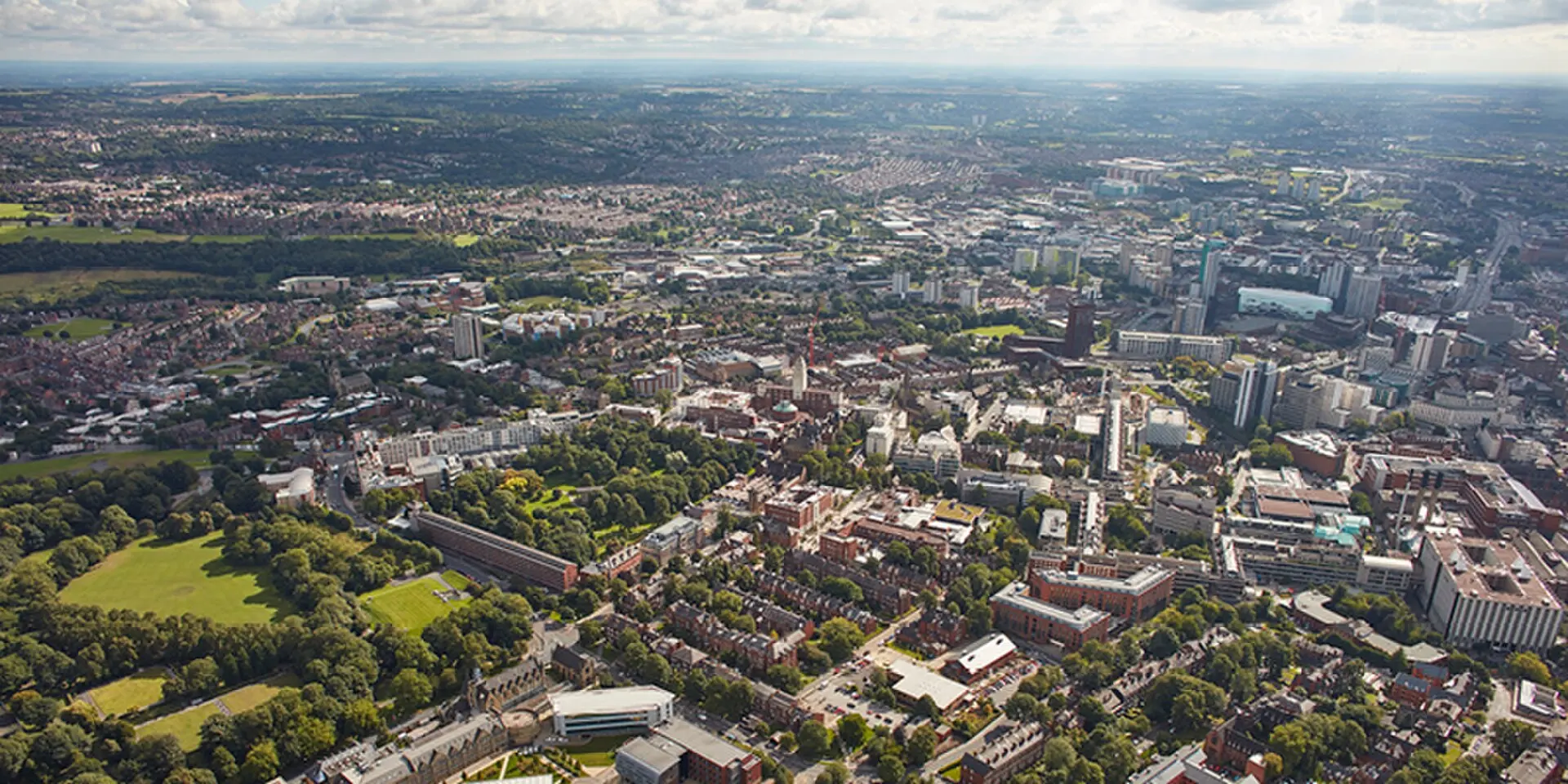
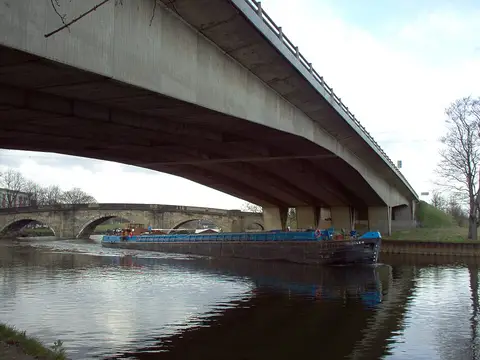
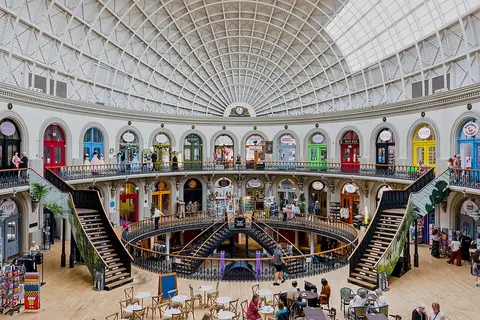
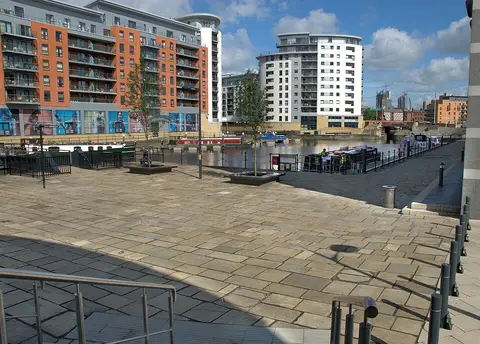
In the 18th and 19th centuries, Leeds grew into one of England’s richest cities thanks to the wool trade and the textile industry. Victorian buildings bear witness to this, above all the Town Hall, which Cuthbert Brodrick built in 1858 with a mighty clock tower and Corinthian columns and which Queen Victoria opened in person. The same architect designed the oval Corn Exchange, now full of small shops. A curiosity is Temple Works, a flax mill built in the style of an Egyptian temple. Today Leeds is a center for finance, media, and higher education, and new residential and cultural districts have sprung up around the River Aire and the Leeds and Liverpool Canal.
Sights in Leeds
The Victoria Quarter brings together covered arcades with mosaic floors, glass roofs, and marble, designed by the theater architect Frank Matcham; fashion boutiques line up side by side here. Kirkgate Market, with its cast-iron hall of 1904, is an experience in itself, with butchers, fish stalls, street food, and the Marks & Spencer memorial stall. By the river, the Royal Armouries Museum shows the national collection of arms and armor, from samurai gear to elephant armor. Leeds Art Gallery and the Henry Moore Institute are devoted to sculpture. On the edge of the city lies the ruin of Kirkstall Abbey, one of England’s best-preserved Cistercian abbeys, and to the north is Roundhay Park, one of the largest city parks in Europe.
Neighborhoods, Food, and Nightlife
Bars and clubs cluster around Call Lane and the Exchange Quarter, while breweries and restaurants have moved into the vaults under the railway arches. Headingley in the north is the student district and also home to the cricket ground that hosts Test matches. Chapel Allerton offers cafés and restaurants with a village atmosphere. On the table you’ll find Yorkshire pudding with the Sunday roast, fish and chips, and rhubarb from the Rhubarb Triangle between Leeds, Wakefield, and Morley, where the stalks are harvested by candlelight in dark forcing sheds in winter. The city has a lively craft beer scene and a long tradition of real ale.
Culture and Festivals
Leeds is home to Opera North and Northern Ballet, and the 19th-century Grand Theatre is lavishly appointed. In August, the Leeds Festival draws rock fans to Bramham Park, and the Caribbean carnival in Chapeltown has been one of the oldest in Europe since 1967. On summer evenings, open-air concerts are held in Millennium Square.
Getting There and Best Time to Visit
Leeds Bradford Airport is about 30 minutes to the northwest, with buses connecting to the city center; Leeds station is one of the biggest rail hubs in the north, and London is about two and a quarter hours away. Leeds has no subway, but the city center is easy to explore on foot. The best time to visit is from May to September. Day trips lead to the Yorkshire Dales, York, or Saltaire, a UNESCO-listed model village of the 19th century.