Geneva: A World City at the End of Lake Geneva
Travel guide · editorialThe canton of Geneva is small, almost completely surrounded by France, and yet one of the most internationally renowned places in the world. A vacation in Geneva means lakeside promenades with views of Mont Blanc, a Calvinist Old Town, diplomatic districts, and vineyards that begin just a few miles outside the city.
City, Lake, and Countryside
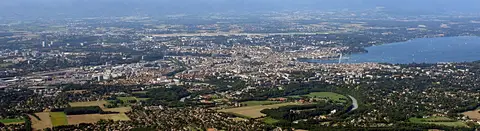
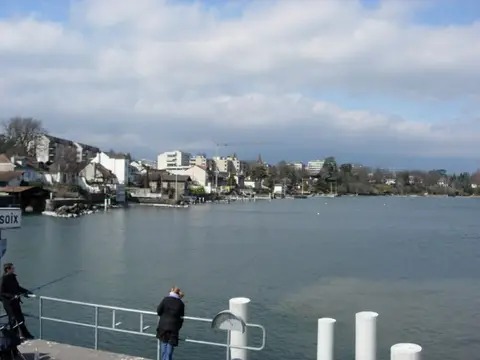
Geneva lies where the Rhône leaves Lake Geneva. The city takes up most of the canton, but all around it stretches a surprisingly rural zone: Satigny is considered the largest wine-growing municipality in Switzerland, and Gamay and Chasselas grow in the Mandement. On the north shore you'll find Versoix with its harbor and the villas of Cologny; to the west lies Meyrin, which shares the border with France with the CERN research center. Le Grand-Saconnex is home to the airport and several international organizations.
Sights in Geneva
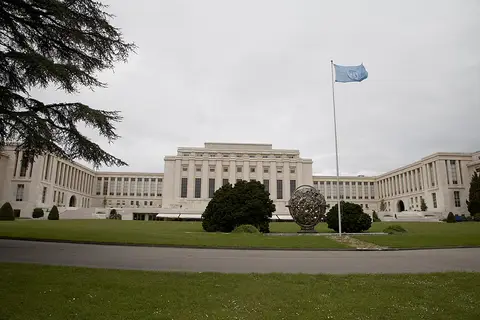
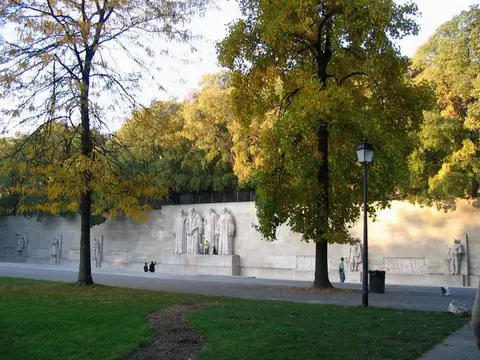
The city's landmark is the Jet d'Eau, a fountain that shoots roughly 140 meters (460 feet) into the sky. Behind the lakeside promenade, the Old Town rises up: Saint-Pierre Cathedral, where John Calvin preached, rests on the foundations of earlier churches, whose remains can be seen at an archaeological site beneath the building. In the Parc des Bastions, the Reformation Wall commemorates Calvin, Farel, Beza, and Knox. Other well-known sights in Geneva include the Palais des Nations, the European headquarters of the United Nations, the International Red Cross and Red Crescent Museum, the Flower Clock in the Jardin Anglais, and the Musée d'art et d'histoire. At CERN in Meyrin, the Science Gateway visitor center explains particle physics.
A walk leads along the Quai du Mont-Blanc to the Bains des Pâquis and on to Parc La Grange with its rose garden. On the right bank, the Ariana Museum showcases porcelain and glass art, and the Old Town street Grand-Rue, where Rousseau was born, invites you to stroll.
History and Culture
In the 16th century, Geneva became the "Protestant Rome" under Calvin, and many religious refugees from France and Italy brought crafts with them, including watchmaking. In 1815, Geneva joined the Swiss Confederation. Since Henri Dunant founded the Red Cross in 1863, the city has been associated with humanitarian diplomacy. Every December, Geneva celebrates the Escalade, commemorating a repelled Savoyard attack in 1602: people parade through the Old Town in costume and smash a chocolate marmite.
Food and Drink
Typical dishes include longeole, a pork sausage seasoned with fennel, served with cardoon, an artichoke-like vegetable prepared as a gratin. Perch fillets come from the lake and are served pan-fried in the lakeside restaurants. The Carouge district, built in the 18th century by the King of Sardinia as a counterpart to Calvinist Geneva, has an almost Mediterranean character with its studios and bistros.
Getting There and Best Time to Visit
Geneva Airport is only a seven-minute train ride from Cornavin main station, and hotel guests receive a public transportation ticket. Trains run to Lausanne, Bern, and Zurich, and the cross-border Léman Express network goes as far as Annemasse and Évian. The best time to visit is from April to October, when you can swim in the lake, for example at the Bains des Pâquis, where you can have a fondue with a lake view in winter.