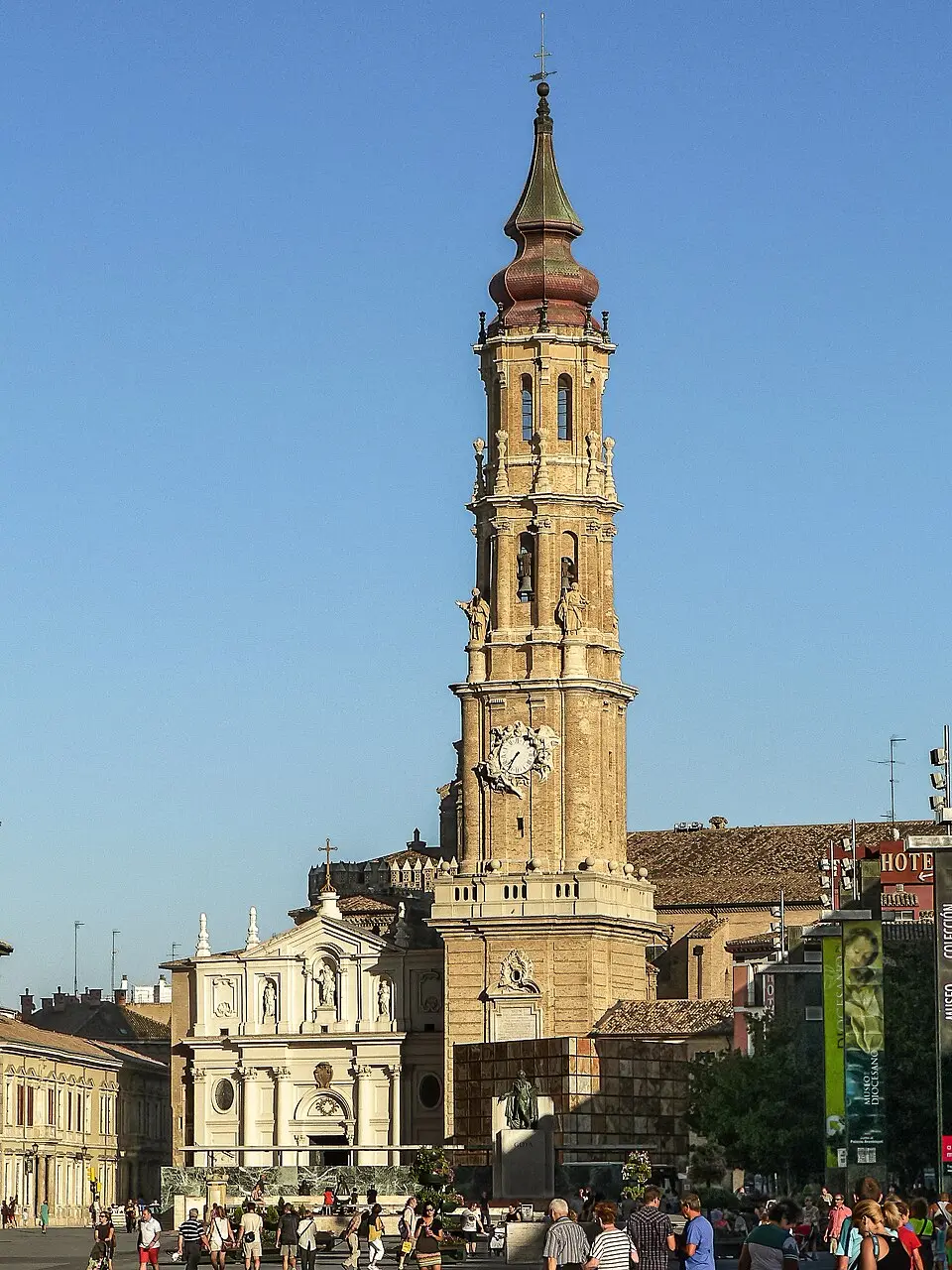
About Catedrales de Zaragoza
The Cathedral of the Savior, popularly known as La Seo, is the spiritual and historic heart of Zaragoza in Spain's Aragon region. It sits on the Plaza de la Seo and shares the status of co-cathedral with the nearby Basilica of El Pilar. The name La Seo comes from the Aragonese word for a bishop's seat and distinguishes it from the neighboring Basilica of Our Lady. As part of the UNESCO World Heritage site Mudéjar Architecture of Aragon, the building embodies a fascinating layering of cultures and eras spanning more than eight centuries.
The history of the site reaches back to antiquity. The grounds were once the Roman forum of Caesaraugusta, which, unusually, lay not at the crossing of the main streets but near the Ebro River and the port. After the Moorish conquest, the main mosque of Saraqusta al Baida was built here, one of the oldest mosques in Al-Andalus. When King Alfonso I the Battler entered the city in 1118, he did not have the building torn down right away but consecrated it in 1121 as a Christian church under the name San Salvador.
Construction of the Romanesque cathedral proper began in 1140. The new house of worship, with three naves and a transept, took its stylistic cues from Jaca Cathedral. From this Romanesque phase, the lower parts of the apses survive today, decorated on the outside with characteristic checkerboard patterns. Within these apses is a sculpture group that is now hidden behind the high altar. From 1204 until the 15th century, the church served as the coronation site for all Aragonese kings, a privilege granted by Pope Innocent III. The last coronation in this building took place in 1518 under Charles I.
When the city was elevated to an archbishopric in 1318, a new building phase began that shaped the Gothic-Mudéjar style. Because stone was expensive, the builders turned to brick and plaster, materials that were readily available in the region. Under Archbishop Pedro López de Luna, the central nave was raised to make room for large windows, which were fitted with stained glass beginning in 1447. A highlight of this period is the Mudéjar dome, built between 1346 and 1376 to flood the chancel with light.
An architectural jewel from this era is the Parroquieta, the Chapel of the Archangel Michael. It was built in 1360 as a self-contained, enclosed chapel within the cathedral and originally served as a funerary chapel. Its outer wall is covered with geometric patterns of glazed ceramics and plain bricks, a unique example of collaboration between Aragonese and Sevillian master builders. Inside, a gilded wooden ceiling in the Mudéjar style is impressive. This chapel is a central draw for visitors who want to admire the fine craftsmanship of the period.
In the early 15th century, the old dome collapsed, prompting the antipope Benedict XIII to order a comprehensive reconstruction. The Romanesque apses were raised, and a new dome in the shape of a papal tiara was built, decorated in 1409 by the master Mohammed Rami. These Renaissance elements blend harmoniously into the overall picture. Nearby is also the tomb of Archbishop Don López Fernández de Luna, another example of Renaissance architecture within the complex.
The Baroque tower that defines the cathedral's appearance today was not completed until the 18th century. After the decayed Mudéjar tower was demolished, construction of the new tower began in 1686 to a design by Juan Bautista Contini that had been drawn up in Rome. The spire was added in 1704. The main façade was designed in the 18th century in an Italian Baroque style with neoclassical touches, which underscores the contrast with the older surrounding structure.
Inside the cathedral, visitors will find a multitude of chapels stretching along the side aisles. On the right side are, among others, the Chapel of the Immaculate Conception, with a late Gothic structure and Baroque altarpieces, and the Chapel of Saint Valero, the city's patron saint, which is furnished with a gilded wooden portal and wall paintings. The Chapel of Saint Pedro Arbués commemorates the inquisitor who was murdered in 1485 and whose tomb is located here.
On the left side, the Chapel of Saint Bernard dominates, a masterpiece of the Aragonese Renaissance style. It houses the tombs of Archbishop Hernando de Aragón and his mother, both made of alabaster. The Chapel of Saint Benedict and the Chapel of the Nativity, with their Renaissance grilles, are also worth seeing. The choir stalls consist of 117 oak seats crafted by monks and surrounded by a bronze grille with gilded sculptures.
A special highlight is the Museum of Flemish Tapestries, which ranks among the three largest collections of its kind in the world. The tapestries date from the 15th, 16th, and 17th centuries and offer insight into the textile art of that time. The high altar, dedicated to the Savior, is a masterpiece of European Gothic sculpture, created from painted alabaster between 1434 and 1480.
La Seo Cathedral is far more than a religious building; it is a living testimony to the history of Zaragoza. Careful restoration in the second half of the 20th century made the building shine anew and revealed the archaeological layers from Roman to Islamic times. Here, visitors can experience the diversity of styles, from Romanesque through Gothic and Mudéjar to Baroque and Neoclassicism, in a single place.
At a glance
- Category
- Sight › Monuments
- Rating
- no reviews yet · write a review
- Address
- Plaza de la Seo, 4
50001 Zaragoza, Spain - District
- Casco Histórico
- Phone
- +34608219566
- Website
- catedraldezaragoza.es
- catzaragoza@artisplendore.com
- Coordinates
- 41.65518° N · -0.87628° E
- Data quality
- confidence 0.99
- Identifier
- ID bb173742-0c2…
Part of the tour
Zaragoza in One Day: Aljafería, Pilar and La Seo →Location & surroundings
Toggle layersRatings & comments
none yetNear Catedrales de Zaragoza
closest 5 per category · 2 kmSights
Museums
Hotels
More:Monuments in Zaragoza (28)Sights in Casco Histórico (49)All sights in Zaragoza (137)
245 places within 2 km loaded.
Don't miss in Zaragoza
All sights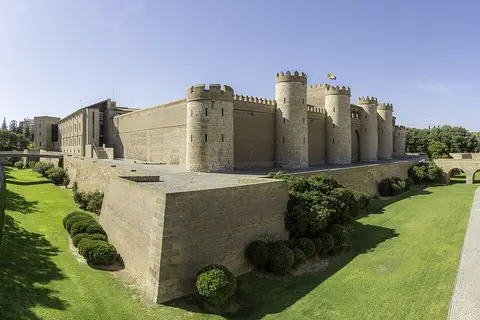 Monuments01
Palacio de la Aljafería
Calle De Los Diputados S/N · Zaragoza● Website● Phone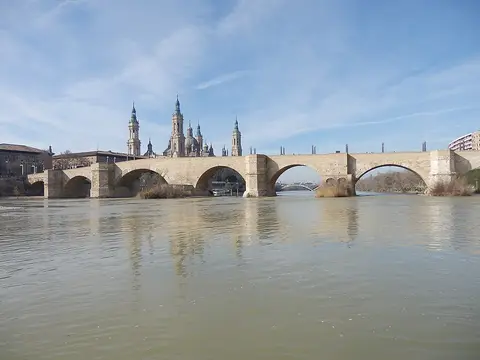 Historic sites02
Puente de Piedra
Hostal Puente de Piedra, Avenida de Cataluña, 13 · Zaragoza○ Website● Phone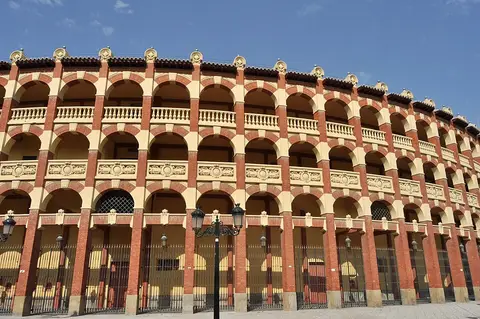 Historic sites03
Plaza de Toros de Zaragoza
Calle Ramón Pignatelli, 122 · Zaragoza● Website○ Phone Monuments04
You need a free account to leave reviews and photos – that keeps comments genuine and lets you edit them later.