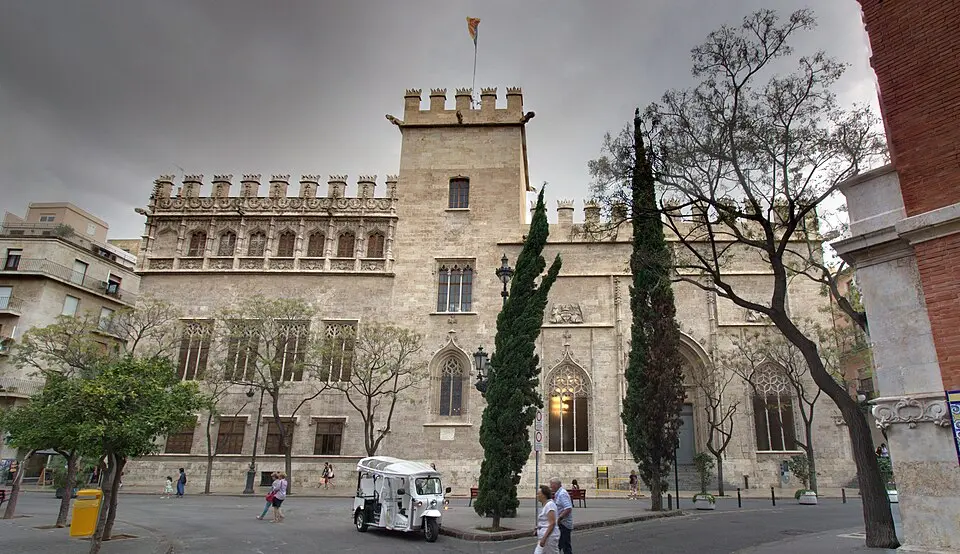
About Llotja de la Seda
The Llotja de la Seda (Silk Exchange) in Valencia is an outstanding example of Valencian Gothic architecture and is considered one of the most important secular buildings in Europe. Built between the late 15th and early 16th centuries, it originally served as an oil market and later became the city's central silk exchange. The complex includes a three-aisled columned hall with twisted columns, a fortified tower with a chapel, a courtyard with orange trees, and the wing of the Consulado del Mar, which already shows Renaissance elements. Today the building houses Valencia's cultural academy and serves as an exhibition venue. Since 1996, the Silk Exchange has been a UNESCO World Heritage Site, inviting you to explore historic commercial architecture.
At a glance
- Category
- Sight › Historic sites
- Rating
- no reviews yet · write a review
- Address
- Pl. del Mercat 30
46001 Valencia, Spain - District
- el Mercat
- Phone
- 963 52 54 78
- Website
- www.valencia.es
- —
- Coordinates
- 39.47458° N · -0.37852° E
- Data quality
- confidence 0.77
- Identifier
- ID a89f5289-ed2…
Part of the tour
Valencia in One Day: Old Town, Silk Exchange and Art Nouveau →Location & surroundings
Toggle layersRatings & comments
none yetNear Llotja de la Seda
closest 5 per category · 2 kmSights
Restaurants
Museums
More:Historic sites in Valencia (218)All sights in Valencia (257)
300 places within 2 km loaded.
Don't miss in Valencia
All sights Historic sites01
La Lonja de la Seda de Valencia
C/ de la Llotja, 2 · Valencia● Website● Phone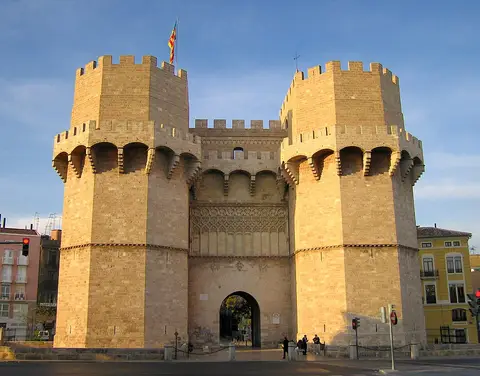 Monuments02
Torres dels Serrans
Plaza de los Fueros, 5 · Valencia● Website● Phone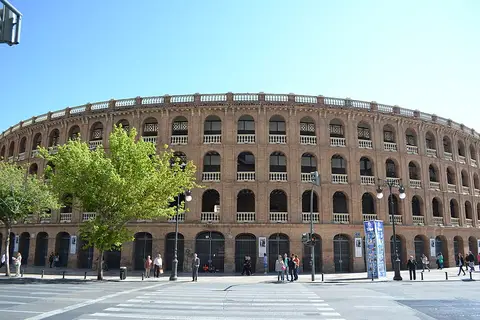 Historic sites03
Plaza de Toros de Valencia
Carrer de Xàtiva, 28 · Valencia● Website● Phone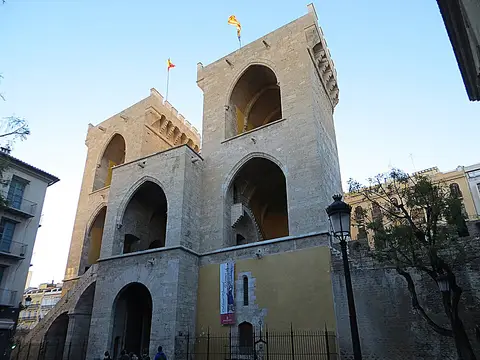 Monuments04
You need a free account to leave reviews and photos – that keeps comments genuine and lets you edit them later.
This UNESCO landmark is considered to be one of the most significant secular Gothic buildings in Europe. It was built between 1482 and 1533 on the site of an earlier oil exchange. The Llotja consists of four distinct parts: the Sala de Contractació (Trading Hall), also known as the Saló Columnari (Hall of Columns); the Sala Consulado del Mar with its magnificent ceiling; the unfinished Torre (tower) with its debtor prison (temporarily closed to visitors), and the Pati dels Tarongers (Patio of Oranges). Some of the Gothic gargoyles are quite naughty.
Source: Wikivoyage, „Valencia“ · authors per page history · CC BY-SA 4.0 · as of 6/29/2015