About Casa de Pilatos
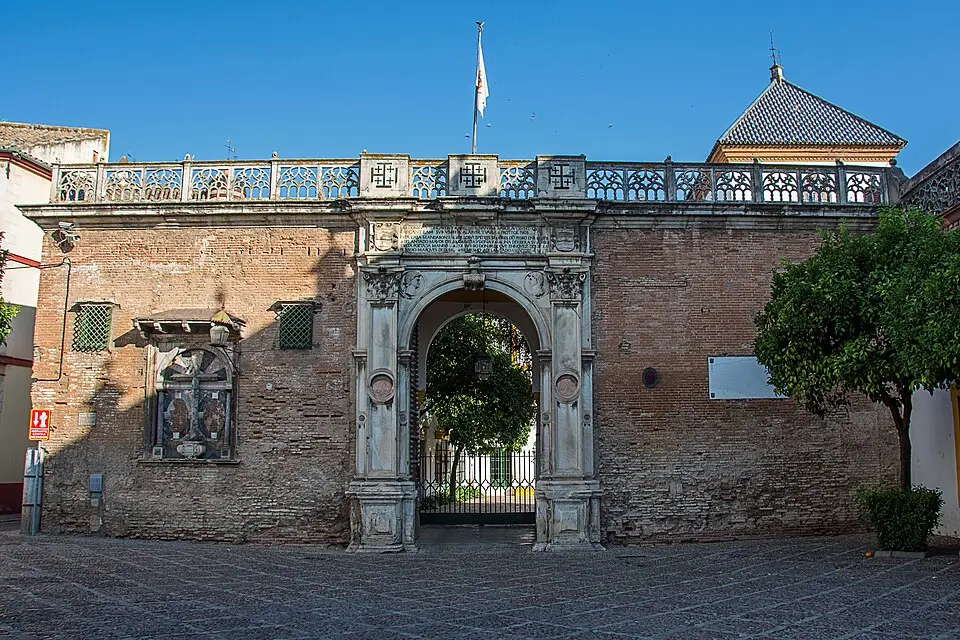
The Casa de Pilatos in Seville is an outstanding example of Andalusian aristocratic architecture, harmoniously blending Mudéjar traditions with forms of the Italian Renaissance. The city palace was built and expanded by the Enríquez de Ribera family between the late 15th and early 17th centuries. Originally constructed on land that had belonged to converted Jewish families, it grew into a stately family seat that underscored the social standing of its owners. The period under Fadrique Enríquez de Ribera was especially formative; after a pilgrimage to Jerusalem, he introduced Italian Renaissance elements to the city. He had the central courtyard surrounded with arcades and installed marble elements from Genoa, making the palace a key work in the transition from the Middle Ages to the modern era.
At the heart of the complex, you'll find the Patio Principal, regarded as one of the most perfect palace courtyards of the early Spanish Renaissance. Here, Gothic arches resting on slender marble columns surround an octagonal fountain of Carrara marble. The corners of the courtyard are adorned with ancient sculptures brought to Seville from Italy in the 16th century, including figures such as Pallas Pacifera and Ceres Fructifera. On the west side, two gardens open up, embodying the ideal of uniting architecture and nature. The facades combine local brickwork with imported marble, while the interiors impress with elaborate coffered wooden ceilings, in which the load-bearing structure doubles as a decorative element.
Beyond its architecture, the Casa de Pilatos houses a significant private art collection. It includes ancient marble sculptures, glazed clay tiles made using the so-called cuerda seca technique, and paintings by Italian and Spanish masters. On the upper floor, you'll see ceiling paintings by Francisco Pacheco that combine humanist ideals with Christian morality. Since 1980, the building has been managed by the Fundación Casa Ducal de Medinaceli as a cultural monument and museum open to the public. Thanks to its architectural diversity, the palace has also served as a filming location for numerous international productions, which has further boosted its fame worldwide.
At a glance
- Category
- Sight › Palaces
- Rating
- no reviews yet · write a review
- Address
- Pl. de Pilatos, 1
41003 Seville, Spain - District
- San Bartolomé
- Phone
- +34954225298
- Website
- www.fundacionmedinaceli.org
- casapilatos@fundacionmedinaceli.org
- Coordinates
- 37.38996° N · -5.98719° E
- Data quality
- confidence 0.99
- Identifier
- ID 4a7c2b15-2a4…
Part of the tour
Palaces, Patios, and Arenal: A Walk Through Seville's Old Town →Location & surroundings
Toggle layersFAQ about Casa de Pilatos
quick answersWhat is the Casa de Pilatos in Seville?
The Casa de Pilatos is an urban palace in Seville and is considered an outstanding example of Andalusian noble architecture, blending Mudéjar traditions with Italian Renaissance forms. The Enríquez de Ribera family built and expanded the palace between the late 15th and early 17th centuries. Fadrique Enríquez de Ribera was especially influential: after a pilgrimage to Jerusalem, he introduced Italian Renaissance elements and had marble from Genoa installed. Since 1980, the Fundación Casa Ducal de Medinaceli has managed the building as a cultural monument and museum open to the public.
What makes the Patio Principal of the Casa de Pilatos special?
The Patio Principal at the heart of the Casa de Pilatos in Seville is considered one of the most perfect palace courtyards of the early Spanish Renaissance. Gothic arches rest on slender marble columns, surrounding an octagonal fountain made of Carrara marble. In the corners of the courtyard stand ancient sculptures that were brought to Seville from Italy in the 16th century, including Pallas Pacifera and Ceres Fructifera. Two gardens adjoin the west side of the palace, combining architecture and nature.
What works of art can you see in the Casa de Pilatos?
The Casa de Pilatos in Seville houses a significant private art collection. It includes ancient marble sculptures, glazed ceramic tiles made using the cuerda seca technique, and paintings by Italian and Spanish masters. On the upper floor, you'll find ceiling paintings by Francisco Pacheco that combine humanist ideals with Christian morality. Also worth seeing are the elaborate coffered wooden ceilings, in which the load-bearing structure doubles as decoration.
What can you see around the Casa de Pilatos in Seville?
Around the Casa de Pilatos in Seville's San Bartolomé neighborhood, several attractions are within walking distance. travelguide195 lists the Museum of Flamenco at about 60 meters, the Palacio de Mañara at about 220 meters, and the Plaza de la Alfalfa at about 300 meters away. Also roughly 300 meters away is the Casa Natal de Velázquez, the birthplace of the painter Velázquez.
Where is the Casa de Pilatos, and are there restaurants nearby?
The Casa de Pilatos is located at Pl. de Pilatos, 1 in the San Bartolomé neighborhood in Seville's old town. travelguide195 lists around 148 restaurants within 500 meters. The palace is also a stop on the tour "Palaces, Patios, and Arenal: A Walk Through Seville's Old Town."
Ratings & comments
none yetNear Casa de Pilatos
closest 5 per category · 2 kmSights
Restaurants
Museums
Hotels
More:All sights in Seville (269)
290 places within 2 km loaded.
Don't miss in Seville
All sights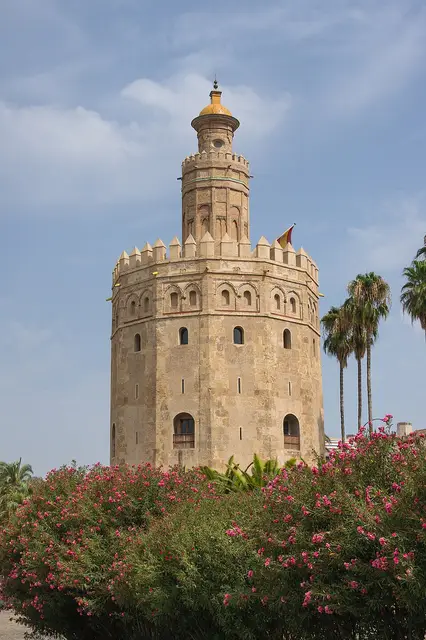 Historic sites01
Torre del Oro
The Golden Tower, P.º de Cristóbal Colón, s/n · Seville● Website● Phone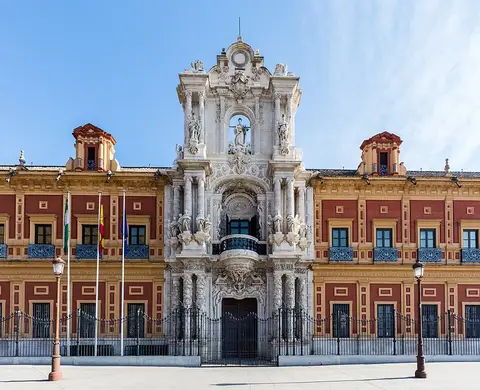 Palaces02
Palacio de San Telmo
P.º de Roma · Seville● Website● Phone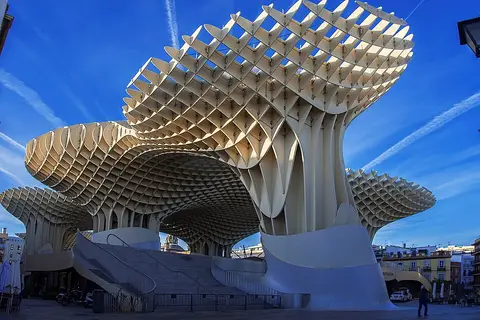 Monuments03
Metropol Parasol
Pl. de la Encarnación · Seville● Website● Phone Historic sites04
You need a free account to leave reviews and photos – that keeps comments genuine and lets you edit them later.
A 16th-century palace and generally thought to be one of the best in the city.
Source: Wikivoyage, „Seville“ · authors per page history · CC BY-SA 4.0