Community of Madrid: The Capital and the Sierra
Travel guide · editorialThe Community of Madrid is barely larger than a mid-sized German state, yet roughly one in seven Spaniards lives here. A vacation in the Community of Madrid means world-class museums, tapas crawls that run past midnight – and, just an hour away, granite peaks, monasteries, and royal palaces.
Location: The Center of the Peninsula
Madrid sits on the Castilian plateau at an elevation of about 650 meters (2,130 feet), almost exactly in the middle of the Iberian Peninsula. The region is shaped like a triangle, wedged between Castile and León to the north and Castilla-La Mancha to the south. To the northwest, the Sierra de Guadarrama forms a natural boundary; its highest summit, Peñalara, reaches a good 2,400 meters (about 7,900 feet) and has been part of a national park since 2013. To the south and east the land flattens out, with grain fields, olive groves, and the river valleys of the Tagus, Jarama, and Henares shaping the landscape. The climate is continental: hot, dry summers and cool winters, with snow in the Sierra.
Madrid: Palaces, Plazas, and the Art Triangle
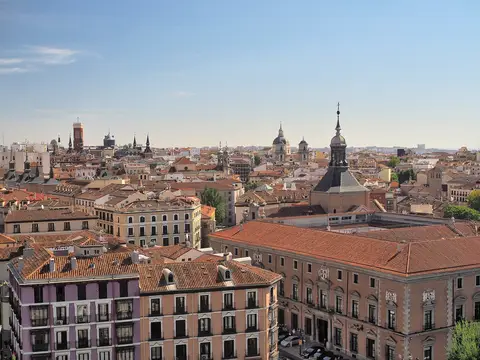
The Spanish capital didn't establish itself as the seat of the court until 1561, and much of the city center tells the story of the Habsburgs and Bourbons. The arcaded Plaza Mayor, the Puerta del Sol with kilometer zero of Spain's road network, and the Royal Palace with more than 3,000 rooms form the historic heart. Along the Paseo del Prado, three of Europe's most important art museums sit close together: the Prado with Velázquez, Goya, and Hieronymus Bosch, the Museo Reina Sofía with Picasso's Guernica, and the Thyssen-Bornemisza. Together with the Paseo del Prado, Retiro Park with its Crystal Palace and rowing pond has been a UNESCO World Heritage Site since 2021. Neighborhoods such as La Latina, Lavapiés, Malasaña, and Chueca each have their own character; on Sundays the El Rastro flea market winds through the alleys south of the Plaza Mayor.
Sights in the Community of Madrid Beyond the Capital
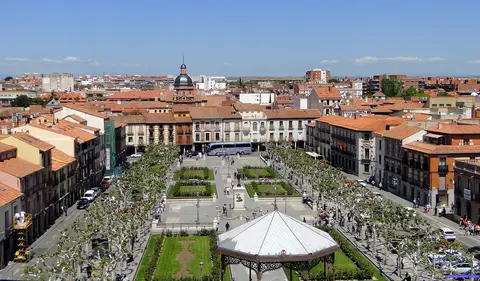
Leave the city and you'll find some of the most rewarding destinations in the Community of Madrid. Alcalá de Henares is the birthplace of Miguel de Cervantes; its 16th-century university served as a model for university towns in Latin America, and the historic center is a World Heritage Site. To the west, Philip II had the monastery of San Lorenzo de El Escorial built, a combination of palace, basilica, library, and royal crypt. To the south lies Aranjuez, the kings' spring residence, with sprawling gardens along the Tagus, also famous for Rodrigo's guitar concerto. Chinchón has one of Spain's most beautiful plazas, lined with wooden balconies, where bullfights still occasionally take place. In the Sierra, worthwhile stops include Manzanares el Real with its castle, the mountain village of Rascafría with El Paular Monastery, and Buitrago del Lozoya with its town walls.
The Cities of the Commuter Belt
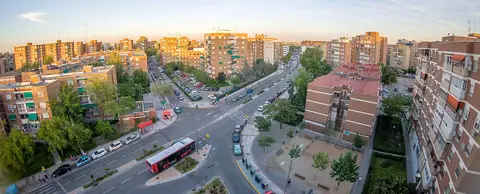
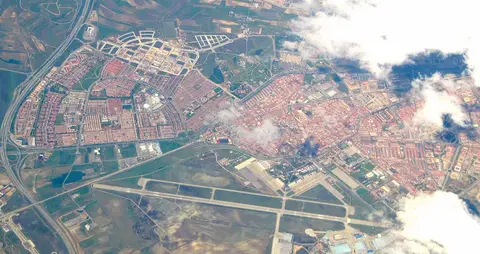
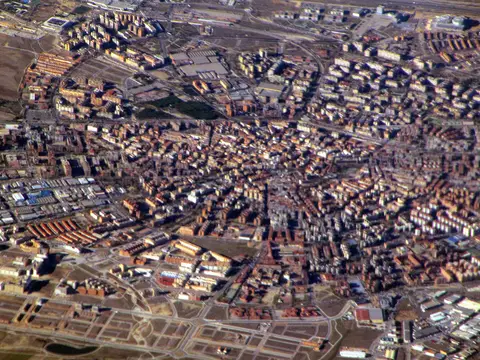
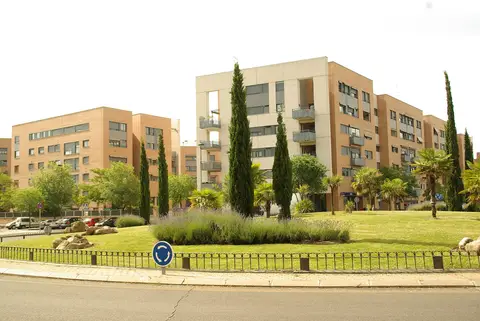
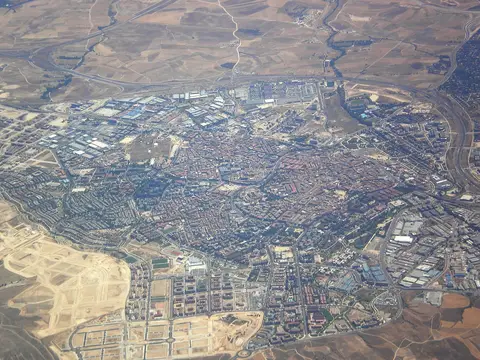
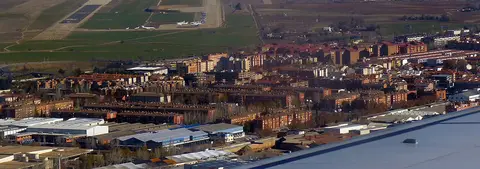
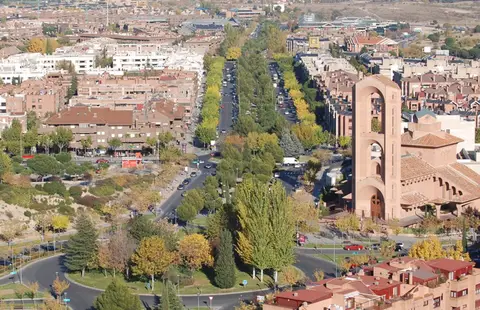
South of the capital, cities such as Móstoles, Fuenlabrada, Leganés, Getafe, and Alcorcón grew into large cities of 170,000 to over 200,000 residents each in the 1960s and 1970s. They aren't classic excursion destinations, but they show you everyday Spain beyond the postcards: residential neighborhoods with markets, soccer clubs such as Getafe CF and CD Leganés, industrial areas, and universities. Alcobendas to the north is home to many companies and, together with San Sebastián de los Reyes, the site of large shopping centers.
Food and Drink: Cocido and Bocadillo de Calamares
Madrid's cuisine is hearty and unpretentious. Cocido madrileño, a stew of chickpeas, meat, and vegetables, is served in several courses – first the broth with noodles, then the rest. Callos a la madrileña are braised tripe, and the bocadillo de calamares is a roll filled with fried squid rings, eaten in the bars around the Plaza Mayor. For breakfast or after a night of dancing, there are churros with thick hot chocolate, for example at Chocolatería San Ginés. Market halls such as San Miguel and San Antón have become gastronomic hangouts. In May, Madrid celebrates its patron saint, San Isidro, with street festivals, and in August the verbenas take over La Latina and Lavapiés.
Getting There, Getting Around, and the Best Time to Visit
Adolfo Suárez Madrid-Barajas Airport is the largest in Spain and is connected to the city by Metro and commuter rail. High-speed trains run from Atocha and Chamartín stations to all parts of the country. The Metro, with around 300 stations, and the Cercanías commuter network also serve El Escorial, Aranjuez, and Alcalá. The best times to visit are April through June and September and October. July and August are often very hot, and many Madrileños leave the city then; winter is sunny but crisp.