Balearic Islands: Mallorca, Ibiza, Menorca and More
Travel guide · editorialFew destinations are as familiar to Germans as Mallorca – and yet many people know only a fraction of the archipelago. A vacation in the Balearic Islands ranges from cathedral views in Palma to mountain villages in the Tramuntana, and from Menorca's turquoise coves to the salt flats of Formentera.
Four Islands in the Western Mediterranean
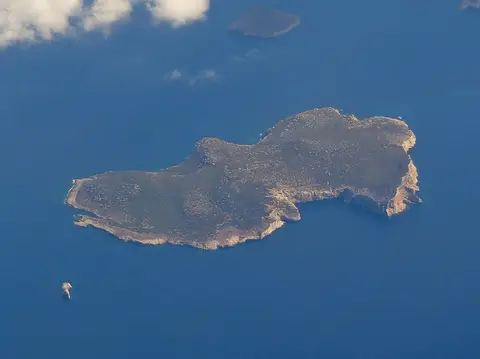
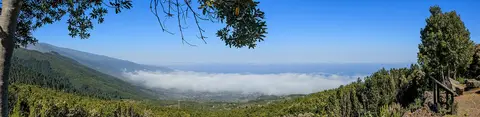
The Balearics lie roughly 50 to 185 miles (80 to 300 kilometers) off Spain's eastern coast. The autonomous community includes the main islands of Mallorca, Menorca, Ibiza and Formentera, as well as smaller islets such as Cabrera, whose waters are protected as a national park. At about 3,600 square kilometers, Mallorca is the largest. In the northwest, the Serra de Tramuntana, with Puig Major, stretches across the island, a cultural landscape of terraces, olive trees and dry-stone walls that has been a UNESCO World Heritage Site since 2011. The center of the island, Es Pla, is flat farmland dotted with almond trees and windmills. The official languages are Spanish and Catalan, which is spoken on the islands in local variants such as Mallorquí.
Palma and the Towns of Mallorca
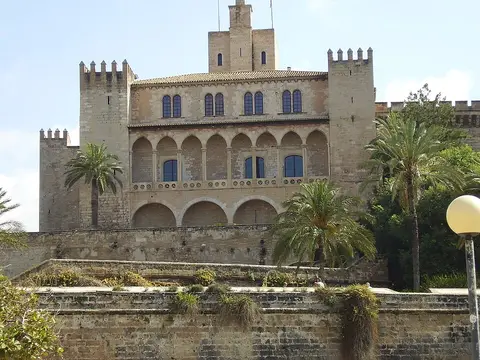
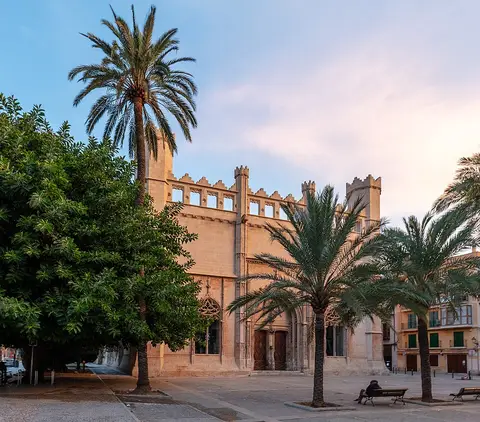
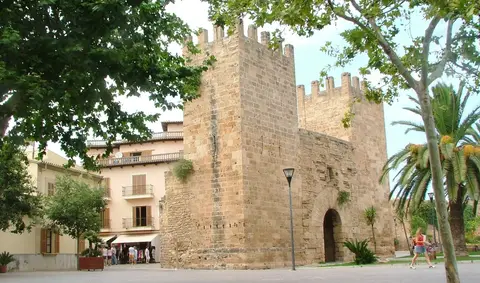
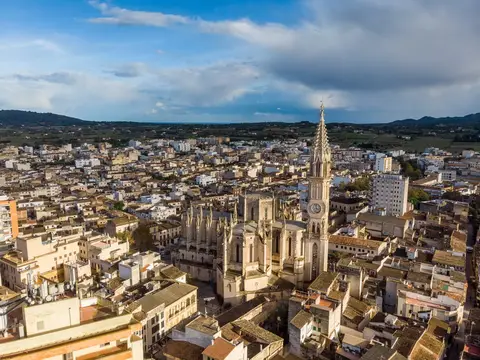
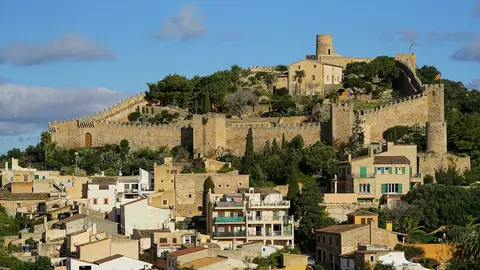
Palma de Mallorca is more than an arrival airport. The Gothic cathedral, La Seu, stands directly above the sea; Antoni Gaudí redesigned parts of its interior, and the artist Miquel Barceló created a chapel. Behind it lie the Almudaina Palace, the old town with the courtyards of former noble houses, the Mercat de l'Olivar market hall and the Santa Catalina neighborhood. To the west lies Calvià, the municipality that includes Magaluf and Santa Ponça, with Port d'Andratx nearby; to the east is the Playa de Palma. In the north you'll find Alcúdia, with its fully preserved town walls and long sandy beach, and Pollença, where 365 steps lead down from the Calvary hill. Manacor is known for its furniture industry and pearl production, and as the hometown of tennis player Rafael Nadal; the Drach Caves, with their stalactites, are nearby near Porto Cristo. Santanyí in the southeast has a popular weekly market and swimming coves such as Cala Llombards and Caló des Moro.
Sights in the Balearic Islands: Tramuntana and Coves
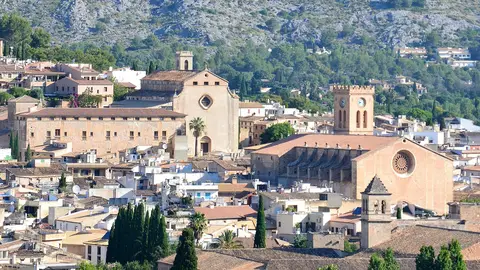
In the Tramuntana you'll find Valldemossa, where Chopin and George Sand spent the winter of 1838–39, Deià with its natural-stone houses, and Sóller, reached by the wooden train from Palma, which dates from 1912. The long-distance hiking trail GR 221 runs through the mountains, and the road to Cap de Formentor winds up to a lighthouse high above the sea. Hilltop monasteries such as Lluc and Randa are pilgrimage sites. On the east coast, calas – narrow coves between pine trees – open up to the sea. If you're looking for peace and quiet, in spring you'll find cyclists instead of sunbathers on Mallorca, and empty hiking trails in fall.
Menorca, Ibiza and Formentera
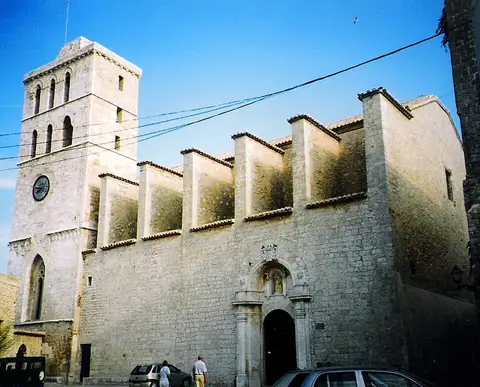
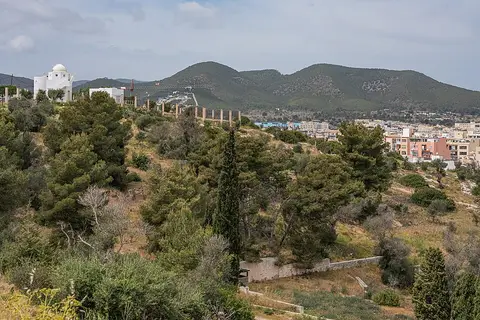
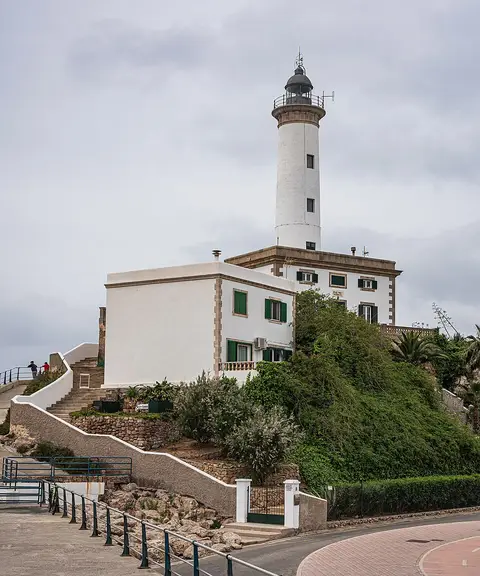
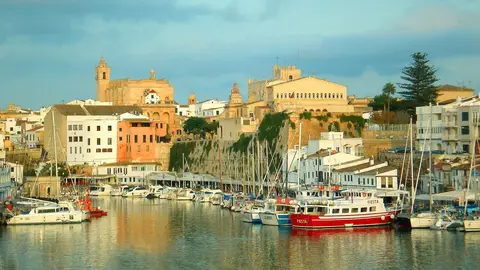
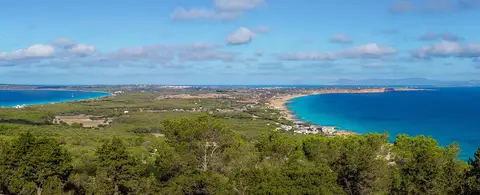
Menorca has been a biosphere reserve since 1993. Ciutadella, the old capital, has a cathedral and a narrow harbor, while Maó has one of the largest natural harbors in the Mediterranean. Talaiots and taulas from the Bronze Age are scattered across the island, and the Camí de Cavalls hiking trail circles the entire coastline. Ibiza is world-famous for its clubs in Sant Antoni and Platja d'en Bossa, yet the walled upper town of Dalt Vila, along with the Phoenician sites and the seagrass meadows off the coast, is a World Heritage Site. In the north of the island you'll find quiet villages and hippie markets. Formentera, reachable only by ferry, has pale beaches such as Ses Illetes and is great for cycling.
Ensaïmada, Sobrassada and Pa amb oli
Balearic cuisine is built on pork, olive oil, vegetables and fish. The ensaïmada, a spiral-shaped yeast pastry made with lard, is the souvenir par excellence. Sobrassada is a spreadable paprika sausage, and pa amb oli is bread drizzled with tomato and oil. Tumbet, a layered dish of eggplant, potatoes and peppers, and frit mallorquí are on the menu at village inns. Menorca is known for its Maó cheese and caldereta de langosta, a spiny lobster stew. Menorcan gin dates back to British rule. On Mallorca, wines are grown around Binissalem and Felanitx. Festivals such as Sant Joan in Ciutadella, with horses moving through the crowds, showcase island traditions.
Getting There and Best Time to Visit
Palma is served by direct flights from almost all German airports, and in summer so are Ibiza and Menorca. Ferries connect the islands with one another and with Barcelona, Valencia and Dénia. On Mallorca, buses and trains run to Inca, Manacor and Sa Pobla. The best times to visit are May, June, September and October; in high summer the beaches and roads are crowded. From late January to March the almond trees bloom, which is ideal for hikers and cyclists.