Asturias: Picos de Europa, Cider and the Green Coast
Travel guide · editorialAsturians call their homeland the Paraíso Natural, and anyone who looks out over the high pastures of the Picos de Europa on a sunny day will understand why. A vacation in Asturias means rugged cliffs and sandy coves, cows on mountain meadows, cider poured into the glass from arm's length, and a history tied to the beginning of the Reconquista.
Between the Mountains and the Cantabrian Sea
Asturias lies on the north coast of Spain between Galicia and Cantabria and is a principality: the heir to the Spanish throne bears the title Prince or Princess of Asturias. The region is only about 125 miles (200 km) long and nowhere wider than about 50 miles (80 km). In the south, the Cantabrian Mountains form a wall; in the east, the limestone massifs of the Picos de Europa rise up, with the Naranjo de Bulnes, a striking tooth of rock. Somiedo Natural Park in the west is a refuge for brown bears, whose numbers have recovered significantly in recent decades. The coast is shaped by cliffs, river estuaries and beaches that almost disappear at high tide. The climate is Atlantic, with frequent rain and mild summers.
Oviedo, Gijón and Avilés
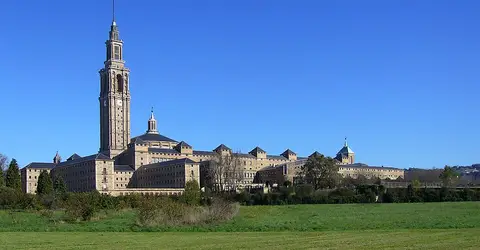
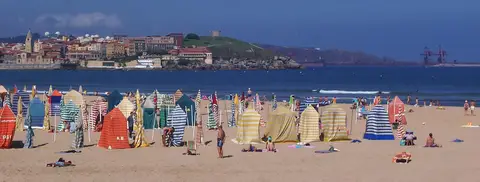
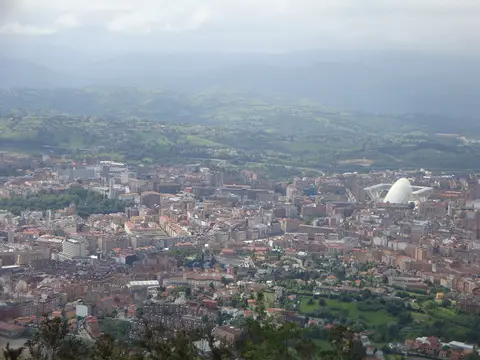
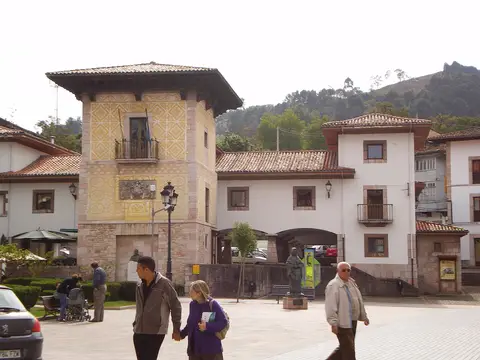
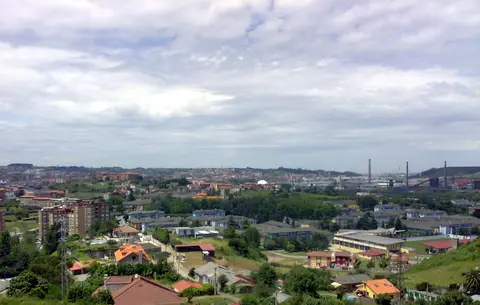
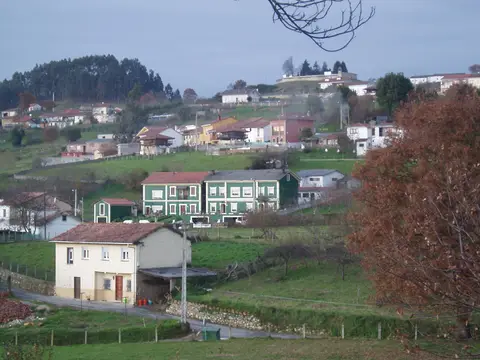
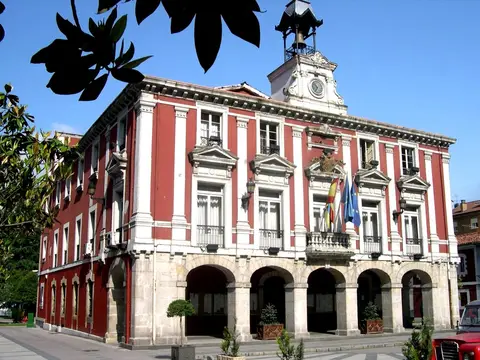
Oviedo, the capital, is a tidy, elegant city with a Gothic cathedral whose Cámara Santa houses relics and gold crosses. On the slope of Monte Naranco stand the churches of Santa María del Naranco and San Miguel de Lillo from the 9th century, masterpieces of Asturian pre-Romanesque architecture and UNESCO World Heritage sites. Woody Allen filmed here, and a statue commemorates it. Gijón is the largest city, a port and industrial city with the San Lorenzo city beach, the old fishing quarter of Cimadevilla on a peninsula, and the Laboral Ciudad de la Cultura, a monumental building from the Franco era. Avilés has a well-preserved old town with arcades and the Niemeyer Center, the Brazilian architect's last major work in Europe. Siero, with the small town of Pola de Siero, lies in the center between the three cities and is known for its livestock market.
Sights in Asturias: Picos de Europa and Covadonga
Cangas de Onís, with its arched Roman bridge over the Sella, is the starting point for the Picos de Europa. A few miles away lies Covadonga, where the Asturian leader Pelayo is said to have defeated the Moors around 722; the cave with the Marian chapel and the pink basilica are a pilgrimage site. The road continues to the Lakes of Covadonga, Enol and Ercina, at around 3,600 feet (1,100 m). In summer, access for private cars is restricted and buses shuttle visitors. The hike through the Cares Gorge is one of the best-known trails in Spain. If you want to see cave paintings, you'll find them at Tito Bustillo near Ribadesella, a UNESCO-protected cave with Stone Age images.
Coastal Towns
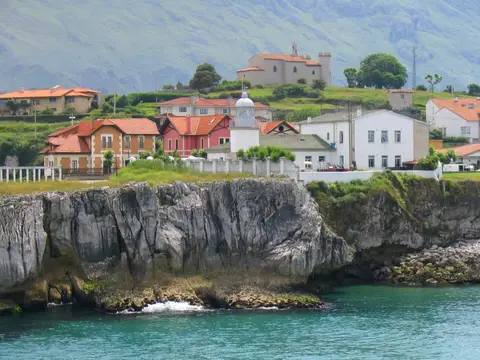
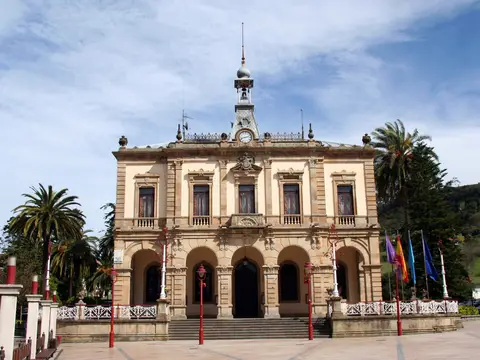
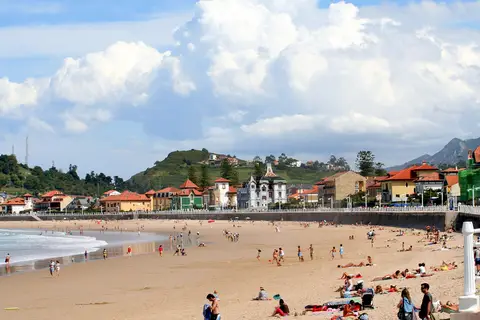
Among the most beautiful destinations in Asturias are the small harbor towns. Llanes in the east has an old town, brightly painted concrete blocks by Agustín Ibarrola at the harbor, and dozens of beaches, including Gulpiyuri, an inland beach connected to the sea underground. Ribadesella is the finish of the international canoe race on the Sella in early August, when thousands celebrate. Villaviciosa, on a river estuary, is considered the capital of cider, and Lastres and Cudillero, with their houses clinging to the hillside, are photographers' favorites. In the west, the coast becomes wilder, with towns like Luarca.
Sidra, Fabada and Cheese
Asturias is the land of sidra, a cloudy, tart cider. In the sidrerías, the server pours it into the glass from a great height with an outstretched arm so that it mixes with air, and you drink the sip right away. Fabada asturiana, a stew of large white beans with chorizo, blood sausage and bacon, is the regional signature dish. Cachopo, two veal cutlets filled with ham and cheese and breaded, has become a cult meal. Asturias has numerous kinds of cheese, the best known being Cabrales, a strong blue cheese aged in caves in the Picos. For dessert, there's arroz con leche with a caramelized crust. Hake and sea urchin play a role in the local fishing industry.
Getting There and Best Time to Visit
Asturias Airport is near Avilés and is served mainly via Madrid and Barcelona, with some direct flights in season. Since 2023, a high-speed line through the Pajares tunnels has connected Oviedo and Gijón with Madrid in about three and a half hours. Narrow-gauge trains run along the coast. The best time to visit is June through September, when it is driest and temperatures are around 68 to 77 °F (20 to 25 °C). In spring and fall the Picos are less crowded, but the weather changes quickly.