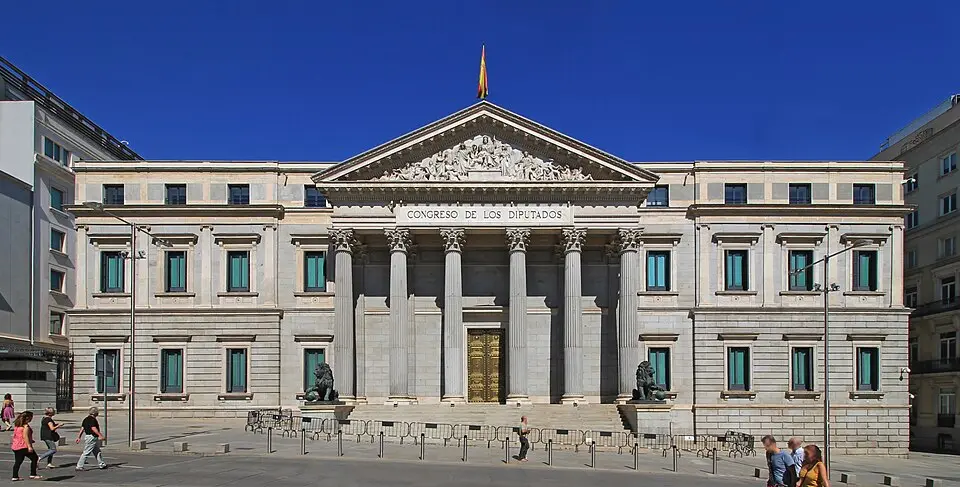
About Palacio de las Cortes
The Palacio de las Cortes in Madrid is the seat of the Congress of Deputies, one of the two chambers of the Spanish parliament. The neoclassical building stands on the Plaza de las Cortes, not far from the Paseo del Prado, and is considered one of the capital's iconic 19th-century landmarks. The site was originally occupied by a convent, which was badly damaged in a fire in 1823. When the liberal regime was established, it was decided to build a new structure worthy of housing parliamentary sessions. Construction began in 1843 under the direction of the architect Narciso Pascual Colomer, and Queen Isabella II inaugurated the building in a ceremony in 1850. While it was being built, the deputies met on a provisional basis in the ballroom of the Royal Theater.
The main facade, which faces the Carrera de San Jerónimo, impresses with its Renaissance aesthetic, featuring a rusticated ground floor and windows with triangular pediments on the upper floor. A magnificent portico with six Corinthian columns forms the grand entrance, crowned by a relief showing Spain with the Constitution, flanked by allegorical figures. In front of the monumental staircase stand two famous bronze lions, cast from captured cannons, which are known in popular tradition as Daoiz and Velarde. Inside, the semicircular chamber dominates the interior, lit by a glass dome with a painting of Queen Isabella II and historical figures such as El Cid and Cervantes. Large history paintings hang on the walls, including scenes from the Cortes of Valladolid and Cádiz. You can also still see the bullet holes left by the failed coup attempt of 1981, a reminder of that dramatic political episode.
In addition to the chamber, the building houses other stately rooms such as the Conference Hall, designed in the Isabelline style with neo-Plateresque stucco work and a glass dome. Here you can see twelve paintings depicting Spain's historic kingdoms, cities, and rivers, as well as a central agate table donated by Queen Isabella II. The library, which serves as the parliament's official archive, occupies a three-story area with an extensive collection of volumes. Over the decades, the building has been expanded several times, most recently by incorporating former bank buildings to meet the parliament's growing need for space.
At a glance
- Category
- Sight › Historic sites
- Rating
- no reviews yet · write a review
- Address
- Pl. de las Cortes
28014 Madrid, Spain - District
- Centro
- Phone
- —
- Website
- www.congreso.es
- —
- Coordinates
- 40.41617° N · -3.69674° E
- Data quality
- confidence 0.70
- Identifier
- ID 6e77d06e-543…
Location & surroundings
Toggle layersFAQ about Palacio de las Cortes
quick answersWhat is the Palacio de las Cortes in Madrid?
The Palacio de las Cortes in Madrid is the seat of the Congress of Deputies, one of the two chambers of the Spanish parliament. The neoclassical building stands on the Plaza de las Cortes in the Centro district, not far from the Paseo del Prado. It is considered one of the iconic 19th-century landmarks in the Spanish capital.
When was the Palacio de las Cortes in Madrid built, and by whom?
The Palacio de las Cortes in Madrid was built between 1843 and 1850 to plans by the architect Narciso Pascual Colomer and was inaugurated in 1850 by Queen Isabella II. The site was previously occupied by a convent that had been badly damaged by a fire in 1823. During construction, the deputies met temporarily in the ballroom of the Royal Theater. The building was later expanded several times, most recently by incorporating former bank buildings.
What is special about the facade of the Palacio de las Cortes in Madrid?
The main facade of the Palacio de las Cortes in Madrid faces the Carrera de San Jerónimo and is dominated by a portico with six Corinthian columns. Above it, a relief shows Spain with the Constitution, flanked by allegorical figures. In front of the monumental staircase stand two bronze lions cast from captured cannons, popularly known as Daoíz and Velarde.
What is inside the Palacio de las Cortes in Madrid?
The heart of the Palacio de las Cortes in Madrid is the semicircular chamber with a glass dome that shows a painting of Queen Isabella II as well as figures such as El Cid and Cervantes. Bullet holes from the failed coup attempt of 1981 are still visible there, along with historical paintings depicting, for example, the Cortes of Valladolid and Cádiz. The conference hall in the Isabelline style features twelve paintings of Spain's kingdoms, cities, and rivers, as well as an agate tablet donated by Isabella II. There is also a three-story library that serves as the official archive of the parliament.
What can you see around the Palacio de las Cortes in Madrid?
Around the Palacio de las Cortes in Madrid, several museums and historic sites are within walking distance. travelguide195 lists, among others, the Statue of Miguel de Cervantes about 65 m away, the Museo ICO about 110 m away, the Museo Nacional Thyssen-Bornemisza and the Palacio de los Duques de Villahermosa about 150 m away, and the Casa Museo Lope de Vega and the Palacio de Miraflores about 200 m away. Within a 500 m radius, travelguide195 also lists around 476 restaurants.
Ratings & comments
none yetNear Palacio de las Cortes
closest 5 per category · 2 kmSights
Restaurants
Museums
Hotels
More:Historic sites in Madrid (466)Sights in Centro (203)All sights in Madrid (606)
300 places within 2 km loaded.
Don't miss in Madrid
All sights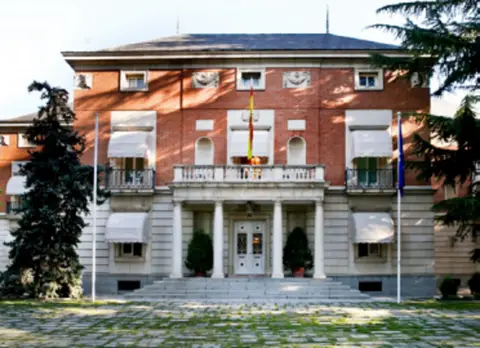 Historic sites01
Palacio de la Moncloa
Avenida Puerta de Hierro, s/n · Madrid● Website● Phone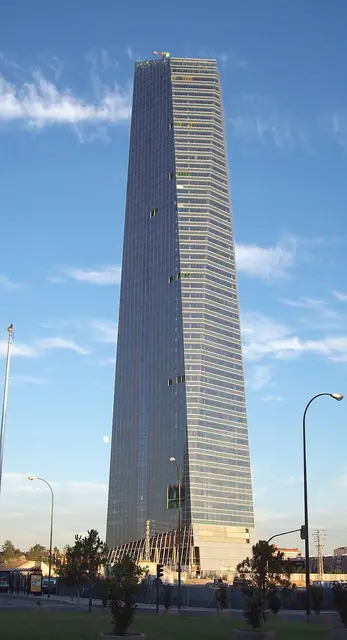 Historic sites02
Torre de Cristal
Paseo de la Castellana, 259 · Madrid● Website● Phone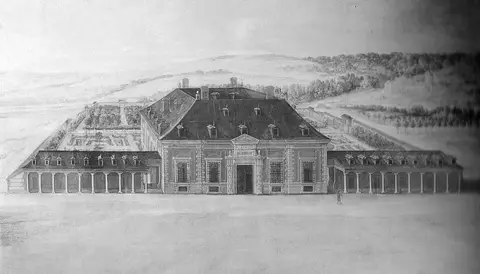 Historic sites03
Palacio de la Zarzuela
Carretera Del Pardo S/N · Madrid● Website● Phone Historic sites04
You need a free account to leave reviews and photos – that keeps comments genuine and lets you edit them later.
The parliament building was the site of the installation of King Juan Carlos I, and the failed 1981 coup.
Source: Wikivoyage, „20th-century Spain“ · authors per page history · CC BY-SA 4.0