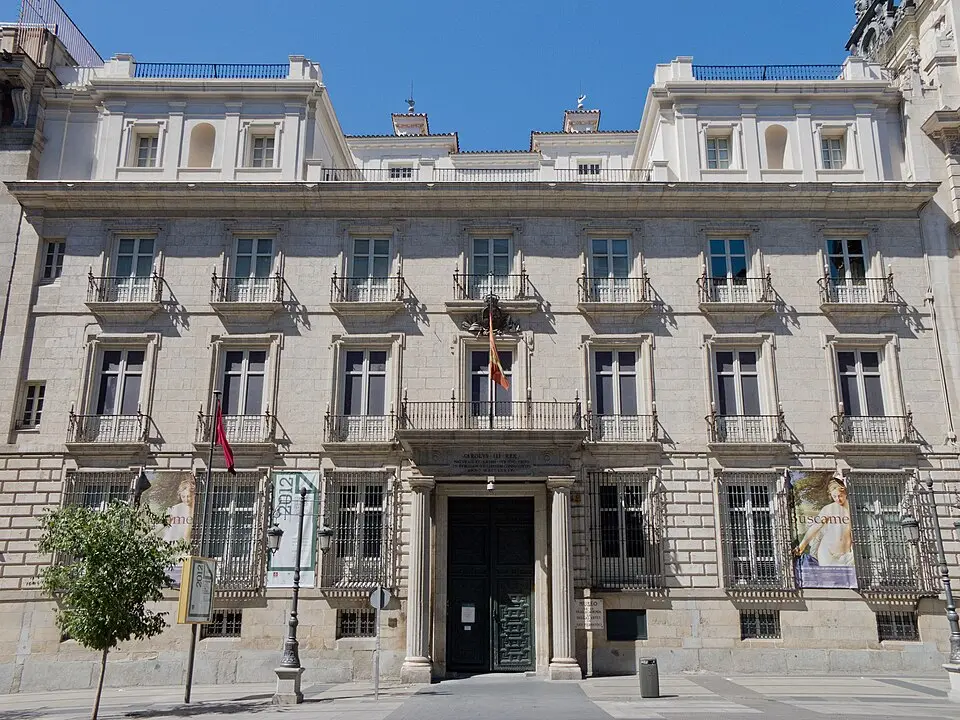
About Palacio de Goyeneche
The Palacio de Goyeneche is a major urban palace on Calle de Alcalá in Madrid that today houses the Real Academia de Bellas Artes de San Fernando. Originally planned in 1720 for the industrialist and financier Juan de Goyeneche, the building was designed by the architect José Benito de Churriguera and, after his early death in 1725, completed by his brother Alberto de Churriguera. The building stands on an irregular but essentially rectangular site and is distinguished by an almost symmetrical layout around two central courtyards and a staircase. The facade has a classically restrained character that contrasts with the Baroque exuberance the Churriguera brothers displayed in other works. Until 1773, the palace served various state purposes, including as the office of royal revenues and the tobacco monopoly administration, before King Charles III bought it to serve as a new home for the Academy of Fine Arts.
For its new function, the facade was remodeled in the neoclassical style by Diego de Villanueva in 1774. The original Baroque elements, such as enormous pilasters and busts, were removed to create a plainer, more classical appearance. Later, at the end of the 19th century, Ricardo Velázquez Bosco added a fourth floor to make room for the art school. After a comprehensive restoration by Fernando Chueca Goitia between 1973 and 1985, which among other things created a new hall in a former courtyard, the upper floors, previously used by the Ministry of Finance, were more recently integrated into the museum area as well. This expansion, designed by the artist Gustavo Torner, added 22 new exhibition rooms to the collection.
Today the building is a national monument and houses not only the Academy but also its museum. The interior spaces are divided by function: the piano nobile historically served for administration, the library, and cabinets for works of art, while the lower levels were originally used for teaching subjects such as mathematics, drawing, and perspective. A special chapter in the building's history is the Natural History Cabinet, which Charles III had established to unite art and science under one roof. Although the collection was later to move to what is now the Prado Museum, the Academy and the natural history cabinet remained together in this building until the end of the 19th century. Today, visitors can experience the architectural evolution from Baroque to Neoclassicism and tour the Academy's extensive collections.
At a glance
- Category
- Sight › Historic sites
- Rating
- no reviews yet · write a review
- Address
- C. de Alcalá, 13
28013 Madrid, Spain - District
- Centro
- Phone
- —
- Website
- —
- —
- Coordinates
- 40.41809° N · -3.70068° E
- Data quality
- confidence 0.50
- Identifier
- ID b09a0513-faa…
Location & surroundings
Toggle layersFAQ about Palacio de Goyeneche
quick answersWhat is the Palacio de Goyeneche in Madrid?
The Palacio de Goyeneche is a historic palace at Calle de Alcalá 13 in Madrid's Centro district, now home to the Real Academia de Bellas Artes de San Fernando. The building is a national monument and houses the academy's museum as well. It stands on an irregular, essentially rectangular plot and is arranged almost symmetrically around two central courtyards and a staircase.
Who built the Palacio de Goyeneche, and how has it changed over time?
The Palacio de Goyeneche in Madrid was designed by José Benito de Churriguera starting in 1720 for the industrialist and financier Juan de Goyeneche and was completed after Churriguera's death in 1725 by his brother Alberto de Churriguera. Until 1773 the building served state purposes, including housing the tobacco monopoly administration, before King Charles III bought it for the Academy of Fine Arts. In 1774 Diego de Villanueva remodeled the facade in the neoclassical style, removing Baroque elements such as giant pilasters and busts. At the end of the 19th century, Ricardo Velázquez Bosco added a fourth floor for the art school.
What can you see at the Palacio de Goyeneche?
At the Palacio de Goyeneche in Madrid, you can visit the museum of the Real Academia de Bellas Artes de San Fernando with its extensive collections and experience the architectural evolution from the Baroque to Neoclassicism. The restoration by Fernando Chueca Goitia between 1973 and 1985 produced, among other things, a new hall in a former courtyard. Later, the integration of the upper floors, previously used by the Ministry of Finance, added 22 new exhibition rooms designed by the artist Gustavo Torner.
What can you see around the Palacio de Goyeneche?
Around the Palacio de Goyeneche on Calle de Alcalá in Madrid, several historic buildings lie within a few minutes' walk. travelguide195 lists the Real Casa de la Aduana at about 240 feet, the Palacio de la Equitativa at about 280 feet, and the former Banco Bilbao Vizcaya Argentaria building at about 365 feet, among others. The Museum of Senses Madrid is about 340 feet away, and the Plaza Canalejas is about 540 feet away.
Are there restaurants near the Palacio de Goyeneche?
Yes, there are plenty of restaurants around the Palacio de Goyeneche in Madrid's Centro district. travelguide195 lists around 693 restaurants within 500 meters of the building at Calle de Alcalá 13.
Ratings & comments
none yetNear Palacio de Goyeneche
closest 5 per category · 2 kmSights
Restaurants
Museums
Hotels
More:Historic sites in Madrid (466)Sights in Centro (203)All sights in Madrid (606)
300 places within 2 km loaded.
Don't miss in Madrid
All sights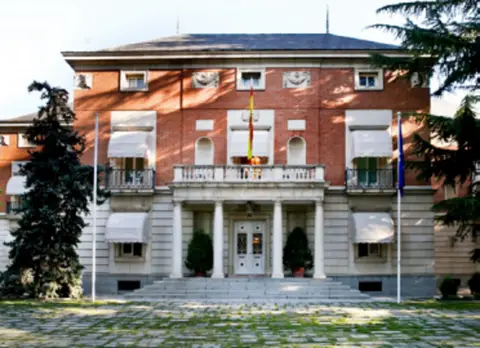 Historic sites01
Palacio de la Moncloa
Avenida Puerta de Hierro, s/n · Madrid● Website● Phone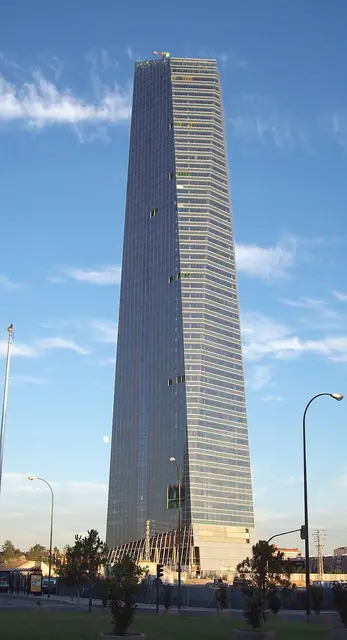 Historic sites02
Torre de Cristal
Paseo de la Castellana, 259 · Madrid● Website● Phone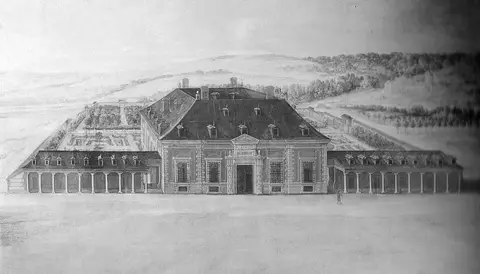 Historic sites03
Palacio de la Zarzuela
Carretera Del Pardo S/N · Madrid● Website● Phone Historic sites04
You need a free account to leave reviews and photos – that keeps comments genuine and lets you edit them later.