Discover Córdoba: The Mezquita, Patios, and the Judería
Travel guide · editorialIn the 10th century, Córdoba was one of the largest and most learned cities in the world, with libraries, baths, and street lighting, when Paris was still a village. The Mezquita, one of the most extraordinary buildings in Europe, still tells the story of that golden age. A trip to Córdoba is a walk through the legacy of three cultures.
The Caliphate of Córdoba
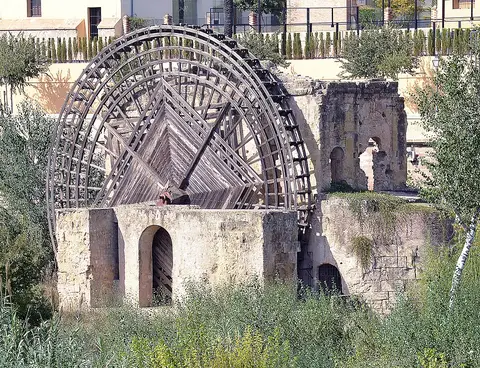
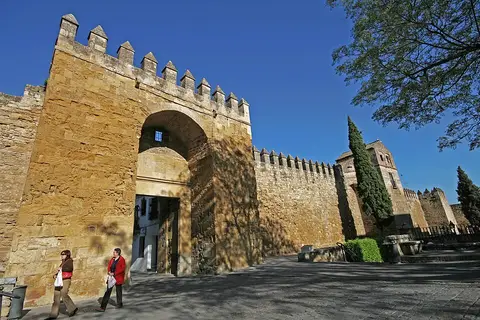
After the Roman era, when Córdoba was the capital of the province of Baetica and the philosopher Seneca was born here, the Umayyads made the city their seat of power in 756. In 929, Abd ar-Rahman III proclaimed the caliphate. Muslims, Christians, and Jews lived side by side here, and scholars such as the philosopher Averroës and the Jewish thinker Maimonides came from Córdoba. In 1236, Ferdinand III conquered the city, which declined in importance afterward – fortunately for its monuments, which were largely preserved as a result.
Sights in Córdoba
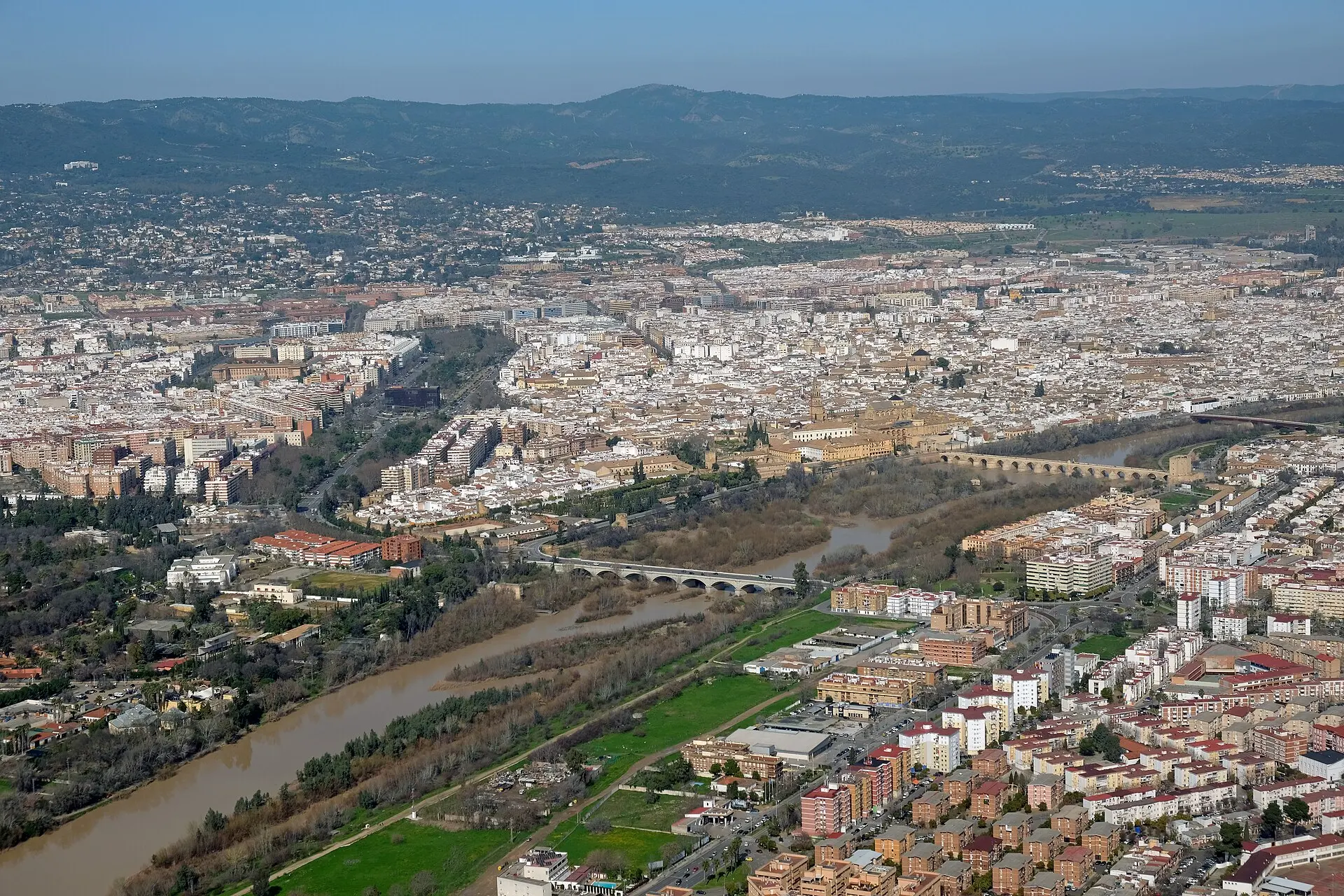
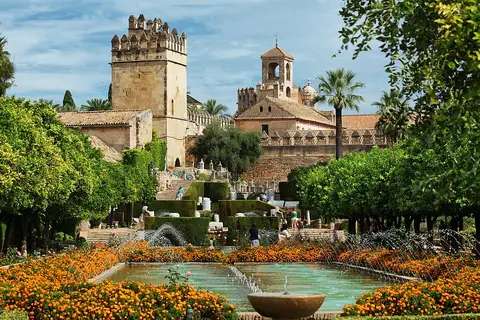
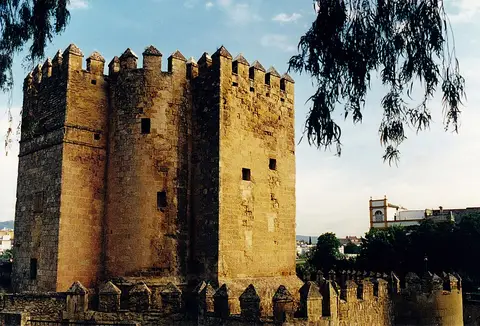
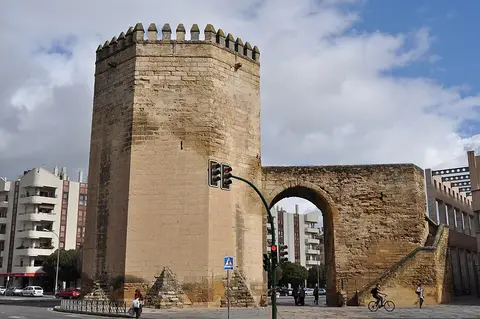
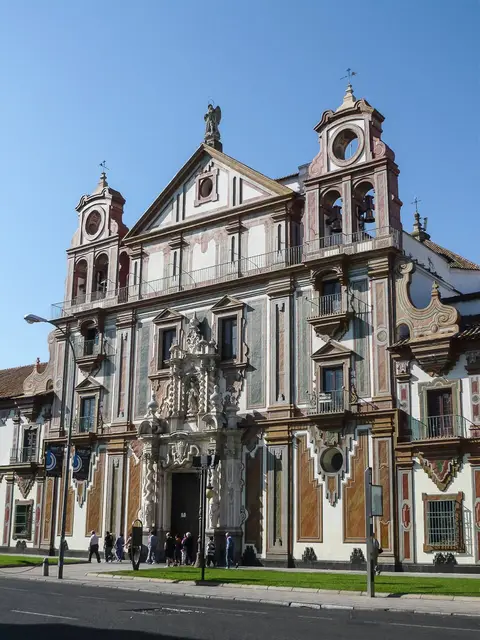
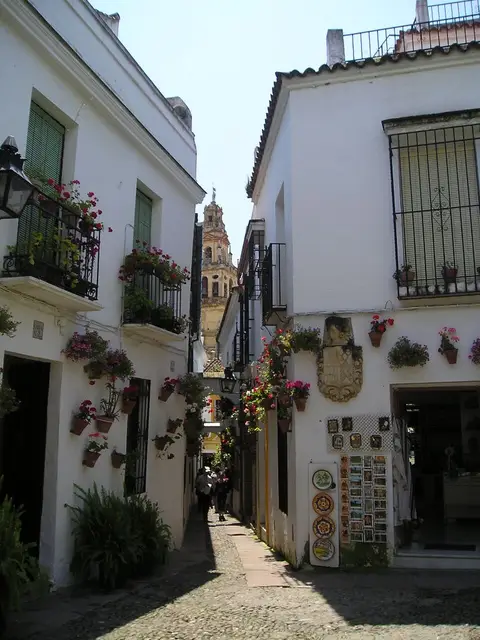
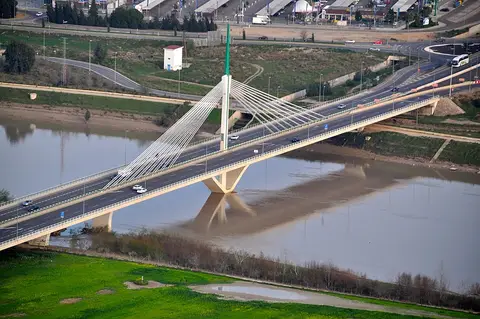
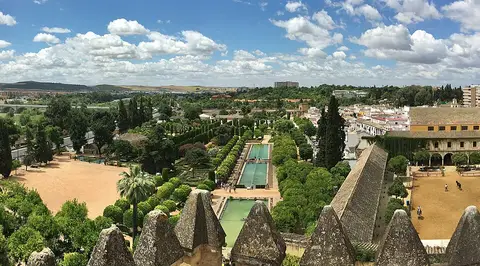
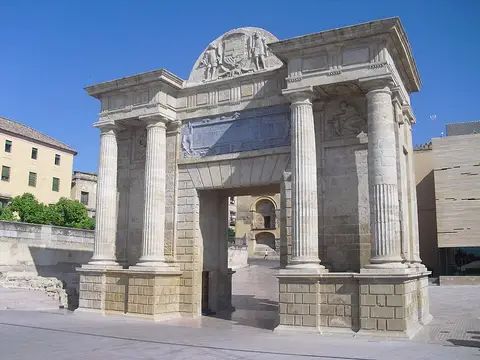
The Mezquita-Cathedral is a forest of more than 800 columns with red-and-white striped double arches, expanded again and again over two centuries. In the 16th century, the Christians built a Renaissance cathedral right in the middle of it – Emperor Charles V is said to have remarked that something unique had been destroyed to build something ordinary. The mihrab with its Byzantine gold mosaics is the highlight. On some days, admission is free early in the morning. The Roman Bridge over the Guadalquivir leads to the Torre de la Calahorra, and the Alcázar de los Reyes Cristianos draws visitors with gardens full of water basins. In the Judería, the old Jewish quarter, you'll find one of the few surviving medieval synagogues in Spain and the Calleja de las Flores with its view of the bell tower.
Patios, Neighborhoods, and Festivals
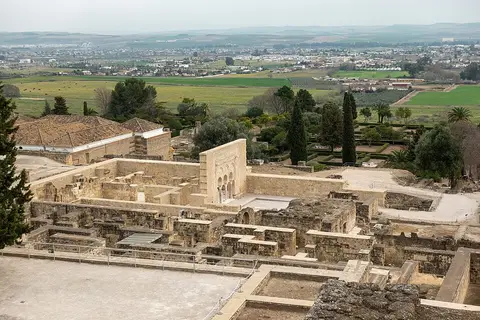
In May, residents open their flower-decked courtyards to visitors during the Festival de los Patios – hundreds of pots of geraniums hang on white walls, a festival that is part of UNESCO's intangible cultural heritage. Especially beautiful patios can be found in the San Basilio neighborhood and around San Lorenzo. May is Córdoba's festival month anyway, with the Cruces de Mayo and the Feria de Nuestra Señora de la Salud. West of the city lie the ruins of Medina Azahara, the caliph's palace city, also a UNESCO World Heritage Site.
Eating in Córdoba
Salmorejo, a thick cold soup made from tomatoes, bread, olive oil, and garlic, garnished with egg and ham, originates here and is a must. Flamenquín, a breaded roll of pork and ham, rabo de toro, braised oxtail, and berenjenas con miel, fried eggplant with honey, come next. A glass of Montilla-Moriles, a sherry-like wine from the province, goes well with them. The restaurants around the Mezquita are touristy; more relaxed taverns can be found in the San Francisco-Ribera neighborhood and around the Plaza de la Corredera, a square lined with arcades.
Getting Around and Best Time to Visit
Córdoba has only a small airport without significant scheduled service; the most convenient way to arrive is by AVE high-speed train: Madrid is about 1 hour 45 minutes away, Seville 45 minutes, and Málaga just under an hour. You explore the old town on foot. The best time to visit is spring, especially May; in summer, Córdoba is one of the hottest cities in Europe.