Discover Slovakia: The Tatras, Castles, and Bratislava
Travel guide · editorialA vacation in Slovakia pairs a small capital on the Danube with a country made up largely of mountains, forests, and castle ruins. The High Tatras are the smallest high mountain range in the world, wooden churches dot the east, and thermal baths can be found in almost every region.
Bratislava on the Danube
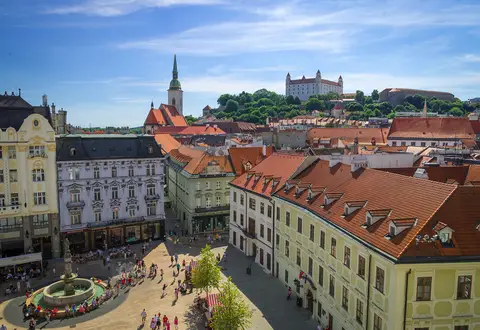
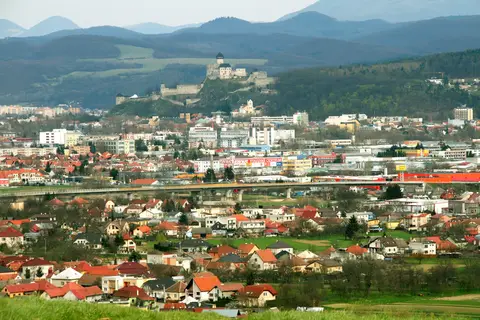
Bratislava sits right on the border with Austria and Hungary, just about 60 kilometers (37 miles) from Vienna. Until 1919 the city was known in German as Pressburg, and from 1563 to 1830 Hungarian kings were crowned in St. Martin's Cathedral; a small golden crown atop the tower recalls that history. The Old Town is compact, with Michael's Gate, the Primate's Palace, and a few quirky bronze statues, such as Čumil, the sewer worker peeking out of a manhole. Above the city stands the castle with its four corner towers, which locals like to compare to an upside-down table. On the other side of the Danube, the Bridge of the Slovak National Uprising rises with its restaurant in the observation pod known as the "UFO." The Blue Church of St. Elisabeth is an Art Nouveau building that really is light blue all the way down to the roof tiles. On the edge of the city, the ruins of Devín Castle sit on a rock above the confluence of the Morava and the Danube.
The High Tatras and the Low Tatras
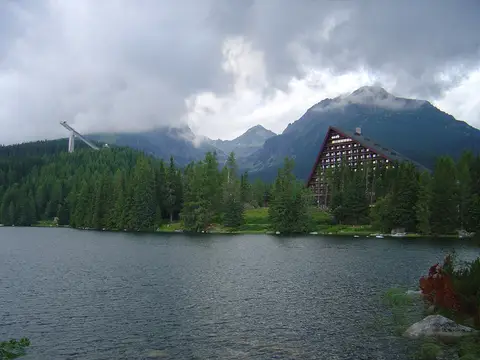
The High Tatras stretch over only about 26 kilometers (16 miles) in length, yet reach 2,655 meters (8,711 feet) at Gerlach Peak. From the villages of Štrbské Pleso, Starý Smokovec, and Tatranská Lomnica, marked trails lead to mountain lakes, huts, and summits; you can approach Lomnický Peak comfortably by cable car. Many high-altitude trails are closed from November to mid-June, so keep that in mind when planning. Some of the huts are still supplied by porters who carry loads of over 80 kilograms (176 pounds) on their backs. To the south lie the Low Tatras with the Jasná ski area on Mount Chopok, the largest in the country. Liptovský Mikuláš is the main town of the Liptov region, with the Liptovská Mara reservoir and several stalactite caves nearby, including the Demänová Ice Cave.
Castles, Mining Towns, and Wooden Churches
Among the best-known sights in Slovakia are its castles. Spiš Castle in the east is one of the largest castle complexes in Central Europe and, together with the little town of Levoča and its carved altar by Master Paul, a UNESCO World Heritage Site; at nearly 19 meters (62 feet), this altar is the tallest Gothic wooden altar in the world. Bojnice Castle, with its pointed turrets, looks like something out of a fairy-tale movie, while Orava Castle perches on a cliff above the river of the same name and served as a backdrop for the silent film "Nosferatu." In central Slovakia you'll find Banská Štiavnica, an old silver-mining town with steep lanes, two castles, and a Calvary hill. Kremnica has been minting coins since the 14th century and still does today. In the northeast, near the border with Ukraine and Poland, stand Greek Catholic and Orthodox wooden churches, several of them World Heritage Sites. Another top Slovakia destination for nature lovers is Slovak Paradise, a landscape of gorges that you climb through on ladders, boardwalks, and iron chains.
Košice and Other Cities
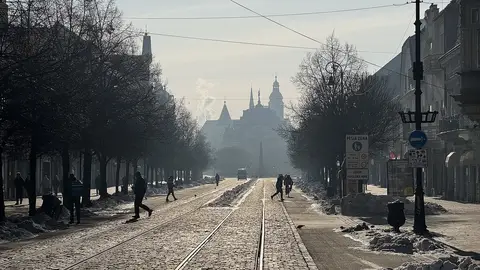
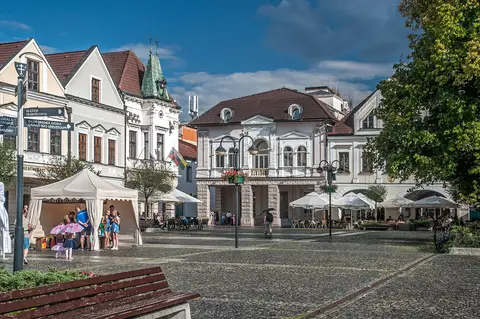
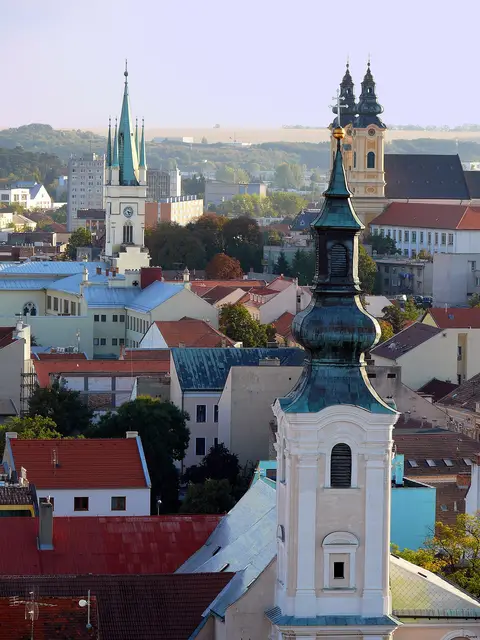
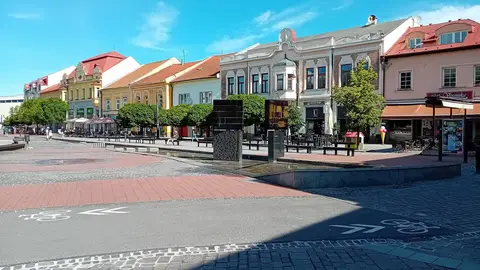
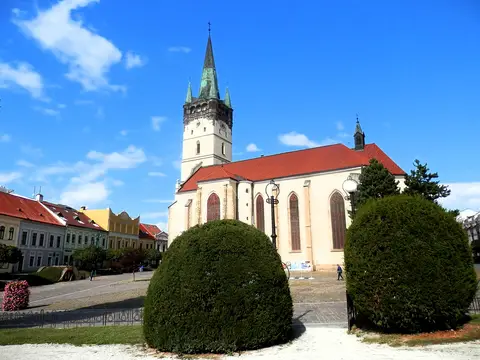
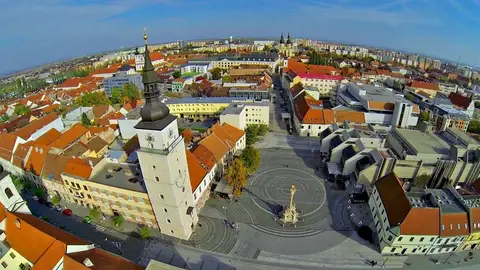
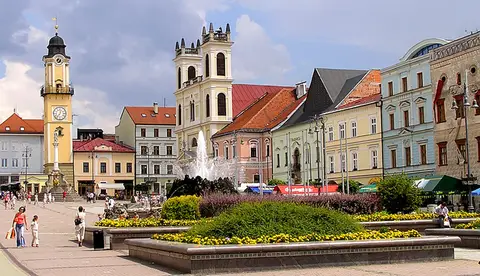
Košice, the second-largest city, has a long, spindle-shaped main street with the Gothic St. Elisabeth Cathedral in the middle and a "Singing Fountain" that dances to music in the evening. Prešov, a bit farther north, has a similarly elongated square and is the center of the Rusyn minority. Žilina lies conveniently in the northwest and is the starting point for trips into the Lesser Fatra, while Nitra is considered one of the oldest towns in Slovakia, with a castle on a hill. Trnava is called the "Slovak Rome" because of its many churches, and Trenčín will be celebrated as a European Capital of Culture in 2026. Banská Bystrica, with its colorful market square, was the center of the Slovak National Uprising against the German occupation and the Tiso regime in 1944.
Slovak Cuisine
The national dish is bryndzové halušky, small potato dumplings with tangy sheep's cheese (bryndza) and crispy bacon. At salaše, the mountain huts along the trail, you can have it with žinčica, a sour whey drink, and smoked braided cheese. Kapustnica, a sauerkraut soup with sausage and mushrooms, is on the table mainly at Christmas. Wine is grown in western Slovakia, on the slopes of the Little Carpathians near Pezinok and Modra; Modra is also known for its blue-painted ceramics. To finish a meal, many people enjoy a glass of borovička, a juniper brandy.
Getting There and Getting Around
Bratislava Airport (BTS) is served mainly by low-cost airlines, so many travelers fly into Vienna and continue by bus or train in about an hour. Košice (KSC) in the east has few connections. The main rail line runs from Bratislava via Žilina and Poprad, the station for the High Tatras, to Košice. In the Tatras, an electric narrow-gauge railway connects the resort towns. You need an electronic vignette for motorways. Slovakia uses the euro and is part of the Schengen Area.
Best Time to Visit Slovakia
The best time to visit Slovakia depends on where you're headed. For hiking in the Tatras, mid-June through September is ideal, when the high trails are open; in the valleys, summer temperatures range from 68 to 82°F (20 to 28°C), and Bratislava can get hotter than 86°F (30°C). September and October are good for cities and castles, and the grape harvest begins in the Little Carpathians. The ski season runs from about December to March, and often into April in Jasná.