Discover Bratislava: Castle, Old Town, and the Danube Waterfront
Travel guide · editorialJust an hour from Vienna, Bratislava sits on the Danube, between the foothills of the Little Carpathians and the borders with Austria and Hungary. A city break in Bratislava combines a compact old town, a castle with sweeping views, and vineyards on the edge of the city.
Pressburg, Pozsony, Bratislava
Over the centuries, the city has gone by many names: Pressburg in German, Pozsony in Hungarian. When the Ottomans conquered Buda, it became the capital of the Kingdom of Hungary in 1536, and between 1563 and 1830, eleven Hungarian kings and queens were crowned in St. Martin's Cathedral, including Maria Theresa. The city did not receive the name Bratislava until 1919. Under communism, part of the old town was torn down to make way for a bridge, and across the river a huge prefab housing estate, Petržalka, was built. Since 1993, Bratislava has been the capital of independent Slovakia.
Sights in Bratislava
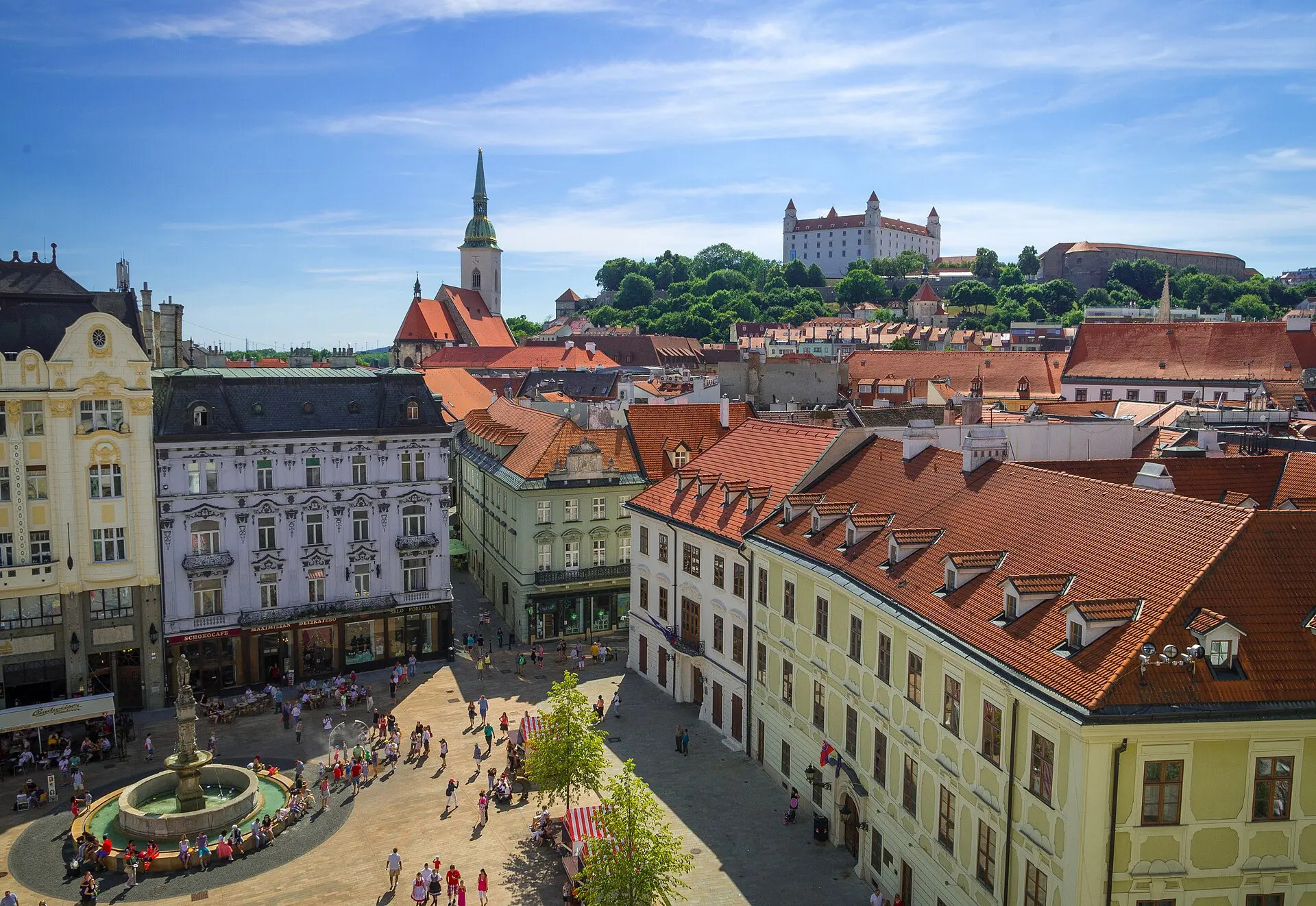
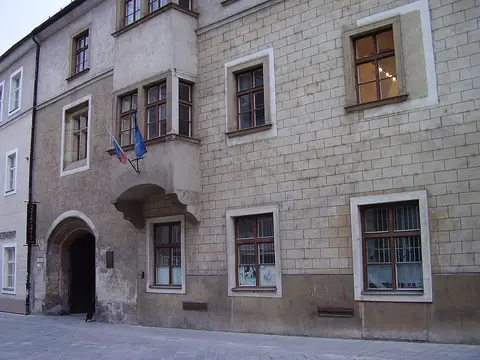
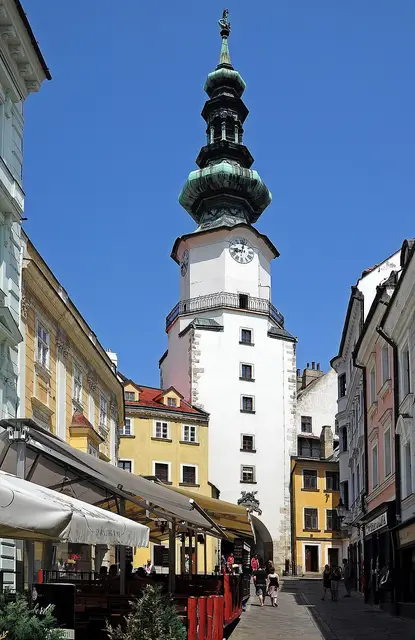
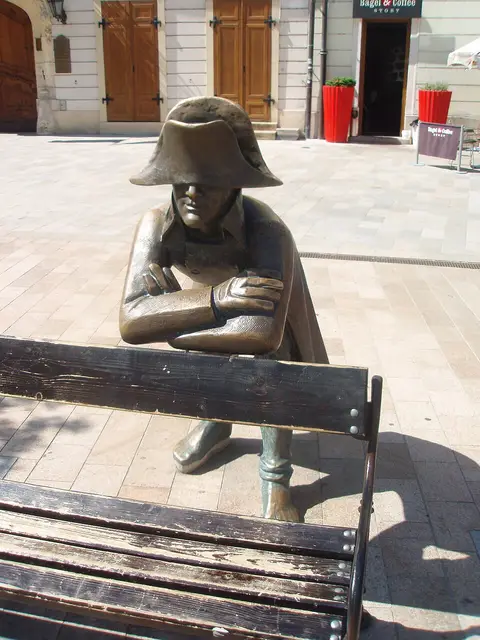
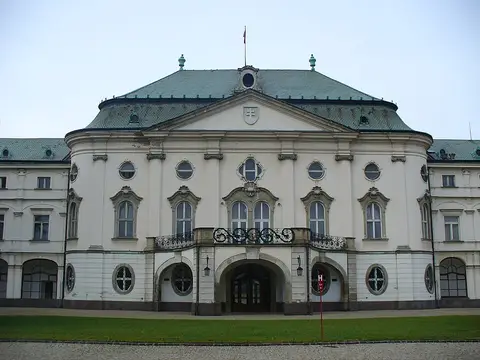
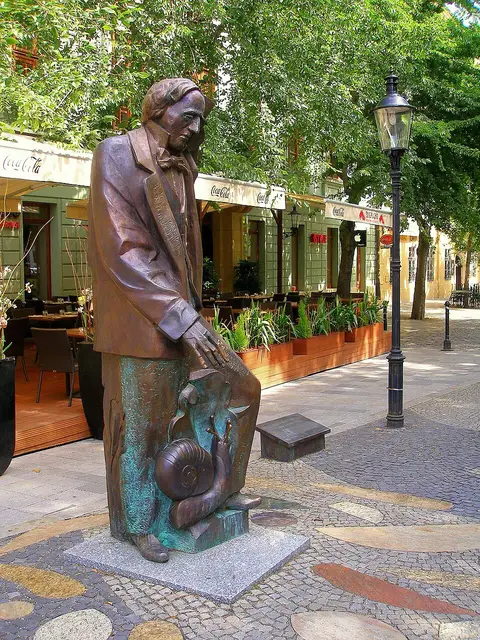
The castle, with its four corner towers, rises above the Danube and is the city's landmark; the Slovak National Museum is housed inside, and from the Baroque garden you can see as far as Austria on a clear day. Below stands the Gothic St. Martin's Cathedral, topped by a gilded replica of the Hungarian Crown of St. Stephen on its spire. Through Michael's Gate, the only surviving city gate, you enter the old town, the historic core, with the Old Town Hall and the Primate's Palace, in whose Hall of Mirrors the Peace of Pressburg was signed in 1805. Bronze statues are tucked away among the lanes, such as "Čumil," a sewer worker peeking out of a manhole. The Art Nouveau Blue Church of St. Elizabeth is a popular photo spot. Spanning the Danube is the Bridge of the Slovak National Uprising with the "UFO," an observation restaurant atop its pylon.
Neighborhoods and City Life
Around Obchodná Street, the main shopping street between the old town and the university district, it's lively with cafés and snack stands. On the Danube waterfront, a modern district with a promenade has sprung up around Eurovea and the new Eurovea Tower high-rise. In the Rača district at the foot of the Little Carpathians, wine has been grown for centuries, and in the fall the winemakers celebrate the grape harvest festival. Podunajské Biskupice in the southeast feels almost village-like. The Železná studnička forest park offers hiking trails, and on Kamzík there is a TV tower with views.
Eating in Bratislava
The Slovak national dish is bryndzové halušky, small potato dumplings with sheep's cheese and bacon. Other specialties include kapustnica, a sauerkraut soup, Pressburg bagel (Pressburger Beugel), a pastry with poppy seed or walnut filling, and wine from the Little Carpathians. Restaurants in Bratislava are cheaper than in Vienna, and the old town has traditional taverns and microbreweries.
Getting There and Best Time to Visit
Bratislava Airport is about nine kilometers from the center, and many travelers use Vienna Airport, which can be reached by bus and train in about an hour. Trains connect Bratislava with Vienna, and in summer fast boats run on the Danube. Trams serve the city, and the old town is small enough to explore on foot. The best time to visit is from May to September; in Advent, Christmas markets transform the main square. Excursions lead to Devín Castle ruins at the mouth of the Morava River, where the Iron Curtain once ran and a memorial now commemorates the people who died trying to flee across the border. By bike, you can follow the Danube Cycle Path into Austria or ride to the Danubiana art museum on a peninsula in the river.