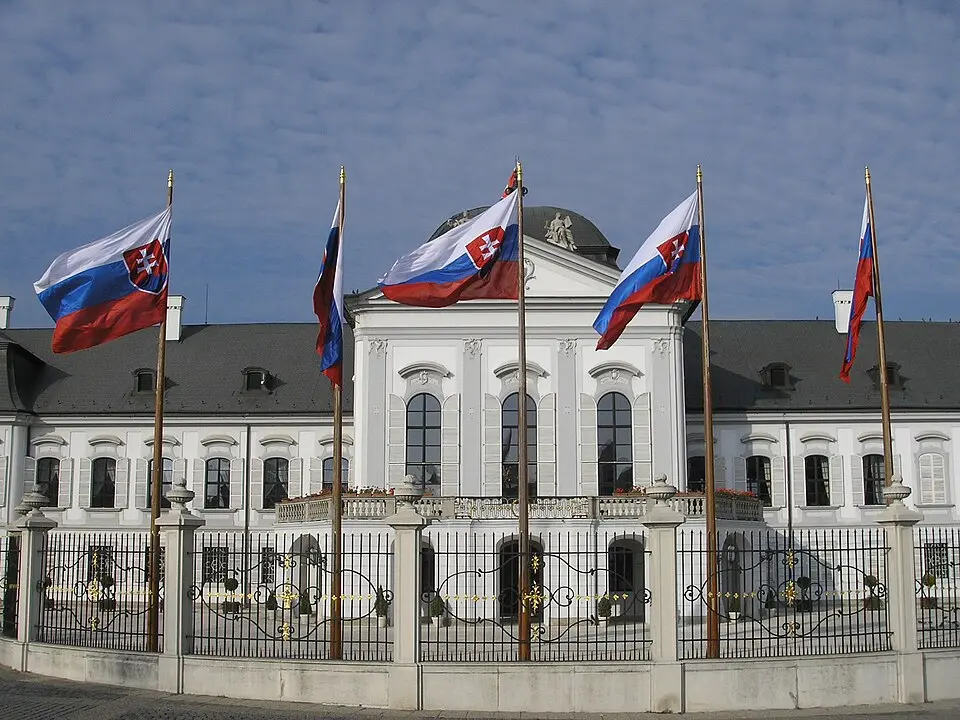
About Graalkovich Place
Grassalkovich Palace, today also known as the Presidential Palace, is a significant historic building in the Slovak capital, Bratislava. It stands in the Staré Mesto district, north of the historic city center, on the north side of Hodžovo námestie. As the official residence of the President of the Slovak Republic, the building holds a central place in the country's political life. Its architecture is defined by an impressive Rococo and late Baroque style, complemented by an adjoining Baroque garden. Its location near the former Archbishop's Summer Palace and the seat of the Slovak government underscores the historical and political importance of the area.
The palace's history begins in 1760, when it was built for Count Antal Grassalkovich I. The architect Andreas Mayerhoffer, who had previously designed Gödöllő Palace near Budapest, was responsible for the project. For the site, Grassalkovich acquired an old inn and several garden plots that then still lay outside the city walls. The building originally served as an elegant summer residence. Despite being fitted with large ceramic stoves on the south side and tiled stoves in certain rooms, staying here in winter was difficult because of the lack of efficient heating. In 1768, St. Barbara's Chapel was built west of the palace; it grew out of an earlier vow made by the count and was open to the public.
After its completion, the palace became the center of social life in Pressburg, then the capital of Hungary. Count Grassalkovich kept his own orchestra, which was led by Joseph Haydn, who premiered some of his works here. To secure the favor of Empress Maria Theresa, ownership changed hands around 1765. From then on, the palace hosted balls and festivities of the Austrian imperial court. Famous events, such as the betrothal of Archduchess Marie Christine, took place here. The philologist Ľudovít Štúr is also said to have declared his love here, lending the place a literary touch.
In the 1770s, the founder's son, Antal Grassalkovich II, had the palace expanded. The extension of the east and west wings with pavilion-like structures shapes the building's appearance today. Inside, walls were removed to create larger halls, and the chapel received a new altar. After the Grassalkovich family died out in 1841, ownership changed several times. The building served at times as a barracks depot and as the seat of a school, while the garden fell into ruin. In the 1890s, Archduke Friedrich of Austria-Teschen and his wife Isabella bought the estate. They modernized the palace, installed electricity, and furnished grand reception rooms. It was here that the lady-in-waiting Sophie Chotek met the future heir to the throne, Franz Ferdinand, who later married her.
With the end of the monarchy in 1918 and the founding of Czechoslovakia, the palace was confiscated and initially served as military administration offices. During World War II, it was the seat of a Slovak president for the first time, in the First Slovak Republic. Structural alterations were made for this purpose, including the demolition of outbuildings and the paving of the courtyard. After the war, the building served various purposes before being taken over by the Pioneer Organization in 1950. As the "House of Pioneers and Youth," the garden was converted into a playground with a swimming pool, a soccer field, and a children's railway. This use caused considerable damage to the building, which required extensive renovation after the end of the communist regime in 1989.
Following a costly restoration in the 1990s, the palace was handed over on September 30, 1996, to the then president, Michal Kováč. Since then, it has been the official residence of the Slovak head of state. The pleasure garden was restored and recalls, in broad strokes, the original Baroque style. As an official residence, the building is normally closed to the public. The exception is the open house day held once a year, when visitors can glimpse the historic rooms. The garden, however, is freely accessible as a public park and invites leisurely strolls.
The palace's interior impresses with its grand rooms. The main staircase, with steps from Kaisersteinbruch and allegorical sculptures of the seasons, leads to the piano nobile. The great hall is decorated with gilded stucco and historic chandeliers. The audience hall, which historically served as a music room, displays portraits of Habsburgs and allegories of the arts. The president's study is furnished with Baroque and Rococo pieces. Other rooms, such as the Green Hall, the Golden Salon, and the Blue Salon, are decorated with period furniture and artworks that reflect the different eras in the palace's use.
St. Barbara's Chapel in the western part of the palace is a special gem. It was built in 1768 and consecrated in 1769. The illusionistic frescoes on the walls and vaults are by the Austrian painter Joseph Pichler. The sanctuary features a painted view of heaven with the Holy Trinity. The furnishings date mostly from the 18th century, though some elements, such as the altar table and the saint's shrine, were newly made in the 1940s. A particular highlight is a modern replica of the miraculous image of the Virgin Mary, regarded as a gift from Pope John Paul II. This combination of historic architecture, political significance, and artistic richness makes Grassalkovich Palace one of Bratislava's most important cultural and political landmarks.
At a glance
- Category
- Sight › Palaces
- Rating
- no reviews yet · write a review
- Address
811 06 Bratislava, Slovakia- District
- Oblasť Žilinská
- Phone
- —
- Website
- en.wikipedia.org
- —
- Coordinates
- 48.14927° N · 17.10788° E
- Data quality
- confidence 0.78
- Identifier
- ID 83e07084-642…
Part of the tour
Bratislava Old Town Walk: Palaces, Gates, and Alleys →Location & surroundings
Toggle layersRatings & comments
none yetNear Graalkovich Place
closest 5 per category · 2 kmSights
Restaurants
Museums
Hotels
More:All sights in Bratislava (254)
237 places within 2 km loaded.
Don't miss in Bratislava
All sights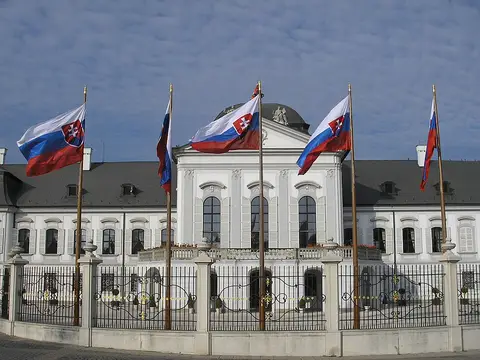 Palaces01
Grasalkovičov palác (Prezidentský palác) | Grassalkovich Palace
Hodžovo nám. · Bratislava● Website● Phone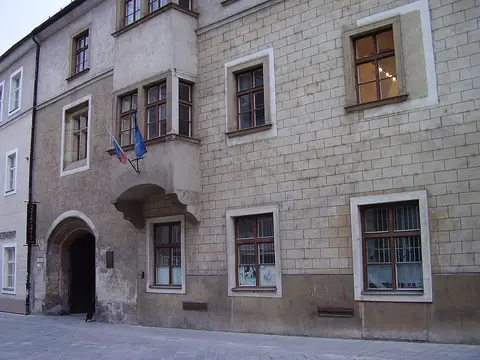 Historic sites02
Universitas Istropolitana
Ventúrska 3 · Bratislava○ Website○ Phone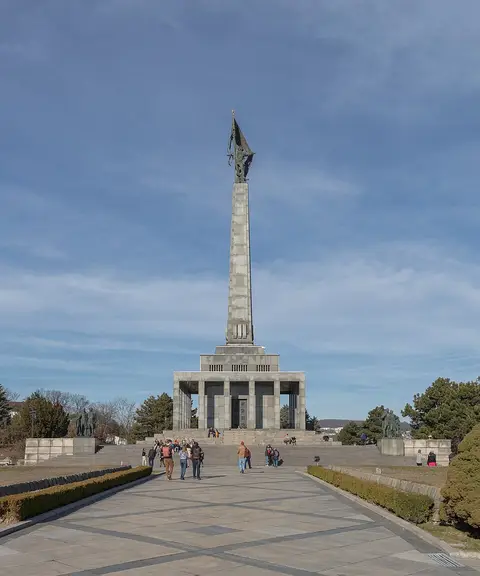 Monuments03
Slavín
Pažického · Bratislava● Website○ Phone Historic sites04
You need a free account to leave reviews and photos – that keeps comments genuine and lets you edit them later.