About St Mary's Church
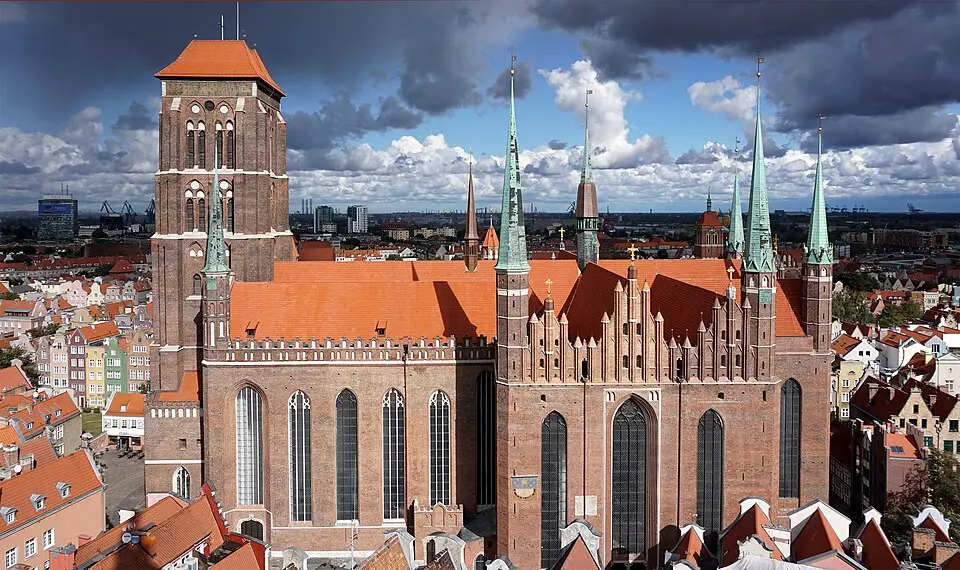
St. Mary's Church in Gdańsk (Polish: Bazylika Mariacka w Gdańsku) is the spiritual and architectural heart of the city. As the main parish church and co-cathedral of the Archdiocese of Gdańsk, its imposing silhouette defines the skyline, and locals affectionately call it the Crown of Gdańsk. The building is one of the largest hall churches in the world and ranks among the three largest brick churches north of the Alps. Construction began on March 28, 1343, on the foundations of an earlier Romanesque church and was not completed until 1502, after 159 years. The master builder Heinrich Ungeradin directed the work, which resulted in one of the most significant achievements of Brick Gothic architecture in the Baltic region.
The history of the church is closely tied to the religious upheavals of the region. Originally Catholic, the church came under Lutheran influence for a time during the Reformation beginning in 1525, before officially becoming a Protestant church in 1557. During this period it was the second-largest Evangelical Lutheran church in the world, after Ulm Minster. In World War II, the church suffered severe damage in March 1945 when the city was captured. The wooden roof structure burned out, numerous vaults collapsed, and a large part of the art treasures was lost. Reconstruction began as early as 1946, with the roof rebuilt as a reinforced concrete structure.
Because of the population resettlements after the war, hardly any Protestant Germans lived in the church's catchment area anymore; the residents were mostly Polish Catholics, who also bore the burden of reconstruction. Consequently, the church was taken over and consecrated by the Roman Catholic Church on November 17, 1955. In 1965 it received the title of Basilica minor, and since 1986 it has been the co-cathedral of the Archdiocese of Gdańsk. Its full name today is the Co-Cathedral Basilica of the Assumption of the Blessed Virgin Mary in Gdańsk.
Architecturally, the church has distinctive features that set it apart from other Brick Gothic buildings on the southern Baltic coast. The nave, transept, and choir have no classic buttresses. Instead, the lateral thrust of the vaults is absorbed by rows of chapels along the outer walls, with the partition walls of these chapels taking over the function of buttresses. This construction method is rare in northern Germany and the former Teutonic Order territory. The rectangular end of the choir also distinguishes the church from other large Brick Gothic churches such as the Frauenkirche in Munich or the one in Lübeck.
The roofing follows a complex system of several parallel roofs over the nave, choir, and transept arms. This arrangement is unusual in northern Germany but common in large hall churches in the Netherlands and Flanders. The 82-meter-high tower has massive Gothic buttresses, which sets it apart from most church towers in the region, many of which have a simple rectangular cross-section. The tower is particularly similar to the belfry of Dunkirk in French Flanders. Two church bells cast in 1970 hang in the tower: the large Gratia Dei and the smaller Ave Maria.
The interior furnishings are among the richest in the entire Baltic region and offer visitors an impressive ensemble of sculptures, retables, and murals. One highlight is the large high altar in the choir, created between 1510 and 1517 and attributed to the master Michael of Augsburg. On its festive side it depicts the Coronation of the Virgin. Other significant altars can be found in the various chapels, such as the St. Adrian Altar in the Holy Cross Chapel and the St. Dorothy Altar in the St. George Chapel. The astronomical clock, a work by Hans Düringer, is also a central eye-catcher. It consists of a calendar, a planetarium, and a figure theater, and has been fully functional again since 1987.
The church also houses numerous grave slabs and memorials. Among those buried here are the Baroque poet Martin Opitz von Boberfeld and the former Sejm Marshal Maciej Płażyński, whose sarcophagus also commemorates the 2010 Smolensk air disaster. In the south transept, the murdered mayor of Gdańsk, Paweł Adamowicz, was laid to rest in 2019. The history of the church's organ is as multifaceted as its architecture. After the original organ was destroyed in World War II, a surviving case from St. John's Church dating to 1629 was installed in 1985 and fitted with a new instrument offering 46 stops across three manuals and pedal.
For visitors, St. Mary's Church is not only a place of worship but also a museum of art and history. The combination of massive brick architecture, richly detailed altars, and historic relics makes it an essential destination for anyone who wants to experience the culture and history of Gdańsk. The church tells the story of the city from the Hanseatic era through the Reformation to modern Polish identity, and it remains a living center of city life.
At a glance
- Category
- Sight › Historic sites
- Rating
- no reviews yet · write a review
- Address
- Ulica Podkramarska 5
80-834 Gdańsk, Poland - Phone
- +48583013982
- Website
- www.bazylikamariacka.pl
- sekretariat@bazylikamariacka.gdansk.pl
- Coordinates
- 54.34986° N · 18.65305° E
- Data quality
- confidence 0.79
- Identifier
- ID b5ce7246-44f…
Part of the tour
Gdańsk in One Day: Main Town, Motława and Shipyard →Location & surroundings
Toggle layersRatings & comments
none yetNear St Mary's Church
closest 5 per category · 2 kmSights
Restaurants
Museums
Hotels
More:Historic sites in Gdańsk (237)All sights in Gdańsk (254)
251 places within 2 km loaded.
Don't miss in Gdańsk
All sights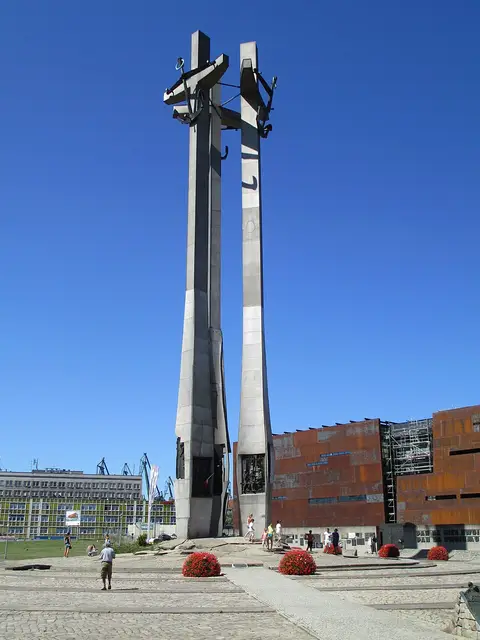 Monuments01
Monument to the Fallen Shipyard Workers of 1970
Plac Solidarności · Gdańsk● Website○ Phone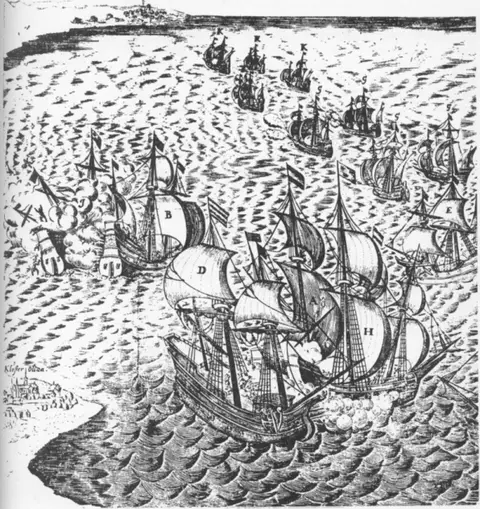 Historic sites02
Bitwa pod Oliwą
No address · Gdańsk○ Website○ Phone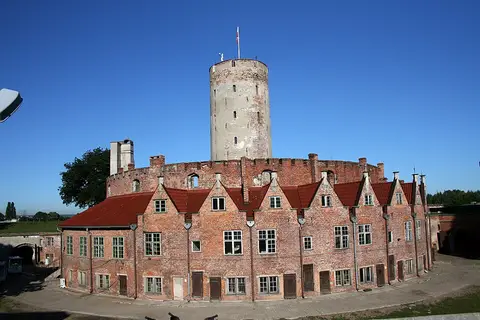 Historic sites03
Twierdza Wisłoujście
Stara Twierdza 3 · Gdańsk● Website● Phone Historic sites04
You need a free account to leave reviews and photos – that keeps comments genuine and lets you edit them later.
One of the largest Gothic churches in Europe and one of the three (almost equal sizes) second largest brick churches in the world. There is space for more than 20,000 people in the church. The church contains a large astronomical clock from 1464, with automata which display every day at 11:57. It is possible to take the stairs to the tower (78 m), but the view is not as inspiring as the one from Main Town Hall. Entry to the church is free — donations are appreciated! — but one must pay to visit the tower (20 zł, reduced price 10 zł).
Source: Wikivoyage, „Gdańsk“ · authors per page history · CC BY-SA 4.0 · as of 11/14/2025