Pomerania: Gdańsk, Baltic Dunes and the Kashubian Lakes
Travel guide · editorialPomerania is Poland's window onto the Baltic Sea: it is home to the Hanseatic city of Gdańsk, the elegant seaside resort of Sopot, the Hel Peninsula and the shifting dunes of Łeba. A vacation in Pomerania combines Brick Gothic architecture and shipyard history with long sandy beaches, pine forests and the lakes of Kashubia.
Between the Baltic and the Lake District
Pomeranian Voivodeship, known in Polish as Pomorskie, covers the central stretch of Poland's Baltic coast and the hinterland all the way to the Vistula lowlands. The coastline is almost entirely sandy beach, lined with dunes and pines; the Hel Peninsula juts into Gdańsk Bay as a narrow finger more than 35 kilometers long. To the east, the Vistula flows into the sea, and its delta, the Żuławy, is a flat landscape of Mennonite houses and drainage ditches. West of Gdańsk begins Kashubian Switzerland, a hilly area with hundreds of lakes where the Kashubians keep their own language alive. Around 2.3 million people live in the region, most of them in the Tri-City of Gdańsk, Sopot and Gdynia.
Gdańsk, Sopot and Gdynia
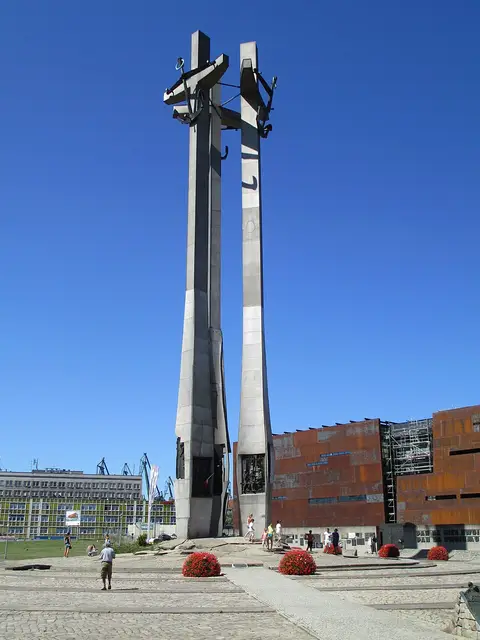
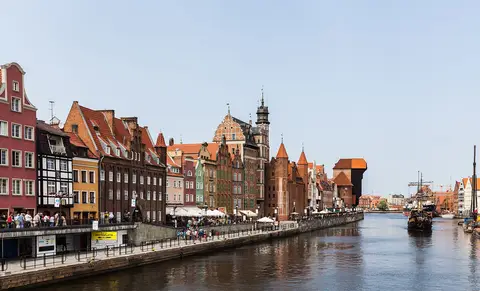
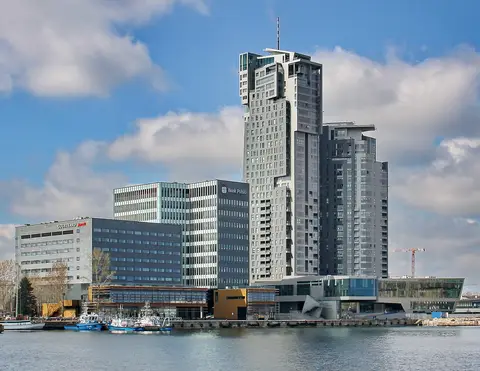
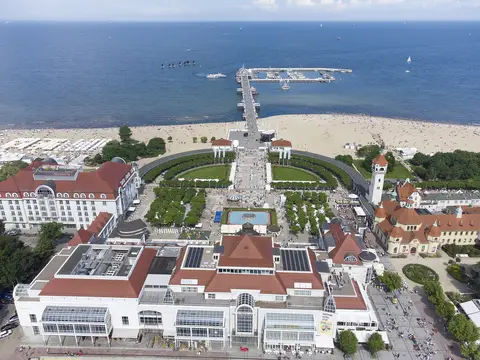
For centuries Gdańsk was one of the richest Hanseatic cities; later it became a Free City, and in 1939 it was the site of the first shots of World War II at Westerplatte. The Main Town, with its Long Market, Artus Court, Neptune's Fountain and St. Mary's Church, one of the largest brick churches in the world, was painstakingly rebuilt after 1945. On the Motława River stands the Crane, a medieval harbor crane. On the grounds of the Gdańsk Shipyard, where the Solidarity trade union was born in 1980, the European Solidarity Centre tells the story of the strikes and the political upheaval; the Museum of the Second World War is another must-see. Sopot draws visitors with the longest wooden pier in Europe, over 500 meters long, and the Monte Cassino promenade. Gdynia, built as a Polish port only in the 1920s, has modern interwar architecture and the museum ship Dar Pomorza.
Sights on the Pomeranian Coast
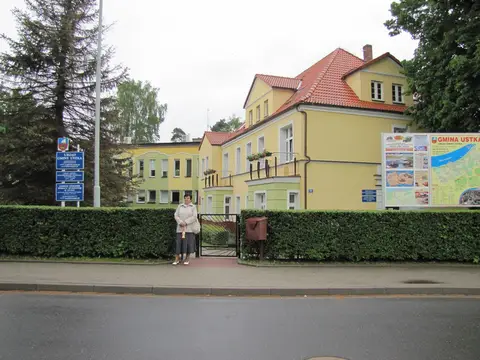
Słowiński National Park near Łeba protects shifting dunes up to 40 meters high, which move several meters inland every year and bury forests; during World War II the Wehrmacht tested rockets here. On the Hel Peninsula, fishing villages such as Jastarnia and Jurata line the coast, and water-sports fans come for kitesurfing and windsurfing in the shallow bay. In Hel itself, the University of Gdańsk runs a seal sanctuary. Ustka and Rowy offer beaches, lighthouses and quieter resorts. On the region's eastern edge stands Malbork Castle, the largest brick castle in the world and former headquarters of the Teutonic Order, a UNESCO World Heritage Site. East of the Vistula mouth lies the Vistula Spit with resorts such as Krynica Morska; a canal opened in 2022 cuts through it.
Kashubia and the Hinterland
The hinterland of Gdańsk shows a completely different side of Pomerania. In Kashubian Switzerland, a hilly landscape of glacial lakes and beech forests, many people still speak Kashubian, which is recognized as a regional language; place-name signs are bilingual. Kartuzy has a monastery church whose roof resembles a coffin lid. In Szymbark stands a house built upside down, and from the tower on Wieżyca, at 329 meters the highest point in the region, you can look out over the lakes. South of Gdańsk, the Cistercian cathedral in Pelplin preserves a Gutenberg Bible. In the west, Słupsk is the regional center, with the Castle of the Pomeranian Dukes and a collection of works by the artist Witkacy.
Culture and Food
Fish is everywhere: smoked flounder, herring in many variations and cod fresh from the frying pan. In Kashubia, people eat czernina, a soup made with goose blood, or potato dishes, served with local strawberries. Goldwasser, an herbal liqueur with flakes of gold leaf, is a Gdańsk original, and Baltic amber is crafted into jewelry in many shops along Mariacka Street. In summer, the Dominican Fair takes place, one of the oldest fairs in Europe.
Getting There and Best Time to Visit
Gdańsk Airport (GDN) has direct flights from many German cities. By train, you can reach the Tri-City via Berlin or Poznań; within the Tri-City, the SKM commuter rail runs at regular intervals. In summer, excursion boats run to Hel from Gdańsk and Gdynia. The best time to visit is June through September; in July and August, the beaches and resorts are crowded. In spring and fall, the coast is quieter and ideal for cycling.