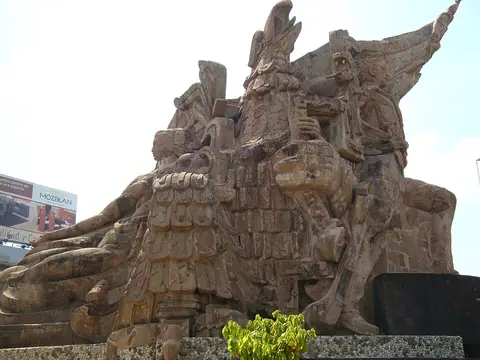
Discovering Villahermosa: Olmec Heads on the Grijalva
Travel guide · editorialIn the middle of a tropical park, multi-ton stone heads carved almost three thousand years ago rest among the trees: Villahermosa, the capital of Tabasco, preserves the legacy of the Olmecs, Mesoamerica's oldest great civilization. On a trip to southern Mexico, the city on the Río Grijalva is also a base for visiting cacao plantations and the Maya ruins of Palenque.
A City on the Water
Villahermosa was founded at the end of the 16th century, after pirate attacks drove the Spanish from the coast into the interior. The city lies in a landscape of rivers, lagoons, and swamps; water shapes life here, and during heavy rains it also arrives in the form of floods, most recently in 2007. In the 20th century, the oil boom made Tabasco rich, and the state-owned Pemex still shapes the economy today. Along the banks of the Grijalva runs a malecón, or waterfront promenade, that invites an evening stroll.
Sights in Villahermosa
The highlight is the Parque-Museo La Venta, which the poet Carlos Pellicer created in the 1950s to save Olmec monuments from destruction by oil drilling. On a loop trail through the forest, you'll come across colossal heads, altars, and stelae that were brought here from the archaeological site of La Venta. A small zoo shows animals native to the region, including jaguars and crocodiles. The neighboring Lago de las Ilusiones is a pleasant place to wind down the day. In the center, the Zona Luz, you'll find the Cathedral of the Lord of Tabasco and the Museo Regional de Antropología Carlos Pellicer, which holds more archaeological finds.
Eating in Villahermosa
Tabasco is a homeland of cacao: the Olmecs and Maya already knew it, and cacao is still grown on haciendas like those in Comalcalco and turned into chocolate. The local cuisine features pejelagarto, the alligator gar from the rivers, grilled or in tamales. You'll also find tamales de chipilín, mojarra frita, and pozol, a cool drink made from corn and cacao that is sold on every corner on hot days. The city's markets offer tropical fruits, chiles, and food stalls where lunch is cooked fresh at midday.
Culture and Nightlife
Villahermosa is a lively city, though more business-minded than touristy. In the evening, locals head to the malecón and to the area around Paseo Tabasco, where restaurants, bars, and shopping centers are located. In spring, the Feria Tabasco takes place, a large fair with music, parades, and the selection of the Flor de Oro. The region's music is strongly shaped by marimba, drums, and flutes, which you can hear at traditional festivals.
Getting Around, When to Go, and Excursions
Carlos Rovirosa Pérez Airport (VSA) lies east of the city and has connections to Mexico City, Monterrey, and Cancún. The Tren Maya has a station in Tabasco near Tenosique, with service to Palenque and the Yucatán Peninsula. In the city, buses and taxis are the usual way to get around. The best time to visit is between November and April; summer is extremely hot and humid. Worthwhile excursions lead to the Maya site of Comalcalco, built of fired bricks, to cacao haciendas, and to Palenque, about a two-hour drive away. Tabasco has seen an increase in crime in recent years; be careful at night and use registered taxis.