Discover San Luis Potosí: Silver, Baroque, and the Huasteca
Travel guide · editorialPlazas, plazas, plazas: hardly any Mexican city has as many of them in its historic core as San Luis Potosí. If you're planning a trip through the mining country of the north, you'll find Baroque churches, silver-mining history, and a cuisine with a character all its own here – plus, as a bonus, the gateway to the lush Huasteca.
A City Built on Silver
In 1592, Spanish settlers discovered gold and silver at nearby Cerro de San Pedro, and the city was founded soon after. The name Potosí refers to the legendary silver city in Bolivia – the settlers hoped for similar riches. The proceeds paid for magnificent churches and palaces. In 1910, Francisco I. Madero drew up the Plan de San Luis here, while in custody, marking the beginning of the Mexican Revolution. The Centro Histórico is part of the UNESCO World Heritage site Camino Real de Tierra Adentro.
Sights in San Luis Potosí
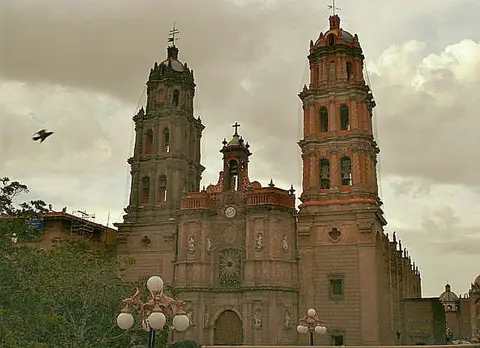
The cathedral and the Palacio de Gobierno stand around the Plaza de Armas, and just a few steps away lies the Plaza del Carmen with the Templo del Carmen, a masterpiece of Churrigueresque Baroque with a gilded side altar. Right next door, the Museo Nacional de la Máscara displays hundreds of festival masks from all over the country. The Teatro de la Paz, a neoclassical building from 1894, is still an important venue today. The Calzada de Guadalupe, a long promenade, leads from the center to the Santuario de Guadalupe. In the Barrio de San Sebastián and other old neighborhoods, small churches and plazas have been preserved that are well worth a stroll off the tourist trail.
Culture and Nightlife
The Centro de las Artes, housed in a former prison where Madero was once held, is now a cultural center with exhibitions and workshops. The Museo Federico Silva is devoted to contemporary sculpture. In the evening, life moves to the illuminated plazas, where families stroll and street musicians perform. Around Calle Carranza and in the Lomas de San Luis area, you'll find cafés, bars, and restaurants. A highlight of the calendar is the nighttime Procession of Silence on Good Friday, when hooded brotherhoods file silently through the old town.
Eating in San Luis Potosí
A must-try is enchiladas potosinas: the dough is colored red with chili, filled with cheese, and fried. Other specialties include tacos rojos, zacahuil from the Huasteca – a giant tamale cooked in an earth oven – and fiambre potosino, a cold platter of meat and vegetables. At the Mercado República you'll find food stalls and regional sweets made from prickly pear. The region produces mezcal from wild-growing agaves, which you can sample in several bars in the city.
Getting Around, Day Trips, and the Best Time to Visit
Ponciano Arriaga Airport (SLP) is located north of the city; the bus station offers connections in every direction. In the center, you get around on foot. Worthwhile day trips include Real de Catorce, a half-abandoned mining town in the desert reached through a long tunnel, and the Huasteca Potosina, with turquoise waterfalls such as Tamul and Edward James's surreal sculpture garden in Xilitla. The best time to visit the city is between October and April: mild by day and cool at night at an elevation of about 6,100 feet (1,860 meters). For the Huasteca, the months after the rainy season are ideal, when the waterfalls are still powerful but the water clears up again. In May, the city can get very hot. Semana Santa with the Procession of Silence is a special but also popular time to visit – hotels in the center fill up quickly.
A Walk Through the Plazas of the Old Town
The best way to explore the center is on a walk from plaza to plaza. It starts at the Plaza de Armas, passes through the Plaza de los Fundadores with the university building, and continues to the Plaza de San Francisco, home to the Templo de San Francisco with its sacristy full of paintings. From there it's not far to the Plaza de Aranzazú and the Museo Regional Potosino in a former Franciscan monastery. To finish, it's worth heading over to the Jardín de San Juan de Dios. Along the way, you'll notice the facades of pink cantera stone, which look especially warm in the evening light.