Tamaulipas: Gulf Beaches, Border Cities, and the Sierra
Travel guide · editorialTamaulipas stretches from the Rio Grande to the mouth of the Pánuco River, linking border cities, lagoons along the Gulf, and the cloud forest of El Cielo. A trip to Tamaulipas is more for seasoned travelers than for package tourists: The state is shaped by industry, trade, and agriculture, yet it holds some astonishing natural areas and a lively musical tradition.
Landscape and Location
With roughly 430 kilometers (about 267 miles) of coastline, Tamaulipas sits on the western Gulf of Mexico. Behind the beaches lie large lagoons such as the Laguna Madre, a shallow saltwater lagoon that is an important wintering ground for migratory birds. Inland, the terrain climbs toward the Sierra Madre Oriental, whose foothills in the southwest are covered in cloud forest. The north is flat and dry, with sorghum fields and cattle pastures. In the south, around Tampico, the climate turns tropical and humid, with rivers, mangroves, and wetlands.
Cities on the Border and the Gulf
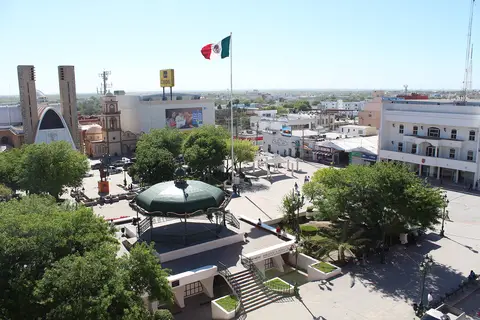
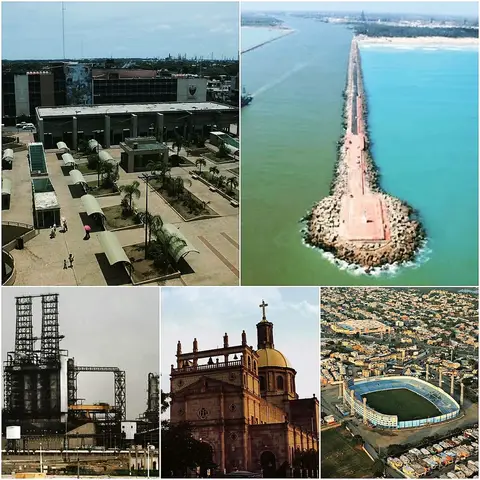
Reynosa, Matamoros, and Nuevo Laredo are border cities on the Rio Grande, which is called the Río Bravo here. A large share of the trade between Mexico and the U.S. rolls across their bridges, and maquiladoras, or assembly plants, shape the economy. The state capital, Ciudad Victoria, is quieter and lies at the foot of the Sierra; it is an administrative and university town. In the south, Tampico, Ciudad Madero, and Altamira form a contiguous metropolitan area with an oil port, petrochemical plants, and an industrial port. Tampico preserves a downtown with New Orleans–style buildings, complete with wooden balconies and cast-iron railings that recall the oil boom of the early 20th century.
Sights in Tamaulipas
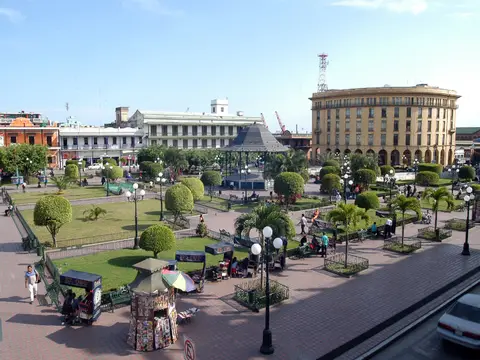
The El Cielo Biosphere Reserve near Gómez Farías is the state's most important protected area: Within a small space, tropical forest, montane cloud forest, and pine-oak forest follow one another, and hundreds of bird species and numerous orchids live here. Near Ciudad Madero, Playa Miramar draws visitors with a broad sandy beach, promenades, and beachfront restaurants; during Holy Week it is the destination of thousands of families. In downtown Tampico, the Plaza de Armas with its bandstand and the cathedral are worth a stroll, and the Museo de la Cultura Huasteca displays finds from the Huastec people. Tula, one of the oldest settlements in the state, is known as a Pueblo Mágico for its leather goods and cuera jackets. On the coast near Rancho Nuevo, biologists protect the nesting beaches of the Kemp's ridley sea turtle, the rarest sea turtle in the world. Between late March and July, the females come ashore to lay their eggs, often during the day and in large groups. Anglers also know the Vicente Guerrero reservoir near Padilla, famous for its largemouth bass.
Culture and History
Huapango, a music style with falsetto singing and violin, belongs to the Huasteca, a region Tamaulipas shares with Veracruz, San Luis Potosí, and Hidalgo. In the north, by contrast, you'll hear norteño music with accordion. The cuera tamaulipeca, a decorated leather jacket with fringe, is the state's traditional garment. Historically, Tamaulipas was long a sparsely populated border region that was only systematically colonized in the 18th century under José de Escandón as the province of Nuevo Santander. During the American Civil War, Matamoros was an important trading point for cotton.
Food and Drink
Tampico's cuisine is known for carne asada a la tampiqueña, a thin beef steak served with an enchilada, beans, and guacamole. Gorditas de Doña Tota, corn pockets with various fillings, are a classic from the south. Shrimp cocktails, jaiba crab, and fried fish are served at beachfront eateries. In the north, grilled meat, cabrito, and flour tortillas dominate, and for dessert there are pemoles, a pastry made from corn flour.
Getting There and Best Time to Visit
There are airports in Tampico (TAM), Reynosa (REX), Matamoros, Nuevo Laredo, and Ciudad Victoria, mostly with connections to Mexico City. Long-distance buses run along the coast and through the interior. The best time to visit is between October and April, when the heat eases; summers are muggy, and hurricanes threaten from June to November. Because of high crime, many governments have issued strict travel advisories for Tamaulipas; you should avoid overland travel, especially at night and near the border, and check for current information.