

Discover Mérida: The White City of the Maya World
Travel guide · editorialIn the evening, when the heat eases, couples in traditional white dress take their places on Mérida's Plaza Grande and dance to the jarana while stalls bake marquesitas. If you're planning a vacation on the Yucatán Peninsula, the "White City" makes an ideal base: colonial splendor in the center, Maya ruins and cenotes nearby, and a distinctive cuisine that sets itself clearly apart from the rest of Mexico.
On the Stones of T'Hó
Mérida was founded in 1542 by Francisco de Montejo the Younger on the site of the Maya city of T'Hó; the Spanish built the stones of its pyramids into churches and palaces. In the 19th century, sisal, a "green gold" made from agave fibers and used for ship ropes, brought enormous wealth. Hacienda owners had French-style mansions built along the Paseo de Montejo, and around 1900 Mérida reportedly had more millionaires at times than any other city in the country. The Maya culture is still present today: you hear Yucatec Maya in the markets, and many place names in the area sound like Dzityá or Susulá.
Sights in Mérida
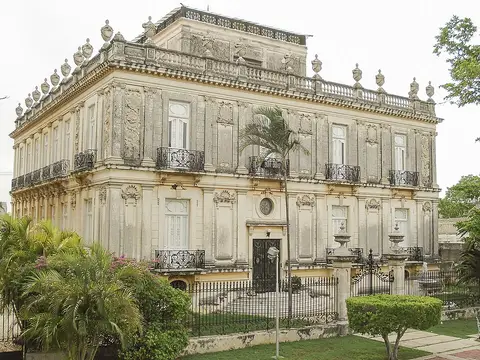
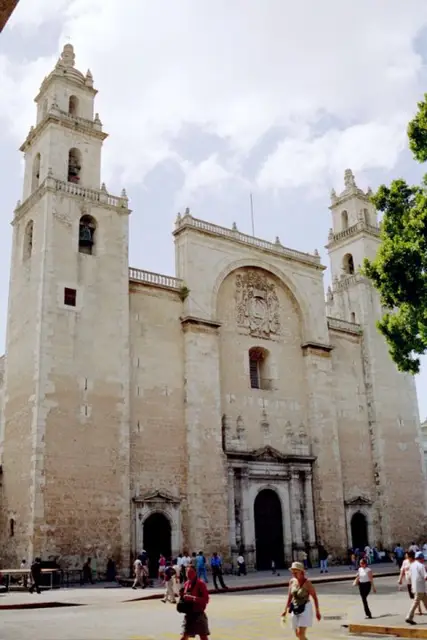
In the Centro, the Cathedral of San Ildefonso stands on the Plaza Grande, one of the oldest on the American mainland, austere as a fortress. Opposite, the facade of the Casa de Montejo, dating from 1549, shows Spanish conquistadors standing on the heads of defeated Maya, a stark document of the conquest. In the Government Palace, large-format paintings by Fernando Castro Pacheco tell the story of Yucatán. From the center, the Paseo de Montejo runs north, a boulevard lined with mansions such as the Palacio Cantón. On Sundays the center is closed to cars, and bicycles, dancers, and market stalls take over the streets. Almost every evening there are free cultural programs, such as the serenata in Parque Santa Lucía.
Museums and Culture
The Gran Museo del Mundo Maya in the north of the city, a modern building shaped like a ceiba tree, is the best introduction to the history and present of the Maya. In the Palacio Cantón, the Anthropology Museum displays finds from the region. The MACAY art museum next to the cathedral is devoted to contemporary art from Yucatán. Musically, Mérida is the home of the trova yucateca, romantic songs with guitar accompaniment that you can hear at concerts in parks.
Eating in Mérida: Cochinita Pibil and Sopa de Lima
Restaurants in Mérida serve dishes that combine Maya tradition with Spanish, Caribbean, and even Lebanese influences, the latter brought by immigrants in the 19th century. Cochinita pibil, pork marinated in achiote and bitter orange and traditionally cooked in an earth pit, is the classic for breakfast, as a taco, or in a torta. Other staples include sopa de lima, a chicken soup made with the local lime, panuchos and salbutes, small fried tortillas, and poc chuc, grilled pork. Go easy on the habanero sauce. At the Mercado Lucas de Gálvez and the Mercado Santiago, locals eat at long counters, and Kanasín on the outskirts is known for its panucho restaurants.
Day Trips to Ruins and Cenotes
About 50 miles (80 km) to the south lies Uxmal with the elegant Pyramid of the Magician, a highlight of the Puuc style and a UNESCO World Heritage Site. Chichén Itzá can be reached in about two hours. Closer is Dzibilchaltún, with a cenote you can swim in. The peninsula is riddled with cenotes, limestone caves filled with groundwater; dozens of them lie around Cuzamá and Homún. On the Gulf of Mexico, the beach town of Progreso is half an hour away, and flamingos live in Celestún.
Getting Around and Best Time to Visit
Manuel Crescencio Rejón Airport (MID) lies south of the city and has direct flights to Mexico City and the United States. Since late 2023, the Tren Maya has also stopped in Mérida, connecting the peninsula as far as Cancún and Palenque. In the city there are buses and, since 2024, the Ie-tram, an electric guided bus; you explore the center on foot. Mérida is considered one of the safest large cities in Mexico. The best time to visit is from November to March; in April and May temperatures often climb to 104°F (40°C), and June through October is rainy and hurricane season.